
Check the details before you make a trip
Venue hours do not necessarily show when gaming machines are available, so check current details directly with the venue.
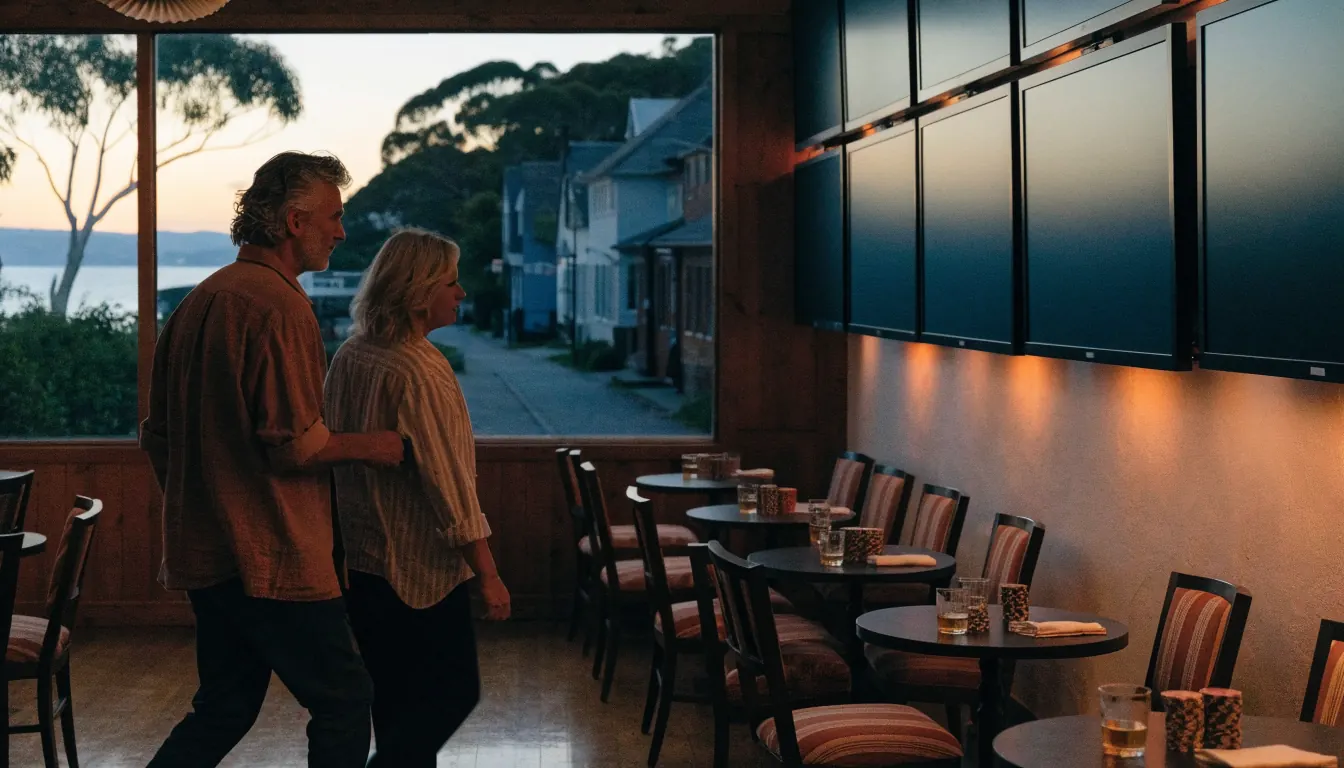
When Tasmania’s Gaming Venues Are Open
To find out whether a Tasmanian venue is open now, check the venue’s own current information first. Its official website may show opening hours, holiday changes and contact details. If the hours are unclear, call before travelling and ask whether the venue is open at the time you plan to arrive.
Opening hours displayed on a map or directory can help you identify a venue’s usual schedule, but they may not reflect a temporary change or tell you which parts of the venue are available. Treat third-party listings as a starting point, then confirm important details with the venue. A phone call is especially useful if the listing gives broad hours without explaining whether those hours apply to the whole premises or a particular area.
There is an important distinction between a venue being open and its pokies being available to play. A venue might open its doors for food, drinks or other services while gaming machines are not operating. The reverse is also possible in principle: advertised opening hours may not explain the precise times when machines can be used. Do not assume that a venue’s general opening schedule answers the separate question of gaming-machine operation.
Casinos listed by licence
If you’re looking for pokies options in Tasmania, this list gives you a concise starting point for reviewing operators. Check each option’s details to decide what suits you.
-
Bizzo Casino
- License
- Curacao Gaming Control Board (TechSolutions Group N.V.)
You can note that Bizzo Casino is listed with a Curacao Gaming Control Board licence held by TechSolutions Group N.V.
-
SpinsUp
- License
- Curacao Gaming Control Board OGL/2023/174/0082 (Dama N.V.)
SpinsUp is listed with Curacao Gaming Control Board licence OGL/2023/174/0082, held by Dama N.V.
-
Wild Tokyo
- License
- Curacao
- Payout speed
- crypto 30-60 minutes, fiat 1-5 days
- Min. deposit
- A$10
Wild Tokyo lists a Curacao licence and a A$10 minimum deposit. Its stated payout times are 30–60 minutes for crypto and 1–5 days for fiat.
-
MrPacho
- Payout speed
- crypto 30-120 minutes, fiat 24-72 hours
- Min. deposit
- A$30
MrPacho lists a A$30 minimum deposit. Its stated payout times are 30–120 minutes for crypto and 24–72 hours for fiat.
-
Rollero Casino
- License
- Curacao Gaming Control Board OGL/2023/176/0095 (Hollycorn N.V.)
Rollero Casino is listed with Curacao Gaming Control Board licence OGL/2023/176/0095, held by Hollycorn N.V.
-
LevelUp Casino
- License
- Curacao eGaming OGL/2023/174/0082 (Dama N.V.)
- Min. deposit
- A$15
LevelUp Casino is listed with Curacao eGaming licence OGL/2023/174/0082, held by Dama N.V., and has a A$15 minimum deposit.
-
Ricky Casino
- Payout speed
- crypto under 1 hour, PayID 1-3 business days
- Min. deposit
- A$20 (A$30 to qualify for the bonus)
Ricky Casino lists a A$20 minimum deposit, or A$30 to qualify for the bonus. Its stated payout times are under an hour for crypto and 1–3 business days for PayID.
-
Playfina Casino
- License
- Curacao eGaming (Hollycorn N.V., since 2017)
- Min. deposit
- A$20-30 (depends on the offer)
Playfina Casino is listed with a Curacao eGaming licence held by Hollycorn N.V. since 2017. The stated minimum deposit is A$20–30, depending on the offer.
-
JustCasino
- License
- Curacao Gaming Control Board
JustCasino is listed with a Curacao Gaming Control Board licence.
-
House of Pokies
- License
- international iGaming licence – jurisdiction not named in the source
- Payout speed
- PayID 1-24 hours
- Min. deposit
- A$30 (PayID from A$10)
House of Pokies lists an international iGaming licence, though its jurisdiction is not named. Its stated PayID payout time is 1–24 hours; the minimum deposit is A$30, or A$10 for PayID.
When you contact a venue, ask directly whether the gaming area is open at the time you intend to visit and whether the machines are operating then. If you are planning around an early or late visit, make the question specific to that time rather than relying on a broad label such as “open”. The staff member can clarify the venue’s current arrangements; a generic listing may simply show the premises’ overall hours.
Check the date as well as the time. A venue may publish different hours for ordinary trading and for public holidays or other special circumstances. If the information you find has no date, or it appears inconsistent across sources, confirm it directly. A listing that says “open” can still be incomplete if it does not state whether the information has been updated or whether it applies to the gaming area.
A useful check is to look for more than one piece of current information: the venue’s own published hours and a direct confirmation if the timing matters. If you are already nearby, signs at the entrance may indicate whether the venue is open, but they may not establish whether gaming machines are operating. For a planned visit, checking before setting out avoids relying on an assumption that the door hours and machine hours match.
Tasmania-wide opening times should not be inferred from one venue’s schedule. Hours can be specific to the individual premises, and the information needed is the current schedule for the venue you have chosen. Search results that describe a place as open now may be based on ordinary listed hours, not a live confirmation of what is operating inside. Use them as a prompt to verify, not as proof that the gaming area is available.
There is also a staffing condition relevant to machine operation. A report published by regionriverina.com.au says that, from 1 July, venues with more than 20 gaming machines are required to have a dedicated responsible gambling officer (RGO) on duty during the period those machines are operating. This connects the requirement to the machines’ operating period, not simply to the venue’s general door hours. It does not, by itself, tell you when a particular venue opens or when its machines are switched on.
Keep the two questions separate when you check: “Is the venue open?” and “Are the pokies operating?” If the answer to the first is yes, that does not automatically answer the second. Likewise, a posted schedule for gaming machines should not be taken as confirmation that every part of the premises is open for the same period. Ask about the specific service or area you intend to use.
For a visit today, confirm the venue’s current opening information and ask about machine availability at your intended arrival time. For a visit on another day, check again closer to the date, particularly if the published hours may have changed. That process gives you a clearer answer than relying on a general description or assuming that all Tasmanian venues follow one shared schedule.
DO
- Check the venue's own official website for opening hours.
- Call the venue directly to confirm if machines are operating.
- Ask specifically if the gaming area is open and machines are running.
- Verify the date and time for public holidays or special circumstances.
DON'T
- Rely solely on third-party listings or maps.
- Assume general venue opening hours apply to gaming machines.
- Assume Tasmania-wide opening times based on one venue.
- Take a generic "open" label as proof of machine availability.
How Pokie Returns and Randomness Work
A pokie’s return setting describes a statistical property of the game, not a forecast for your next turn. It is useful for understanding how a game is configured over extensive play, but it cannot tell you whether an individual spin will pay, how much it might return, or when a win will occur.
Return to player, often shortened to RTP, is expressed as a percentage. It represents the theoretical share of wagers that a game is designed to return across a very large number of plays under its specified configuration. The figure is calculated from the game’s rules and payout structure. It is not a promise that a particular player will receive that share, and it does not describe the result of a short session.
The difference is the scale being measured. A published RTP concerns an aggregate of outcomes across many spins. Your own results are a small sample, so they can fall well above or below that theoretical figure. A return setting cannot ensure that losses will be recovered, nor does it identify a time when a payout is due. Treating it as a personal return forecast confuses a long-run model with the result of a single play.
Why the same pokie may show different settings
A specialist review reports that some game providers give casinos a choice of RTP configurations for the same pokie. Where that option is available, the game’s return setting may therefore differ between casinos even though its name and general presentation appear the same. This is a configuration difference, not evidence that the game will produce a particular result at one venue.
A displayed figure is meaningful only when it relates to the version and setting actually offered. If you are comparing pokies in Tasmania, check the information for the specific game available where you intend to play. Do not assume that a figure found in a general game description applies to every casino or every installation. If the setting is not shown, you cannot reliably infer it from the game’s title, graphics, or reputation.
That distinction also matters when people look for the best-paying pokies in Tasmania. A higher published return setting, if confirmed for the particular version, describes a more generous theoretical return over extensive play. It does not establish that the game will pay more during your visit, or that its next spin is more likely to win. A comparison based only on a title or a figure detached from its configuration can give a false impression of certainty.
What randomness means for each spin
A pokie uses a Random Number Generator, or RNG, to determine each spin’s outcome. Each new spin is separate from the previous one. A loss does not make a win due, and a recent win does not mean the next spin must lose. The machine does not need to balance your personal results during a session to match the published return setting.
This independence is why a sequence can look uneven without contradicting the game’s stated return. Several outcomes may occur close together, or a session may contain no substantial return. Those results do not reveal what the next spin will be. Watching a machine, tracking its recent outcomes, or changing your stake cannot turn its past results into a reliable prediction of its next result.
RTP and randomness answer different questions. RTP describes the theoretical behaviour of a configured game over extensive play; the RNG selects the outcome of each individual spin. Neither supplies a schedule for wins. If you compare casino pokies, use a published setting only as information about the game configuration, not as a promise about what you personally will receive.
Finding a Venue Near an Airport or CBD
A map result can show that a place is near a search point without establishing that it has pokies. Treat “near” as a location clue, not confirmation of what a venue offers. Before travelling, check the venue’s own information or contact it to confirm that gaming machines are available there. A map pin or a result that mentions pokies may refer to a nearby business, a general area, or information that is no longer current.
Airport searches
A search for pokies near a Tasmanian airport can return places around the airport, somewhere else in the surrounding area, or results that use “airport” as a broad location label. It does not show that pokies are inside the terminal or on airport grounds. Check the address attached to each result and open it on a map. The address, rather than the wording of the result, is what lets you judge whether the venue is close to the airport you mean.
Tasmania has more than one airport-related location a traveller might have in mind. If the result does not clearly identify the airport or locality, refine the place name before relying on its position. A result labelled as being near an airport may still require a longer journey than its short description suggests: map listings can emphasise straight-line proximity, while the actual route follows available roads.
CBD and “near me” results
A CBD search is also a starting point, not a precise boundary. Results may refer to different parts of a central business district or to a surrounding suburb. Check the displayed address and map position against the part of the CBD you plan to visit. If you need to walk or drive from a particular destination, enter that destination as the starting point rather than assuming that “CBD” means the same spot in every result.
“Near me” depends on the location available to your device or browser. If location access is off, imprecise, or set to a different place, results may not represent your current position. You can instead search using a town, suburb, airport or other recognisable place name, then check the resulting addresses on a map.
Regional wording and state ambiguity
A broad search for northern Tasmania may cover a large area rather than a single town. Add the town or suburb you intend to visit, then compare the addresses returned. This makes it easier to separate genuinely nearby options from results that simply match the wider region.
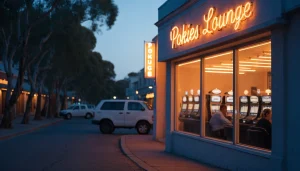
Wording that combines Tasmania and Victoria can also be unclear. It may reflect a mistaken location entry, a search spanning state names, or a result associated with a different place. Do not assume that such a listing is in Tasmania: inspect its address and state before using it to plan a trip.
For any proximity search, use the venue’s address as the reference point and verify that the venue actually offers pokies. Search wording alone cannot establish either fact.
What Venue Responsible-Gambling Rules Require
When comparing a venue’s gaming facilities, responsible-gambling arrangements are more informative than a broad label such as “best pokies venue”. The relevant question is what procedures apply while machines are in use, and whether staff can respond when a patron appears to be experiencing gambling harm.
A report published by regionriverina.com.au describes a requirement for venues with more than 20 gaming machines to have a dedicated responsible gambling officer (RGO) on duty from 1 July while those machines are operating. The officer’s duty is tied to machine operation, not simply to whether the venue is open. The report also says venues will have a one-month grace period to remove signage and introduce RGOs. Because this information is presented in a report about changes, check the venue’s current procedures rather than assuming every venue has already completed the transition.
The threshold matters: the reported RGO requirement applies to venues above it, not automatically to every venue with gaming machines. If you are assessing a particular venue, ask whether its machine count brings it within the requirement and how it ensures a dedicated RGO is on duty when the machines are operating. A general statement that staff are available does not answer whether a designated officer is present.

The report also describes a gambling incident register. It is intended to record occurrences, including situations in which a patron’s behaviour indicates they may be at risk of gambling harm or affected by it. A register gives the venue a way to document incidents rather than treating each one as an isolated conversation. It can also support follow-up and consistent handling, although the existence of a register alone does not show how effectively a venue uses it.
For a patron, the practical distinction is between a written process and an observable response. You can ask who to approach if you or someone with you needs support, and whether staff can bring the RGO into the conversation. You do not need to disclose personal details to ask how the venue handles concerns. The answer should explain how staff identify the appropriate person and what happens when an incident is recorded.
These requirements do not rank venues or establish which one offers the best experience. They describe safeguards and record-keeping obligations relevant to certain venues. For a comparison of pokies venues in Tasmania, treat claims about an RGO and incident reporting as specific operational information: confirm what applies to the venue and whether the procedures are in place, rather than inferring compliance from promotional language or the venue’s size alone.
Online Play, the Spirit of Tasmania and Legal Limits
A question about pokies aboard the Spirit of Tasmania is different from a question about playing online. A search result, passenger discussion or reference to gaming does not establish that the ferry offers pokies. Treat claims about onboard machines as unconfirmed unless the ferry operator’s current, official information explicitly verifies them. Internet access during a voyage, if available, would not by itself show that onboard gambling is offered or lawful.
Legal Risk
Providing real-money online pokies to people in Australia without a domestic licence is prohibited under the Interactive Gambling Act 2001.
The same care applies to phrases suggesting a “Crown Tasmania” casino. A Tasmania-related label in a page title or advertisement does not prove that a casino operates in the state, that it is connected to a particular venue, or that it holds authority to offer online pokies to people in Australia. Check what service is actually being described rather than inferring its status from the name.
Real-money online play in Australia
The Interactive Gambling Act 2001 prohibits companies from offering real-money online pokies to people in Australia without a domestic licence. No such licences have been issued, and there is no Australian-licensed online casino. This applies whether an online service uses a Tasmanian identity, mentions a local venue, or promotes a no-deposit bonus. A bonus offer does not change the legal status of the underlying service.
This is separate from playing pokies at a physical venue. A venue-based machine is not an online casino, and the rules for one should not be inferred from claims about the other. Likewise, a website that can be opened on a phone is not thereby an authorised Australian online gambling service.
If a site advertises real-money online pokies to Australians, its claims about location, branding or promotions should not be treated as proof that it has an Australian licence. There is no local online-casino licence for it to hold. Avoid providing payment or identity details on the assumption that a Tasmania connection makes the service legitimate.
How to assess a claim
For a claim about the Spirit of Tasmania, look for confirmation from the ferry operator rather than relying on an unaffiliated page or a search snippet. For a claim about a casino, distinguish a physical venue from a website and check whether the wording actually identifies an operating venue or merely uses a place name to attract attention. Neither a name nor a promotional offer establishes that online real-money play is permitted in Australia.
The key distinction is the form of play: a claim about an onboard or land-based machine concerns a physical setting, while an online service takes bets through the internet. For real-money online pokies offered to Australians, the national legal position is clear: operators cannot provide them under an Australian online-casino licence, because none has been issued.
Why 24-Hour Availability Cannot Be Assumed
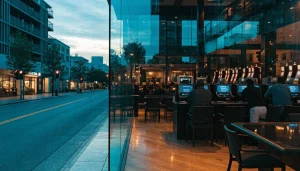
A venue described as open overnight is not necessarily operating its pokies throughout that period. These are separate conditions: the venue may admit patrons while gaming machines are switched off, or it may close even though its machines could operate during other permitted hours. A claim about one does not establish the other.
For a specific venue, check its current opening information and confirm directly whether pokies are available at the time you plan to visit. Treat phrases such as “open now” or “24-hour” as claims to verify, not as proof that machines are running. Opening details can also change, so an old listing may not reflect the venue’s present arrangements.
Tasmania-wide opening times cannot be inferred from a general description of the state’s gaming venues. Nor does a venue’s late-night schedule prove that its machines operate without interruption. If the timing matters, ask the venue specifically about gaming-machine operating hours rather than relying on its general trading hours.
There is also a regulatory distinction between machines being present and machines operating. A report by regionriverina.com.au describes a requirement applying from 1 July: venues with more than 20 gaming machines are to have a dedicated Responsible gambling officer (RGO) on duty while those machines are in operation. The condition is tied to machine operation, not simply to the venue being open. It therefore does not establish that a venue is open around the clock or that machines run whenever patrons can enter.
When you assess a claim of continuous availability, separate the evidence into two questions: can you enter the venue at that time, and are its pokies operating then? A listing that answers only the first question is not enough to establish the second. If neither the venue’s published information nor staff can confirm machine hours, do not assume continuous play is available.
This distinction matters particularly for late-night plans. “Open all night” may refer to a bar, accommodation, or another part of a venue, rather than its gaming area. Likewise, a machine-hours statement does not confirm that the venue itself is accepting patrons at every hour. Check each condition independently and rely on current venue information for the visit you are planning.
What to Check Before Playing at a Venue
You must be at least 18 years old to gamble in Australia, including on pokies. If you are unsure whether you meet the age requirement, resolve that before entering a gaming area or attempting to play. Venue staff can explain their entry and age-check procedures.
Before you start, decide what boundaries you want to keep. Deposit limits can restrict how much money you put into play; loss limits can set a ceiling on losses; and session time limits can help you stop after a chosen period. These are established responsible-gambling tools, but the way they are offered and applied can differ. Ask venue staff what controls are available, how to set them, and whether a limit takes effect immediately or at a later time. Do not assume that a limit on one type of activity automatically applies to another.
Self-exclusion is a stronger option if you want to prevent yourself from gambling at a venue or within a relevant scheme. Before relying on it, check how to enrol, what locations or services it covers, and what happens if you want to change or end the arrangement. The scope matters: a control only helps with the gambling settings to which it applies.
Questions about maximum bets or cash payouts need a separate check. Do not infer a machine’s maximum stake or payout from its appearance, a nearby machine, or a general description of pokies in Tasmania. Read the information displayed for that machine and ask venue staff to clarify any conditions you do not understand. The amount payable can be subject to the machine’s rules, so check those before playing rather than treating a possible top prize as a guaranteed cash amount.
A practical check before you begin is to identify the limit you intend to use, confirm how it works, and decide in advance when you will stop. If you find that you are increasing a limit, continuing after reaching it, or struggling to leave, pause play and speak with venue staff about the available support and self-exclusion options. These controls do not change the outcome of a game; they define boundaries around your participation.
Online Pokies Searches and Australian Legal Risks
A search for online pokies connected with Tasmania can blur two different questions: whether an operator may provide the service to people in Australia, and whether a player is punished for using it. Under the Interactive Gambling Act 2001, providing real-money online casino games to customers in Australia is prohibited. That rule is aimed at the operator; it does not make an individual player liable simply for playing.
This distinction does not make an offshore casino an Australian-regulated service. There is no Australian-licensed online casino, and the Australian Communications and Media Authority (ACMA) blocks access to illegal offshore gambling sites. A website appearing in search results, or presenting itself as relevant to Tasmania, is not evidence that it is authorised to offer online pokies here.
Claims about the best-paying games or high limits also need careful interpretation. A payment claim on a site is not a guarantee that a withdrawal will be honoured, and an advertised limit does not establish that you can access the money under Australian protections. Most importantly, if an offshore casino refuses to pay your winnings, you have no legal recourse in Australia to recover them. That leaves you without the domestic remedy a reader might assume applies to a local service.
The same caution applies whether you are in Tasmania or elsewhere in Australia: wording that suggests a site is “for” Tasmanian players does not change the law or create local oversight. Nor does a lack of individual player liability provide a way to enforce an unpaid balance. These are separate issues: the law targets the operator, while the practical risk of a disputed withdrawal falls on the player.
Before treating an online offer as a dependable place to play, distinguish a search result from a legal entitlement. If the service is offshore, Australian authorities do not provide a route to compel it to pay winnings. ACMA’s blocking measures also mean that access can be interrupted; a site being reachable at one moment would not establish that it is lawful or protected.
For someone looking for pokies while in Tasmania, an online page and a physical venue are not interchangeable. Online casino services are prohibited when provided to customers in Australia, while the player is not the party targeted by the operator rule. The key financial consequence is direct: if an offshore site withholds a win, Australian legal remedies are unavailable. Avoid treating promotional claims, apparent access or Tasmania-focused wording as a substitute for enforceable protection.
CBD Clubs and Gaming-Machine Signage
A club’s name or CBD address does not establish that it has pokies. Listings can identify a venue as a club without specifying its facilities, and a result mentioning gaming does not confirm what is available on site. If you are checking a particular club, use its own current information or contact it directly rather than treating a search result as proof.
The same caution applies when comparing CBD venues. A prominent listing or a description that sounds relevant is not evidence that a venue has gaming machines, or that its machines are available to patrons. Check the details for the specific venue you intend to visit.
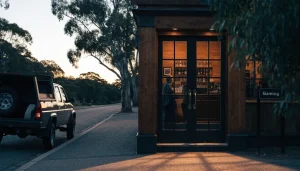
Signage around gaming areas is subject to restrictions designed to separate gambling prompts from access to cash. A sign directing patrons to a gaming lounge must be removed if it is within the line of sight of an ATM or EFTPOS terminal. Conversely, a sign directing patrons to an ATM must be removed if it can be seen from gaming machines. These rules concern the placement and direction of signs, not whether a club has machines.
That distinction matters when you assess a venue. A sign pointing towards a gaming lounge does not override the restriction on where that sign may appear, and an ATM sign visible from machines is not made acceptable simply because it gives directions. The relevant question is what the sign directs patrons to and whether it can be seen from the specified cash facility or machines.
These signage controls are separate from venue obligations such as having a Responsible gambling officer (RGO) on duty while machines are operating and recording gambling-related incidents. They address different risks: signage placement around cash access, rather than staff presence or incident records. A venue’s compliance with one requirement should not be taken as evidence of compliance with another.

If you are looking for a club in Tasmania and want to know about self-exclusion, ask the venue directly how it handles that process before you play. Do not infer that a club offers a particular control from its name, signage or online listing. This keeps the question focused on the venue’s actual arrangements, while signage remains a separate matter of where patrons can see directions to gaming areas and cash facilities.
Cashless Play and Unverified Venue Claims
A reference to cashless pokies does not establish that a Tasmanian venue has introduced them. The phrase can describe different arrangements, such as paying through a card or another account-based system, but the label alone does not tell you what equipment is installed, how a transaction works, or whether the option is available to patrons. Treat any claim as venue-specific: look for a current statement from the venue that explains the payment method and its conditions. If those details are absent, the presence of cashless play cannot be confirmed from the wording alone.
The same distinction applies to results that combine Tasmania with Newcastle. A place name in a listing or page title is not enough to establish that a venue is in Tasmania, or that it offers pokies. Check the venue’s own address and identify which locality it refers to before relying on the result. If the location is unclear, do not infer that a Newcastle venue is part of Tasmania’s local gaming scene.
These checks are about evidence, not whether a technology or venue sounds plausible. A page may use broad regional terms, repeat an outdated description, or refer to a place elsewhere. Its wording does not prove a machine type, payment facility, or current venue offering. Prefer details that can be tied directly to the specific venue, and distinguish a confirmed statement from a directory label or search snippet.
Cashless payment also does not, by itself, establish anything about a pokie’s return setting, the way its random outcomes are generated, or the venue’s other facilities. Those are separate claims and need their own evidence. Keep the conclusion narrow: if the venue has not directly confirmed the relevant feature, record it as unverified rather than treating it as available.
Are online pokies legal for Australian players?
Yes, Australian players can legally use offshore sites that accept them, but companies cannot legally offer real-money online pokies to Australians without a domestic licence, and none have been issued. If an offshore casino refuses to pay, you have no legal recourse in Australia.
Are online pokies rigged?
Each spin is an independent random event determined by a Random Number Generator. A game’s RTP setting describes its long-run theoretical return, not the result of your spins; the same pokie may also have different RTP settings at different casinos.
What does “wagering requirement” actually mean?
It is the amount you must bet before bonus winnings can be withdrawn, calculated by multiplying the qualifying bonus amount by the stated turnover requirement. For example, a $500 bonus with a 40x requirement means $20,000 in bets; if the requirement applies to a $500 deposit plus a $500 bonus at 35x, it means $35,000 in bets.
What is the cost-benefit calculation of casino promotions?
Compare the bonus’s potential value with the required turnover and any cash-out cap. For example, a $500 bonus at 40x requires $20,000 in bets, while a 35x requirement on a $500 deposit plus a $500 bonus requires $35,000; free-spin winnings may also be capped.