
Check the payment path before you deposit
Understand wallet transfers, account checks, AUD timing, app access and bonus terms, while keeping payment convenience separate from legal status.
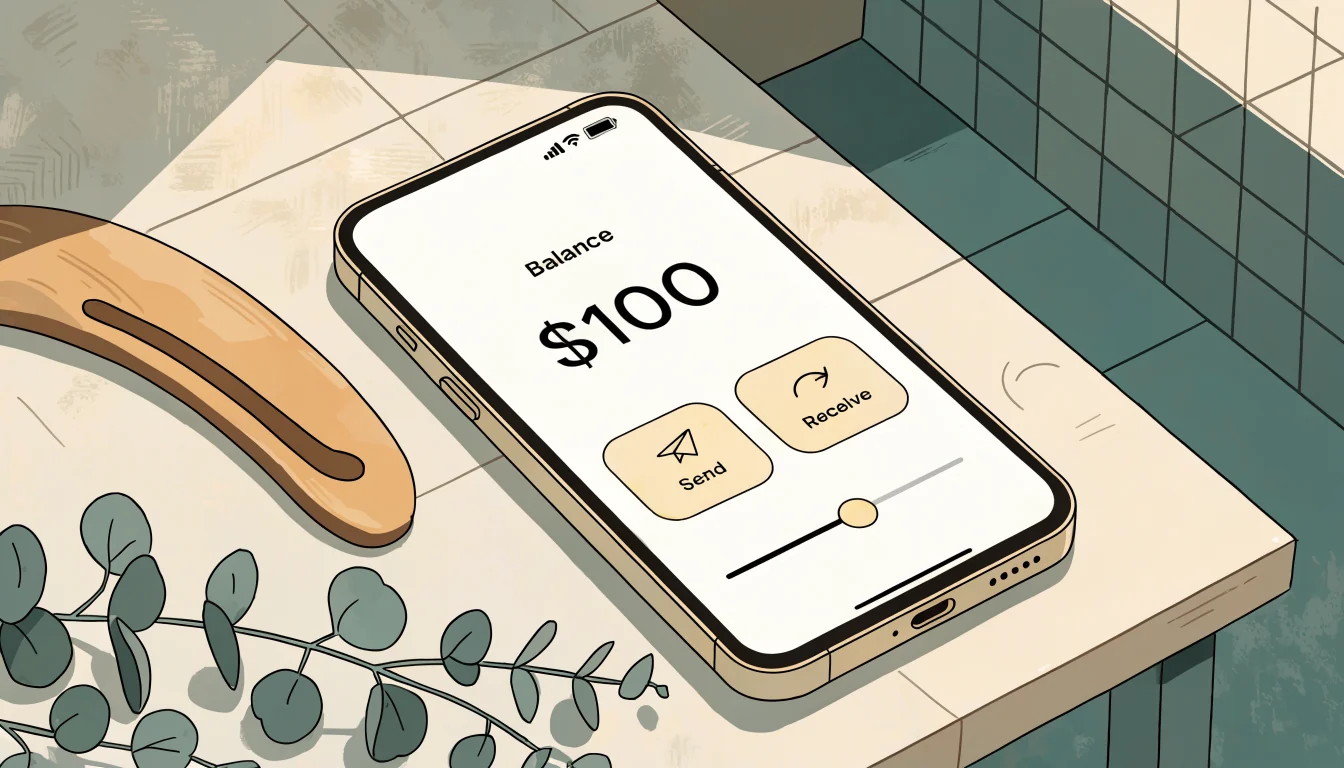
How E-Wallet Pokies Work for Australian Players
An e-wallet is a payment account that sits between your bank or other funding source and a merchant account. In a casino payment flow, you hold funds in the wallet, select it at the cashier, and authorise a transfer to the casino account. A withdrawal runs in the opposite direction: the casino sends funds to the wallet, which then holds them for you to use or transfer elsewhere. The wallet handles money movement; it does not run, supply or determine the outcome of a game.
That separation matters. A payment method can make a deposit technically possible without making the service lawful to offer in Australia. The Interactive Gambling Act 2001 prohibits operators from offering online casino-style games to people in Australia. That covers games such as pokies, as well as other casino-style games. The prohibition is directed at the operator; under that Act, an individual Australian player is not made a criminal simply for playing at an offshore casino. You must be at least 18 to register and gamble in Australia.
Casinos listed by licence
If you’re looking for online pokies with an e-wallet in Australia, check the available operator details before choosing: the information here covers licensing, minimum deposits and payout timing where provided, but does not specify e-wallet support.
-
Bizzo Casino
- License
- Curacao Gaming Control Board (TechSolutions Group N.V.)
Bizzo Casino is listed with a Curaçao Gaming Control Board licence held by TechSolutions Group N.V.
-
SpinsUp
- License
- Curacao Gaming Control Board OGL/2023/174/0082 (Dama N.V.)
SpinsUp is listed with Curaçao Gaming Control Board licence OGL/2023/174/0082, held by Dama N.V.
-
Wild Tokyo
- License
- Curacao
- Payout speed
- crypto 30-60 minutes, fiat 1-5 days
- Min. deposit
- A$10
Wild Tokyo lists a Curaçao licence and a minimum deposit of A$10. Its stated payout timing is 30–60 minutes for crypto and 1–5 days for fiat.
-
MrPacho
- Payout speed
- crypto 30-120 minutes, fiat 24-72 hours
- Min. deposit
- A$30
MrPacho lists a minimum deposit of A$30. Its stated payout timing is 30–120 minutes for crypto and 24–72 hours for fiat.
-
Rollero Casino
- License
- Curacao Gaming Control Board OGL/2023/176/0095 (Hollycorn N.V.)
Rollero Casino is listed with Curaçao Gaming Control Board licence OGL/2023/176/0095, held by Hollycorn N.V.
-
LevelUp Casino
- License
- Curacao eGaming OGL/2023/174/0082 (Dama N.V.)
- Min. deposit
- A$15
LevelUp Casino lists Curaçao eGaming licence OGL/2023/174/0082, held by Dama N.V., and a minimum deposit of A$15.
-
Ricky Casino
- Payout speed
- crypto under 1 hour, PayID 1-3 business days
- Min. deposit
- A$20 (A$30 to qualify for the bonus)
Ricky Casino lists a minimum deposit of A$20, or A$30 to qualify for the bonus. Its stated payout timing is under an hour for crypto and 1–3 business days for PayID.
-
Playfina Casino
- License
- Curacao eGaming (Hollycorn N.V., since 2017)
- Min. deposit
- A$20-30 (depends on the offer)
Playfina Casino lists a Curaçao eGaming licence held by Hollycorn N.V. since 2017. The stated minimum deposit is A$20–30, depending on the offer.
-
JustCasino
- License
- Curacao Gaming Control Board
JustCasino is listed with a Curaçao Gaming Control Board licence.
-
House of Pokies
- License
- international iGaming licence – jurisdiction not named in the source
- Payout speed
- PayID 1-24 hours
- Min. deposit
- A$30 (PayID from A$10)
House of Pokies lists an international iGaming licence, though the jurisdiction is not named in the source. Its stated PayID payout timing is 1–24 hours; the minimum deposit is A$30, or A$10 for PayID.
The payment connection
The basic flow has three parts: your wallet, your casino account and the payment connection between them. First, you create or hold an account with an e-wallet provider and fund it through a method the provider supports. At the casino cashier, you choose the wallet and enter the payment details requested. The wallet authorises the payment, and the casino credits its own account balance after it receives confirmation.
The casino balance and wallet balance remain separate records. Money displayed in the casino account is not stored inside the wallet, and the wallet does not control the casino’s games. Likewise, a game result does not come from the wallet: the wallet is only involved when funds move between accounts. This helps explain why a payment can succeed while a game session has a separate technical problem, or why a game can load without a payment being made.
For a withdrawal, the casino sends money from the casino account to the wallet rather than directly to your bank by default. Once the wallet receives it, you can keep the funds there or use an available wallet function to move them onward. The exact steps depend on the services involved. The important distinction is that the casino initiates the payout, while the wallet receives and records it.
E-wallets including MiFinity, Skrill and Neteller are used for both deposits and withdrawals at online casinos. That does not mean every casino supports every wallet, or that a wallet available for deposits is necessarily available for cash-outs. Treat the payment option as a connection between two accounts, not as a feature of the games or a guarantee about how a particular casino handles transactions.

What an e-wallet does not establish
Seeing an e-wallet option in a cashier tells you only that the site presents that payment route. It does not establish that the operator is permitted to offer online casino games to people in Australia. Payment availability and legal status are different questions: one concerns the transfer mechanism, the other concerns the service being offered.
The same distinction applies to the phrase “e-wallet pokies”. It describes a way of funding an account associated with casino-style games; it does not identify a separate kind of pokies or change how the games work. The wallet cannot make a prohibited service lawful, and the existence of a payment channel is not an endorsement of the operator.
If you are considering any real-money gambling, keep the legal context in view before focusing on the cashier. Australian law prohibits operators from providing online casino-style games to people located in Australia, while the Interactive Gambling Act does not make an individual player’s offshore play an offence. Those statements describe different responsibilities and should not be collapsed into a claim that the service is locally authorised.
An e-wallet is therefore best understood as a payment layer: it can receive funds from you, pass a deposit to a casino account, and receive a withdrawal from that account. It does not determine whether the casino may offer its games in Australia, and it does not change the legal status of those games.
Legal Risk
Under the Interactive Gambling Act 2001, it is prohibited for operators to offer online casino-style games to people in Australia.
Account Access, Verification and Withdrawal Conditions
An e-wallet login and a casino login are separate account credentials. The casino account records your balance, play and withdrawal request; the wallet account holds the payment method used to move funds. Signing in to one does not sign you in to the other. If a casino offers an e-wallet as a payment option, you still need to access the casino account to request a withdrawal and follow its instructions for sending the money to the wallet.
For Australian readers, that account process sits within a significant legal restriction. Under the Interactive Gambling Act 2001, operators must not provide real-money online casino games to people in Australia. The law does not make it illegal for an individual to play at an offshore casino, but that does not make the service locally regulated or give you the protections of an Australian casino. An offshore crypto-friendly casino may set its own account and payment conditions. If it refuses to pay winnings, there is no Australian government body that can hear a complaint against it.
What happens at the first withdrawal
A casino may let you create an account and deposit before it has confirmed your identity. That does not mean the account is fully cleared for withdrawals. The first withdrawal commonly triggers a know-your-customer (KYC) check: the operator asks you to prove that you are the account holder and that the account details are genuine. Requests can include a selfie or identity document and proof of address.

This check connects the person using the account with the identity supplied during registration. If the submitted information does not match, or an image is unclear, the casino may ask for more material before handling the request. Follow the operator’s stated upload instructions, and use its account area or documented support channel rather than sending identity documents through an unrelated link. Keep a copy of what you submitted and note any message explaining what is still required.
A withdrawal request can therefore move through distinct account states: it is submitted, reviewed, and either approved or held while the casino asks for information. The wallet itself cannot resolve a casino-side identity hold. If the account page shows a pending request, check whether the operator has requested KYC material before assuming the payment method has failed.
Deposits that do not go through
A failed card deposit does not necessarily mean that the casino account or wallet login is incorrect. Some Australian banks block or flag gambling-related card transactions, which can prevent a charge from being authorised. A specialist review has reported this as a possible issue; it is not a rule that applies to every bank or every card. If a card payment is declined, check the bank’s transaction notice or contact the bank through its official channel. Repeated attempts may not change a block applied by the bank.
Do not treat a different payment route as a workaround without first checking the casino’s account rules. A method that accepts deposits may not be enabled for withdrawals. In addition, the casino may apply a rule requiring a withdrawal to go back through the method used to deposit. A specialist review has described both same-method requirements and deposit-only methods; the conditions vary by operator. Read the cashier terms before paying, and check whether the method is listed for both directions.
DO
- Use accurate registration details
- Keep your deposit records and casino confirmations
- Use official password-recovery processes
DON'T
- Change account details during a verification review
- Use a VPN to bypass location blocks
- Assume a rejected withdrawal means funds have disappeared
Keep the account details consistent
The details attached to the casino account, identity documents and payment account may be compared during review. Use accurate registration details and make sure you understand whose name must appear on the payment account. If you need to change an account detail, ask the operator how to do so before placing a withdrawal request; changing details mid-review can prompt further checks.
Keep the deposit record and any casino confirmation available. If a withdrawal is rejected, the reason may be a missing verification document, a mismatch in account details, or a payment method that cannot receive withdrawals. Ask support to identify the specific condition and where it appears in the account terms. Do not assume that a rejected request means the funds have disappeared, but do not assume that a later payment is guaranteed either.
A login problem also differs from a verification hold. If you cannot access the casino account, use its official password-recovery process and check that you are on the correct website. If you can log in but cannot withdraw, look for a request for identity documents or a restriction attached to the selected payment method. These are different points in the process and need different remedies.
Treat any offshore account as a service outside Australia’s local casino framework. The operator may impose conditions that affect whether a withdrawal is accepted, and Australian authorities do not provide a complaints body for unpaid offshore winnings. Confirm the location is accepted before depositing, and do not use a VPN to reach a blocked casino: access through a VPN may breach the operator’s rules, void winnings and lead to account closure.

What an Australian-Facing Casino List Can—and Cannot—Tell You
A page describing an e-wallet pokies list may show which payment methods a site says it accepts, but that does not establish that the site can legally offer online casino games to people in Australia or that it will accept your account. Treat any such page as a set of claims to verify, not as proof of access, payment, or protection.
Under the Interactive Gambling Act 2001, operators are prohibited from providing real-money online casino-style games to people located in Australia. The Act does not make it illegal for an individual Australian to play at an offshore casino. These are different rules: the restriction applies to the operator providing the service, not to a player simply accessing it. A list that calls a site “Australian-facing” does not change that legal position.
What a listing can indicate
A listing might describe a site as accepting Australian punters, identify its stated licensing jurisdiction, or mention that it supports e-wallets. Such details can help you understand what the site claims to offer. They do not confirm that the site has been checked by an Australian regulator, that the information is current, or that you will be allowed to register and use the service from your location.
Curaçao, the Malta Gaming Authority and Gibraltar are among jurisdictions associated with casinos that claim to accept Australian customers. A jurisdiction named on a listing is not an Australian licence, and it does not give you the protections or complaint route of an Australian government body. Do not read a foreign licence reference as approval for the operator to provide online casino games in Australia.
A list also cannot guarantee that a payment method will work for your account. Availability can depend on the operator’s current rules and your location. Before depositing, confirm directly with the site that it accepts customers physically located in Australia and that the payment method you intend to use is available to you. If the site’s terms, cashier or support response is unclear, do not treat a third-party listing as a substitute for a clear answer.
Check location before depositing
The practical question is not whether a page uses phrases such as “e-wallet pokies Aus” or “Australian players welcome”. It is whether the operator’s own current terms allow registration and play from your location. Check the eligibility wording before creating an account or sending money. If the operator excludes Australia, or its rules do not clearly cover your situation, a listing cannot override that restriction.
The Australian Communications and Media Authority (ACMA) works to restrict access to gambling services that are illegal in Australia. A site loading successfully at a particular moment does not prove that it is authorised or that access will remain available. Nor does a broken page necessarily tell you why it cannot be reached. Access, eligibility and legal status are separate matters.
Do not use a VPN to get around a location block. A VPN can make a connection appear to come from somewhere other than your actual location, but it does not make you eligible under the operator’s terms. If the site detects that you bypassed a restriction, it may close your account and void winnings. A listing cannot remove that risk or require the operator to honour a payout.

What a list cannot protect you from
If an offshore casino refuses to pay winnings, there is no Australian government complaints body that can resolve the dispute on your behalf. That matters even when a site appears in several lists, names a foreign licensing jurisdiction, or says it accepts Australian customers. Before relying on any claim, consider what recourse you would have if the operator and you disagreed about access or payment.
An offshore crypto-friendly casino may describe e-wallets and cryptocurrency among its payment options. Those descriptions are not evidence of Australian approval, and they do not establish that a particular transaction will be accepted or that funds can be recovered if a dispute arises. A page that presents payment options should not be mistaken for an endorsement or a guarantee.
A useful list can help you identify questions to ask; it cannot answer them for every visitor or protect you from an operator’s decision. Confirm that your location is accepted before depositing, read the operator’s own terms, and treat claims about access or licensing as claims rather than assurances. If the information is inconsistent, the safest interpretation is that the site’s availability to you has not been established.
AUD Deposits and E-Wallet Withdrawal Timelines
A deposit and a withdrawal move through different systems, so their timing should not be treated as a single payment estimate. A deposit is sent from your payment method to a casino account. A withdrawal moves in the opposite direction, but it may first wait in the casino’s own pending queue before the payment provider receives it. The time shown for the provider’s transfer therefore may not include the casino’s processing stage.
Online casino-style games cannot legally be offered to people in Australia under the Interactive Gambling Act 2001, and the Australian Communications and Media Authority blocks access to illegal gambling sites. The payment details below describe claims and mechanisms reported in the market; they are not an endorsement or an invitation to use an offshore casino.
Depositing Australian dollars
The route depends on the payment method selected and the options the site displays. A specialist review describes mobile casino deposits through methods including PayID, BPAY, cards and cryptocurrency, with processing times varying by method. That is a report about possible payment rails, not a guarantee that a particular site accepts them, that a transaction will succeed, or that a displayed balance will update immediately.
PayID is described in that specialist review as near-instant for deposits and typically free. Treat both the timing and fee as claims to verify against the payment screen and the terms shown by the operator: availability and charges can differ. A successful transfer may still take time to appear in the casino balance, because the payment confirmation and the casino’s account update are separate steps.
POLi should not be assumed to be a current option. It ceased Australian operations in September 2023 and no longer processes local transactions. If a site still displays POLi, that label alone does not establish that the service can complete a local payment.
Card deposits can also fail. Some Australian banks block or flag gambling-related card charges, so a declined transaction may reflect the bank’s handling rather than an error in the amount entered. Do not keep retrying a payment without checking whether the first attempt has been debited or is still pending. A duplicate attempt can make it harder to identify which transaction needs attention. Online gambling services must not accept credit card payments.

An e-wallet creates another step in the route: funds are moved from the wallet to the casino account for a deposit, then later from the casino to the wallet for a withdrawal. E-wallets such as MiFinity, Skrill and Neteller are used for both directions, but availability and processing depend on the options supported by the site. A payment method shown for deposits should not be assumed to work for withdrawals.
Separating the withdrawal stages
For a withdrawal to an e-wallet, there are two relevant intervals. First, the casino must release the request from its pending period. Then the e-wallet transfer must be processed and credited. A specialist review reports e-wallet withdrawals arriving within 24 hours after the casino’s pending period; this is a reported timeframe, not a universal service standard. The pending period is additional, so an estimate that refers only to the transfer after release does not tell you the total time from submitting the request.
Crypto withdrawals are also described by a specialist review as being processed in under 24 hours. That report concerns processing, not necessarily the full time before funds are accessible to you. E-wallets and cryptocurrency are distinct payment routes, and a timing claim for one should not be applied to the other. Check which stage the stated estimate covers.
A bank transfer can take longer. A specialist review gives a timeframe of up to five business days for withdrawals by bank transfer. This is a different payment rail from an e-wallet transfer, and the stated duration should not be read as the time the casino takes to approve a withdrawal. It describes the transfer route; any casino pending period may come before it.
Reading a displayed estimate
When comparing a deposit or withdrawal estimate, identify the event that starts the clock. For a deposit, that might be submitting the payment or the provider confirming it. For a withdrawal, it might be submitting a request, the casino releasing it, or the payment service receiving it. Those are not interchangeable starting points.
Also distinguish a processing estimate from a promise of when money will be usable. The casino, payment provider and receiving account each handle a different part of the route. If an estimate names only one part, it cannot establish the total elapsed time.
The practical comparison is therefore not simply “e-wallet versus bank.” It is the full route: the payment method’s availability, the casino’s handling stage, and the time attributed to the transfer after release. Read the wording beside the payment option carefully, and treat broad claims about speed or fees as claims to confirm before sending funds.
Checking a Newly Offered E-Wallet Before You Use It
A wallet appearing in a casino’s cashier is not, by itself, proof that it can handle the full payment cycle. The cashier may accept it for deposits while the withdrawal page excludes it, or the operator may allow withdrawals only through the method used to fund the account. Treat a newly offered e-wallet as an option to verify, not as a recommendation or a promise that winnings can be returned to it.
E-wallets are an established payment category in this setting. MiFinity, Skrill and Neteller are examples used for both deposits and withdrawals. That does not establish that another wallet will work at a particular casino. Support depends on the specific combination of wallet, operator and transaction type, so check the casino’s own current payment information rather than inferring compatibility from the wallet’s name or from another site.

Check both directions
Look separately for the wallet in the deposit and withdrawal sections. If it appears only beside deposits, do not assume that the casino will send withdrawals to it. Some payment methods are deposit-only. A cashier can also present different options depending on the transaction, so inspect the withdrawal instructions as well as the deposit screen.
Then check whether a same-method rule applies. Specialist casino reviews report that some operators require a withdrawal to use the method used for the deposit. In practice, that can affect your choice before you make a payment: a wallet that accepts funds may not be useful for receiving a withdrawal if the operator’s rules direct the money elsewhere or do not permit that wallet for payouts.
Read the wording closely. “Accepted” may describe deposits only; “withdrawal available” may be subject to an additional rule. Look for an explicit statement about whether the wallet can be used for both directions and whether deposits made through it must be returned through the same method. If the terms are unclear or contradictory, ask the operator to explain the rule in writing before relying on that wallet.
Match the names and instructions
Check that the wallet named in the cashier is the same service you intend to use. Similar labels, payment intermediaries or separate wallet products should not be treated as interchangeable unless the operator says they are. Follow the payment instructions shown for the selected method, and confirm that the account details you provide belong to the wallet you control.
- Check if the wallet is available in both the deposit and withdrawal sections
- Confirm if a same-method rule applies to your account
- Verify the wallet name matches your intended service
- Ensure the casino accepts your physical location
The casino’s payment page and the wallet’s own instructions serve different purposes. The casino describes which methods it will accept and how it handles deposits or withdrawals. The wallet describes how to access and use your wallet account. Neither statement alone confirms the other side of the transaction. Verify both before moving money.
If a method is unavailable at the point you need it, do not assume that support can override the cashier rules. Ask whether the restriction concerns deposits, withdrawals or both, and whether using another method would change the withdrawal route. Keep the answer and the relevant terms available so you can compare them with what the cashier actually offers.
Check location and legal context
For Australian residents, first confirm that the site accepts customers in your location before depositing. An offshore operator’s payment options do not change the legal position: the Interactive Gambling Act 2001 prohibits operators from providing online casino-style games to people in Australia, while the Act does not make it illegal for an individual to play at an offshore casino. The Australian Communications and Media Authority blocks access to illegal gambling sites. Using a VPN to reach a blocked site may breach the operator’s rules, void winnings and lead to account closure.
An offshore operator is not covered by an Australian government complaints body for disputes over unpaid winnings. If the operator refuses to pay, you cannot take the complaint to an Australian government gambling regulator for resolution. That risk is separate from whether the wallet itself is legitimate or whether its payment screen looks familiar.

Before proceeding, make sure the cashier answers the practical questions: can this wallet fund the account, can it receive withdrawals, and does the operator require the same method for both? If any answer is absent, do not treat the wallet’s appearance in a menu as confirmation. A payment method is usable only when the operator’s rules and the transaction options support the action you intend to take.
Browser Play, PWAs and Sideloaded Casino Apps
Mobile access can take three forms: a website opened in a browser, a Progressive Web App (PWA) saved to your home screen, or an app installed from outside an official app store. These are different ways to reach a service; they do not change the legal status of the service or make an unavailable site accessible.
Browser access
A mobile browser loads the casino website directly. For Australian users, this is the most common format: casino apps are seldom available through Google Play or Apple’s App Store in Australia, so the website is generally the access route. The same account may be used in a mobile browser and on desktop, which means switching devices does not itself require a separate account.
Browser play also avoids installing a separate application. The site runs within the browser, so access depends on the browser and the device’s connection. If a page does not load, repeatedly changing access methods does not establish that the site is permitted to serve Australian users.
A PWA shortcut
A PWA is a shortcut to a website that can behave more like a native app on a mobile device. It does not turn the website into an app approved by Google Play or Apple’s App Store. To add one, you use the prompt on the casino website to install it or add it to the home screen, then confirm the action. The shortcut provides another way to open the site; it is not a separate account or a different gambling service.
Does using a VPN make me eligible to play?
No, using a VPN to bypass location restrictions can lead to account closure and voided winnings.
Can I use any mobile device to access a casino?
Yes, you can use a mobile browser, a PWA shortcut, or a sideloaded app, but these do not change the legal status of the service.
Are casino apps available on official stores in Australia?
Casino apps are seldom available through Google Play or Apple’s App Store in Australia.
Casinos that accept Australian players tend to rely on browser access or PWAs rather than native mobile apps. That describes a technical format, not legal approval. Under the Interactive Gambling Act 2001, operators cannot offer online casino-style games to people in Australia. The law does not make it illegal for an individual Australian to play at an offshore casino, but that does not make the operator’s service lawful to provide here.
Apps installed outside official stores
An app offered as a download from a casino website, rather than through an official store, is sideloaded. Installing it gives software access to your device, so its security depends on the operator and on what the app requests or does. A download link alone does not verify that an app is safe. If you cannot establish who supplied it and how it handles device access, do not treat it as equivalent to an app reviewed through an official store.

Access can also be affected by Australian Communications and Media Authority (ACMA) blocks on illegal gambling sites. Do not use a VPN to get around a block: reaching a site that way may breach its conditions, lead to account closure and put winnings at risk of being voided. Before making any deposit, confirm that the site accepts your location. If an offshore casino refuses to pay, there is no Australian government body that can handle a complaint against it.
The access format is therefore a narrow technical choice. A browser page, a home-screen PWA and a sideloaded app can all point to a website, but none removes the legal and security risks associated with an offshore gambling service.
E-Wallet Deposits and No-Deposit Bonus Terms
A no-deposit offer describes how a bonus is awarded, not whether its winnings can be withdrawn. The wallet is a payment route; it does not remove the conditions attached to a promotion. Before claiming an offer, read the full terms and check what must happen before any resulting balance becomes cashable.
Start with the wagering requirement. It states how much qualifying play is required before the bonus or related winnings can be withdrawn. A specialist review describes welcome-bonus requirements in the range of 30x to 50x the bonus amount, while treating requirements above 40x as steep. These are assessments, not a guarantee of what a particular offer requires. Check the exact calculation in the offer’s terms, including whether it applies to the bonus, winnings, or another stated amount.

Then check game restrictions. The terms may define which games count towards the requirement, or how much each game contributes. If a game is excluded or contributes less, playing it may not advance the requirement as expected. Do not infer eligibility from a game’s name or category; use the offer’s own rules.
Expiry is a separate condition. A bonus can have a deadline for completing wagering, and missing it may cause the bonus to be removed. Check when the period starts and what happens to any associated winnings if it ends before the requirement is met. The headline offer does not answer those questions.
Look for a cashout cap as well. It can limit the amount payable from bonus play even after the wagering requirement has been completed. Also check whether a minimum deposit is required to activate or withdraw from an offer described as “no deposit”; the label alone does not establish that no other condition applies. Wagering, any deposit condition and the time allowed all affect the practical value of the offer.
These terms should be read as conditions, not as a reason to gamble. Online casino-style games cannot lawfully be offered to people in Australia under the Interactive Gambling Act 2001. If you encounter an offshore crypto-friendly casino, confirm that it accepts your location before depositing. Australian players have no government complaints body to turn to if an offshore casino refuses to pay winnings; using a VPN to reach a blocked site may void winnings and close the account.
Can I use PayID at Australian casino apps?
Yes, PayID is available for deposits at some mobile casinos and is typically near-instant and free. Its availability does not mean the casino is authorised to offer online pokies in Australia.
Can players use real-money mobile casinos in Australia?
Yes, individual players are not made criminals under the Interactive Gambling Act 2001 for playing at offshore casinos. However, operators are prohibited from offering online casino games to people in Australia.
Is mobile casino gambling legal in Australia?
The law prohibits operators from offering online casino-style games to people in Australia, including through mobile sites. Playing at an offshore casino is not an offence for an individual player under the Interactive Gambling Act 2001.
Can I play mobile casinos for real money without an app?
Yes, most mobile casinos are accessed through a browser, using the same account as on desktop. Some also offer a Progressive Web App that you can add to your home screen.
What is the fastest way to get a withdrawal from a mobile casino?
Crypto and e-wallet withdrawals are typically processed in under 24 hours, with e-wallet funds usually arriving within 24 hours after the casino's pending period. A first withdrawal may take longer if identity verification is required.
Do players usually need to download a dedicated casino app?
No, most Australian mobile casinos are used through a browser, and dedicated casino apps are rarely listed in the Google Play or Apple App Store. Some casinos offer a Progressive Web App that can be added to your home screen.
What is the real difference between a native app and a mobile browser casino?
A browser casino runs through the casino's website, while a native app is installed as an app on your device. Some casinos offer a Progressive Web App, which is a website shortcut that behaves much like a native app.