
Understand the limits before you use crypto
Bitcoin changes how funds move, but it does not guarantee anonymity or remove the legal and practical risks of offshore casino play.

What Bitcoin Changes—and What It Does Not
Bitcoin changes the asset used to move value between you and an offshore casino. It does not, by itself, make gambling anonymous. A payment made in BTC still leaves a record on the Bitcoin blockchain: transactions and wallet addresses can be publicly inspected, even though an address does not automatically display its owner’s name. If an address is linked to you through other information, the public record may become easier to attribute.
That distinction matters when a service is described as an anonymous Bitcoin casino. The wording can refer to accepting BTC, but payment in Bitcoin is not proof that the service knows nothing about you or will never ask you to verify your identity. The coin is a payment method, not an identity shield. A crypto payment also does not remove the ordinary risks of gambling or establish that a platform can be used without consequences.
Bitcoin’s design affects the movement of funds. A transaction is broadcast to the network and included in the public ledger when confirmed. The process is not the same as sending a bank transfer, and the time before a payment is recognised can depend on network conditions and the service’s own processing. Once a transfer has been sent to an address, it cannot simply be cancelled through a bank or reversed by the sender. Those properties apply whether a site describes itself as a no-KYC casino or uses some other label.
Bitcoin also differs from assets and networks that can move funds faster or with lower transfer fees. Those alternatives may be more suitable when speed or transaction cost matters more than using BTC specifically. The trade-off is not simply “Bitcoin is slow” or “another coin is better”: the result depends on the asset, its network, network conditions, and how the receiving service handles deposits and withdrawals. A casino’s acceptance of Bitcoin does not tell you how quickly it will process a withdrawal.

A specialist review has characterised Bitcoin as a better fit for larger, less frequent cashouts when waiting around half an hour is not important. Treat that as a particular assessment, not a universal payout rule. Whether it fits your situation depends on the amount, the time you are willing to wait, and the costs and price exposure involved. No payment asset makes a withdrawal immediate or guarantees that a platform will release funds on a particular schedule.
Price movement is a separate risk from transfer speed. Bitcoin’s value against the Australian dollar can change between the time you acquire it, deposit it, and later withdraw or sell it. A balance shown in BTC may remain unchanged while its Australian-dollar value moves. The reverse is also possible: the coin’s value may rise before you convert it. So the amount returned in cryptocurrency and the amount it is worth in dollars are not the same measure.
This means a gambling result and a financial result can diverge. You might receive the same quantity of Bitcoin that you deposited, yet find that its value in Australian dollars has fallen. Or a balance that has increased in BTC may be worth less than expected if the market price has declined. The timing of conversion matters because the casino balance is denominated in crypto while your spending decisions may be in Australian dollars.
Bitcoin is not the only crypto payment option. Offshore crypto casinos commonly accept Bitcoin and Ethereum, along with stablecoins and other cryptocurrencies. The existence of alternatives does not make every asset interchangeable: each has its own network and price behaviour. A stablecoin is intended to track another asset’s value, but that label alone does not remove transaction, platform, or conversion risks.
Nor does a casino bonus become anonymous or risk-free because it is denominated in Bitcoin. A promotional offer is a separate set of terms from the payment method. The coin does not tell you whether an offer is available, what conditions apply, or whether a withdrawal will be approved. Do not treat “anonymous casino bonus” as a promise created by using BTC; the payment asset cannot establish the terms of a promotion.
The useful way to think about Bitcoin is therefore narrow and practical: it is a digital asset that can be transferred through its network and accepted by some offshore gambling services. It can suit a larger, less frequent cashout when the wait is acceptable, while other crypto options may better suit a priority on speed or fees. None of those characteristics makes a casino truly anonymous, fixes the Australian-dollar value of a balance, or removes the risks attached to sending and holding cryptocurrency.
The Legal and Regulatory Position for Australians
The key distinction is between the rules governing operators and the position of an individual player. Under the Interactive Gambling Act 2001, operators cannot provide real-money online casino games to people located in Australia. This applies even if the service is based overseas or accepts cryptocurrency. A foreign licence does not make an offshore casino an Australian-licensed service.
That means there is no Australian regulatory framework that authorises an online casino to offer real-money casino games to Australian residents. Offshore crypto casinos operate outside that framework: they are not licensed in Australia and are not regulated by Australian authorities. Their use of digital currency does not change the legal status of the service.
The Australian Communications and Media Authority (ACMA) is the regulator responsible for online gambling under the Act. Its role concerns the operation of prohibited gambling services, not the creation of a local licence for offshore casinos. An operator’s statements about its overseas registration, licence or business location should not be mistaken for Australian approval.

What the law means for players
The Act targets operators that provide prohibited online casino services, rather than making it a criminal offence for an individual in Australia to access an offshore casino. It is not illegal for an Australian individual to gamble at an offshore online casino. That distinction does not mean the service is lawful to provide in Australia, or that the player is dealing with a locally regulated business.
It also does not give you Australian consumer protections when you use an offshore platform. Australian authorities do not regulate these casinos as domestic services, so you cannot treat an offshore licence or the operator’s own policies as equivalent to oversight under Australian rules. If a dispute arises, the fact that a platform accepts Australian customers does not make it subject to the same local regulatory framework as an Australian-regulated service.
This matters when a site describes itself as “licensed” or presents its use of crypto as a route to anonymous play. Those descriptions do not establish that it has an Australian licence. Nor does a crypto payment method create a legal exemption or provide a guarantee that you will not be asked to verify your identity. The word “anonymous” is a platform claim, not a regulatory status.
How to read claims about legality
Separate three questions: where the operator is based, whether it holds a licence somewhere, and whether it is authorised to provide online casino games to people in Australia. The first two do not answer the third. Under the Australian framework, offshore crypto casinos are not licensed here and sit outside Australian regulatory oversight.
Legal Status
Offshore crypto casinos are not licensed in Australia and operate outside the local regulatory framework. They do not provide Australian consumer protections.
The same distinction applies to the player’s position. You are not committing a criminal offence simply by gambling at an offshore casino, but that does not turn the operator into an approved Australian provider or bring the service within local consumer protections. Legal exposure and practical risk are not the same thing: the absence of a player offence does not make an offshore service safe, supervised or accountable to Australian authorities.
You must be at least 18 to gamble. Age eligibility does not alter the operator’s obligations under the Interactive Gambling Act, and meeting it does not establish that an offshore platform is regulated in Australia. Treat claims about Australian legality, anonymity or protection as separate matters, and do not infer local approval from the fact that a website is accessible or accepts Australian customers.
How Offshore Casino Play Works—and Where the Limits Are
An offshore casino is a gambling service operated from outside Australia and accessed through a website or, where available, a mobile interface. The basic arrangement has three parts: you, the platform that holds your account and handles play, and the software that presents the games. Using cryptocurrency changes the payment method; it does not change that arrangement.
When you use the service, the platform records activity against an account or other identifier it assigns to you. Its interface sends your actions to the game software and displays the resulting outcome. The platform also keeps records needed to manage account activity and transactions. The precise setup can differ between services, so the word “anonymous” should not be taken to mean that no account information or activity records exist.

A crypto wallet is not the same thing as an identity-free account. A wallet address can be used to send or receive funds without putting your name directly in the transaction, but that alone does not establish who controls the wallet. It also does not prevent the platform from asking for identifying information. An operator may require identity checks under its own account conditions or when reviewing activity, and you cannot assume that a crypto deposit will let you avoid them.
This distinction matters if you are looking for an anonymous online casino or a no-KYC service. Those labels describe claims about account access, not a legal status or a guarantee about how the platform will handle your information. A service may advertise limited registration and still ask you to verify your identity later. If you cannot or will not complete a requested check, access to the account or funds may be affected under that service’s procedures. Read the conditions before creating an account, and do not treat a label as proof that identity checks will never apply.
For Australians, the legal position concerns the operator as well as the player, but the consequences are not the same. The Interactive Gambling Act 2001 prohibits operators from providing real-money online casino games to people in Australia. The law targets operators, not individual players: accessing an offshore casino is not a criminal offence for the user. That does not make the service an Australian-licensed option. Offshore crypto casinos are not regulated by Australian authorities and do not provide Australian consumer protection.

That absence of local oversight changes what you can rely on if a dispute arises. An offshore platform’s account terms and complaint process are not a substitute for protections from an Australian regulator. A site’s appearance, its use of familiar payment technology or its claims about privacy do not establish that it is lawful to offer its games to people in Australia. Cryptocurrency is a means of transferring value, not a permission to operate.
You must be 18 or older to gamble. Age eligibility is separate from identity verification: meeting the age requirement does not mean a platform will accept you without checks, and a crypto wallet does not prove your age. Keep those questions distinct when reading a service’s terms.
The practical limit of “anonymous” play is therefore straightforward. You may be able to interact with a platform using a wallet address or an account name that is not your legal name, but this does not guarantee anonymity, remove identity checks, or change the Australian legal framework. Before treating any claim as meaningful, identify exactly what it promises: reduced information at sign-up is not the same as no verification, no records, or protection under Australian law.
Crypto Deposits, Withdrawals and Bonus Terms
A crypto transaction has several separate stages: the casino sets a deposit amount, you choose an asset and blockchain network, the transaction is broadcast, and the receiving service waits for the required confirmations before crediting it. A withdrawal runs in reverse, but the operator may also review and process the request before sending it. These stages explain why a payment can appear on a blockchain before the balance on a casino account changes.
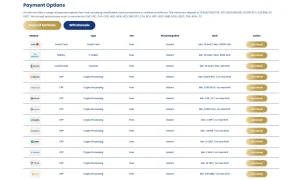
Minimums are set by the operator and can differ by currency. A specialist review reports minimum deposits ranging from AUD 15 to AUD 30 at most of the operators it examined, with Bitcoin minimums often between AUD 30 and AUD 50. Another specialist review has reported deposits starting at $5 at listed casinos. These are attributed observations, not a universal schedule: check the current cashier terms for the specific asset before sending funds. A minimum shown in one currency may also be converted when you select another.
Network selection and confirmations
A coin name alone is not enough to identify where to send funds. Some assets can be transferred over more than one blockchain network, and the casino’s deposit instructions specify which network its receiving address supports. The network selected in your wallet must match those instructions. Sending on a different network can leave the funds inaccessible or require recovery that is not available; blockchain transfers may be irreversible.
Before confirming a transfer, compare the address and network shown in the casino cashier with the details in your wallet. Check the asset as well: a Tether deposit, for instance, must use the supported Tether network, not simply an address that looks compatible. Do not rely on a previous address or saved transaction details without checking the current instructions.
DO
- Compare the casino address and network with your wallet details.
- Check the specific supported network for your chosen asset.
- Verify the current cashier terms for minimum deposit amounts.
DON'T
- Rely on a previous address or saved transaction details.
- Send funds on a different network than the one specified.
- Assume "instant withdrawal" means immediate arrival of funds.
After broadcast, the network processes the transaction and records confirmations. The receiving platform may wait for a certain confirmation state before crediting the deposit. Withdrawal timing likewise depends on operator processing and the network’s confirmation activity. A wallet can show that a withdrawal was sent while the receiving wallet is still waiting for confirmation. “Instant withdrawal” therefore needs to be defined: it might refer to operator approval, broadcast to the network, or arrival after confirmations. Those are different events, and the label alone does not establish an arrival time.
Fees also depend on the chosen asset and network. A specialist review describes TRC-20 transfers as costing cents, and identifies Litecoin and Tether on TRC-20 as options associated with quick confirmation and low fees. These observations do not guarantee the fee or speed of a particular transaction: check the cashier’s supported networks and the fee displayed before sending.
Value changes and bonus wording
The AUD value of crypto can change between the moment you deposit and the moment you withdraw. A balance displayed in coins may therefore represent a different Australian-dollar amount later, even if the number of coins has not changed. Network fees and conversion rates can affect the amount received as well. Consider the value at each transaction point, not only the initial deposit amount.
There is also a tax distinction: depositing cryptocurrency into a casino can itself count as a capital gains tax event, separate from any subsequent win or loss. The relevant disposal is the transfer of the crypto, so keep records of the asset, transaction date, value and fees. For advice about your circumstances, consult a qualified Australian tax professional.
A “no-deposit bonus” is a promotional claim, not a transaction feature that can be assumed to exist. No bonus should be treated as available merely because a page or search result uses that phrase. If an offer is displayed, read its current terms before relying on it: eligibility, identity checks, withdrawal conditions and any restrictions can affect whether a promotional balance can be used or withdrawn. Never send funds or provide personal details on the assumption that a bonus is guaranteed.
How to Assess an Anonymous Crypto Casino Without a Ranking
Casinos listed by licence
If you’re considering an anonymous crypto casino in Australia in 2026, use this list as a starting point for checking each option’s available details. Confirm that the operator’s terms and payment methods suit you before signing up.
-
Bizzo Casino
- License
- Curacao Gaming Control Board (TechSolutions Group N.V.)
Bizzo Casino is listed with a Curacao Gaming Control Board licence associated with TechSolutions Group N.V.
-
SpinsUp
- License
- Curacao Gaming Control Board OGL/2023/174/0082 (Dama N.V.)
SpinsUp is listed with Curacao Gaming Control Board licence OGL/2023/174/0082, held by Dama N.V.
-
Wild Tokyo
- License
- Curacao
- Payout speed
- crypto 30-60 minutes, fiat 1-5 days
- Min. deposit
- A$10
Wild Tokyo is listed as Curacao-licensed, with a minimum deposit of A$10. Its stated payout times are 30–60 minutes for crypto and 1–5 days for fiat.
-
MrPacho
- Payout speed
- crypto 30-120 minutes, fiat 24-72 hours
- Min. deposit
- A$30
MrPacho has a stated minimum deposit of A$30. Its listed payout times are 30–120 minutes for crypto and 24–72 hours for fiat.
-
Rollero Casino
- License
- Curacao Gaming Control Board OGL/2023/176/0095 (Hollycorn N.V.)
Rollero Casino is listed with Curacao Gaming Control Board licence OGL/2023/176/0095, held by Hollycorn N.V.
-
LevelUp Casino
- License
- Curacao eGaming OGL/2023/174/0082 (Dama N.V.)
- Min. deposit
- A$15
LevelUp Casino is listed with Curacao eGaming licence OGL/2023/174/0082, held by Dama N.V. The stated minimum deposit is A$15.
-
Ricky Casino
- Payout speed
- crypto under 1 hour, PayID 1-3 business days
- Min. deposit
- A$20 (A$30 to qualify for the bonus)
Ricky Casino lists crypto payouts in under an hour and PayID payouts in 1–3 business days. Its minimum deposit is A$20, or A$30 to qualify for the bonus.
-
Playfina Casino
- License
- Curacao eGaming (Hollycorn N.V., since 2017)
- Min. deposit
- A$20-30 (depends on the offer)
Playfina Casino is listed as licensed by Curacao eGaming, with Hollycorn N.V. named as the holder since 2017. Its minimum deposit is A$20–30, depending on the offer.
-
JustCasino
- License
- Curacao Gaming Control Board
JustCasino is listed with a Curacao Gaming Control Board licence.
-
House of Pokies
- License
- international iGaming licence – jurisdiction not named in the source
- Payout speed
- PayID 1-24 hours
- Min. deposit
- A$30 (PayID from A$10)
House of Pokies lists an international iGaming licence, but the jurisdiction is not named. Its stated PayID payout time is 1–24 hours; the minimum deposit is A$30, or A$10 for PayID.
A claim that an offshore casino is “anonymous” needs to be examined as a set of specific promises, not accepted as a description of the whole service. Paying with cryptocurrency may reduce the personal details entered at the payment stage, but it does not establish that the operator cannot identify you, that you can use the account without identity checks, or that your activity is risk-free.
Start by separating three questions: what information the service asks for when you register, what information it may request later, and what information is attached to a crypto transaction. A platform may allow an account to be created with limited details yet reserve the right to request identity documents before allowing an account action. Read the terms and privacy information for the circumstances in which checks can occur, what documents may be required, and how personal information is handled. If those conditions are unclear, a broad “no-KYC” label does not resolve the uncertainty.
- Check what information is required during registration.
- Review if the platform can request identity documents later.
- Verify if the privacy notice explains how data is handled.
- Confirm if the "no-KYC" claim is specific or absolute.
Test the claim against the terms
Look for precise conditions rather than promotional wording. Does the site explain when it can verify identity, restrict an account, or ask for further information? Are there statements that conflict across its registration screens, terms, and privacy notice? If the service uses phrases such as “anonymous play”, check whether they refer only to a particular step, such as account creation, or imply that no personal information will ever be requested.
Do not infer that an identity check will never happen because you have not been asked for documents at the outset. Nor should you assume that using a wallet rather than a bank card makes the account anonymous. Cryptocurrency transactions are not a substitute for the operator’s own account policies, and the operator may still apply checks under its terms.
A useful assessment records what is stated, where it is stated, and what remains vague. If the privacy notice does not explain data handling, or the terms give the operator broad discretion without explaining the process, treat the anonymity claim as limited rather than filling in the gaps with assumptions. This is an evaluation of the claim, not a guarantee about what the operator will do.

Separate privacy from protection
Even a clearly described privacy policy does not make an offshore service regulated in Australia. Offshore crypto casinos are not licensed here and sit outside Australia’s regulatory framework. They do not provide Australian consumer protection. A foreign licence, a privacy statement, or a promise of discreet access should not be mistaken for Australian oversight.
That distinction matters if a dispute arises. A platform’s own terms explain what it says it will do; they do not create the protections associated with Australian regulation. Assessing an anonymity claim can help you understand what information might be requested, but it cannot make the service accountable to Australian authorities as a locally regulated casino.
The Australian Communications and Media Authority monitors online gambling activity, including activity involving cryptocurrency. Crypto use therefore does not place a service outside regulatory attention. A site’s claim that it is private, decentralised, or crypto-only does not establish that it can lawfully provide online casino services to people in Australia.
Use a cautious checklist
Before relying on a “no-KYC” or anonymous-play claim, check whether the service:
- defines what it means by anonymity and limits the claim to a specific process;
- explains when identity checks may be requested and what happens if you do not complete them;
- provides accessible terms and a privacy notice that do not contradict the claim;
- identifies its regulatory status clearly, without suggesting that an overseas authorisation is Australian approval.
If those points cannot be established from the service’s own information, the claim is not a dependable basis for deciding how much personal information you may need to provide or what recourse you would have. Do not treat a lack of visible checks as proof that checks will not occur.
You must be at least 18 to gamble. That age requirement does not change because a service accepts crypto or describes itself as anonymous. Assess the limits of the claim before sharing information or interacting with an offshore platform, and do not equate reduced disclosure at one step with anonymity across the entire service.
Casino Domains, Access and ACMA Blocking
An offshore casino site can become unreachable from Australia even if its address worked before. The Australian Communications and Media Authority (ACMA), the online gambling regulator, can require internet service providers (ISPs) to block access to offshore gambling domains that provide prohibited services. The restriction is applied through the ISP, so the same address may behave differently depending on where you connect from.
This is a domain-access issue, not necessarily evidence that the site has closed. A block may prevent a browser from reaching the address while the service continues operating elsewhere. Conversely, a page failing to load does not by itself tell you whether ACMA action, a technical fault or some other change caused the problem. The blocklist and enforcement activity can change, so access at one point does not establish that the same address will remain available.
A specialist account of enforcement reported that blocking notices had covered hundreds of domains by mid-2025. That figure describes notices reported by that date; it should not be treated as a fixed total or a forecast of which addresses will be blocked next. ACMA actively monitors online gambling, including activity involving cryptocurrency, so using digital currency does not place a site outside the regulator’s attention.

For you, the practical consequence is instability of access. A saved bookmark, a link in an old article or an address that previously opened may stop working without advance notice. A replacement address, if one appears, is not proof that the service is lawful in Australia, regulated by Australian authorities or covered by Australian consumer protection. A change in address also does not establish that the operator behind it is the same one you encountered before.
Treat accessibility and legitimacy as separate questions. A page loading successfully only confirms that your connection reached a page at that moment; it does not confirm the site’s regulatory status or the safety of using it. If access fails, avoid assuming that changing networks or following an unfamiliar alternative link resolves the underlying issue. Those steps can expose you to misleading pages, and they do not remove the possibility of further blocking.
ACMA blocking is therefore one reason an offshore casino address may disappear from your view without warning. It concerns whether an Australian ISP allows access to a particular domain, not whether the service has gained approval or protection for Australian users.
Which Cryptocurrencies Casinos Commonly Accept
Offshore crypto casinos may support several kinds of digital asset, but the exact selection differs by platform. Bitcoin and Ethereum are prominent options; Tether (USDT) is a stablecoin, while Litecoin and Ripple are also commonly accepted. Some platforms may support assets such as Solana or Dogecoin. This is a broad picture of currencies used in the sector, not a guarantee that any particular casino accepts all of them.
Bitcoin
A prominent cryptocurrency used for transfers, though processing times depend on network conditions.
Ethereum
A widely accepted cryptocurrency option alongside Bitcoin.
Tether (USDT)
A stablecoin designed to track the value of a fiat currency.
Altcoins
Other common options including Litecoin, Ripple, Solana, or Dogecoin.
The categories matter because they behave differently. Bitcoin and Ethereum are separate cryptocurrencies with their own networks. Tether is designed to track the value of a fiat currency, rather than fluctuate in the same way as a typical crypto asset. That design does not remove every risk: its value and availability can still be affected by the asset, issuer and network involved. Litecoin, Ripple and other altcoins add further choices, but their presence on a casino’s payment page must be checked directly.
A currency name alone may not identify the payment route. Some assets can be transferred using different blockchain networks, and a receiving address is intended for a particular asset and network combination. Before sending funds, compare the casino’s instructions with the wallet details you are using. Selecting an incompatible network can result in funds being lost or difficult to recover. Crypto prices can also change between a deposit and a later withdrawal, so the amount’s value in Australian dollars may not remain the same.
A long list of supported coins does not establish that a casino is anonymous. Using cryptocurrency does not guarantee that you can play without identity checks, nor does it remove financial or access risks. The payment options describe what an operator says it can receive or send; they do not establish the platform’s regulatory status or provide Australian consumer protection.

For Australians, offshore crypto casinos are not regulated by Australian authorities. Anyone considering gambling must be at least 18 years old. Treat a currency menu as a platform-specific detail, not as proof of safety, anonymity or suitability. Verify the asset and network shown for the intended transaction rather than assuming that support for one coin implies support for another.
Mobile Access Does Not Change the Underlying Risks
A phone changes how you reach an offshore casino site; it does not change what the service is or which rules apply. A mobile browser, shortcut or app-like interface is still a route to the same offshore operator. The screen size and installation method do not give the service Australian authorisation or add Australian consumer protections.
The Interactive Gambling Act 2001 prohibits operators from providing real-money online casino games to people in Australia. Offshore crypto casinos are outside the Australian regulatory framework and are not regulated by Australian authorities. If a dispute arises, using a mobile interface does not create local oversight or consumer protection that the operator otherwise lacks. The legal position attaches to the service, not to the device you use to reach it.

An app label is not proof of anonymity either. Crypto payments do not guarantee that an operator will let you use its service without identity checks, and an app or mobile site cannot remove the possibility of account restrictions or other risks. Treat claims such as “no-KYC” as claims to examine, not as a promise that your identity will never be requested. The interface alone cannot establish how an operator handles verification or account information.
ACMA actively monitors online gambling activity, including activity involving cryptocurrency. That monitoring is relevant whether you access a service through a desktop browser, a phone browser or an app-style interface. Moving the same activity to a mobile device does not place it outside regulatory attention.
You must be at least 18 to gamble. Before installing software or entering account details, consider what access the software requests and whether the source and operator are identifiable. Do not assume that an app-store presence, a polished mobile layout or a familiar payment option means the service is regulated in Australia. Nor does a phone’s privacy setting make gambling anonymous: it controls aspects of the device or connection, not the operator’s verification rules or the service’s legal status.
The practical distinction is simple: mobile access is a delivery method. It may change how pages are displayed and how you interact with them, but it does not change the offshore service’s regulatory position, create Australian consumer safeguards or prevent ACMA from monitoring online gambling activity.
Why Older Casino Lists Need a Date Check
A list published in 2024 is a record of what its publisher described at that time, not a current endorsement. Its date matters because rules for licensed domestic wagering services changed during 2024, and the change affects how crypto-related claims should be read.
From 11 June 2024, licensed wagering services in Australia could no longer accept credit cards or digital currency for wagering. That rule concerns services licensed domestically; it does not turn an offshore crypto casino into a licensed Australian service. A list that groups platforms together under labels such as “Australian” or “anonymous” may therefore blur distinctions that matter. Read its description of each service and the date of publication rather than treating a category label as evidence of its status.

The phrase “anonymous casino” also needs careful interpretation. A list may use it to describe a crypto payment option, but that does not establish that a service allows play without identity checks or that it is regulated in Australia. Nor does an old entry confirm that its description remains accurate. Treat the wording as a claim made by the publisher, not as a guarantee about the service today.
A practical date check is simple: note when the list was published or last updated, then compare its statements about Australian rules with the change that took effect on 11 June 2024. If it presents crypto payments at a licensed domestic wagering service as available after that date, the entry may be stale or imprecise. If it does not distinguish domestic services from offshore ones, do not assume the same rules or protections apply to both.
A dated list can help explain what its publisher covered at a particular time. It cannot, by itself, establish a platform’s current status or make an old description a reliable basis for a decision.

New Casino Domains Can Disappear Without Notice
A newly encountered offshore casino domain may not remain reachable. ACMA can direct Australian internet service providers to block prohibited gambling sites, and the regulator actively monitors online gambling, including activity involving cryptocurrency. Once a block takes effect, the address may stop loading through an Australian connection, even if the site was accessible earlier.
This is a changing access condition, not evidence that a domain has closed permanently or that a replacement address is safe. By mid-2025, blocking notices had covered hundreds of domains, according to a specialist review. That figure describes notices issued by that point; it does not predict which address will be affected next or when.
If a site becomes unreachable, avoid treating a new address circulated elsewhere as confirmation that the service is trustworthy or available on the same terms. A changed domain can make it harder to distinguish the platform from an imitation, while a block may interrupt access without warning. Keep records of any transactions and account communications you already have, but do not send funds to an address merely because it is presented as a replacement.
Domain availability is therefore temporary and separate from the claims made about a platform. A site that loads today may be blocked later, and no stable address should be assumed.
What should I check before depositing on an offshore crypto casino from Australia?
Check that you understand the casino is not licensed in Australia and operates outside the Australian regulatory framework. Also consider that crypto transfers cannot simply be reversed and that the Australian-dollar value of your deposit can change.
Which cryptocurrencies do crypto casinos accept?
Bitcoin and Ethereum are widely accepted, along with stablecoins such as Tether (USDT), Litecoin, and other altcoins. Some casinos also accept Solana or Dogecoin.
Can Australians use Bitcoin to gamble online?
Yes, an individual in Australia does not commit a criminal offence by gambling at an offshore online casino. However, offshore casinos are not licensed in Australia, and the law prohibits operators from providing real-money online casino games to people in Australia.