
Separate payment claims from casino access
BPAY availability concerns how funds may move, while legality and withdrawal timing require separate checks.

What Payment Acceptance Can—and Cannot—Tell You About Online Casino Access
A payment option and permission to provide a gambling service are separate questions. Seeing BPAY mentioned in connection with a casino account would not, by itself, show that the operator may lawfully offer online casino games to people in Australia. Nor does a payment label establish that the service is available to a person in a particular location. The transaction channel describes how money might move; it does not determine whether the underlying service can be provided.
That distinction matters when you assess claims about Australian online casinos that accept BPAY. A payment method can be described as available without resolving the legal status of the activity it is meant to fund. Conversely, a method’s absence from a payment menu does not explain whether the gambling service itself is lawful. These are different layers, and treating one as proof of the other can lead to a mistaken conclusion.
Under the Interactive Gambling Act 2001, operators must not provide online casino games to people located in Australia. The law’s focus is on the operator’s provision of the service. It does not expressly make a player’s use of an offshore casino a criminal offence. That distinction is not an endorsement of offshore play or a guarantee that a site can be accessed: the Australian Communications and Media Authority (ACMA) enforces the Act, and offshore casino services are subject to blocking and enforcement.
Casinos listed by licence
Use this list as a starting point when looking for casino sites that accept BPAY in Australia. Check each site's current cashier options before depositing, as no BPAY availability details are provided here.
-
Bizzo Casino
- License
- Curacao Gaming Control Board (TechSolutions Group N.V.)
Bizzo Casino is listed with a Curacao Gaming Control Board licence held by TechSolutions Group N.V. No BPAY or payment-method details are provided.
-
SpinsUp
- License
- Curacao Gaming Control Board OGL/2023/174/0082 (Dama N.V.)
SpinsUp is listed with Curacao Gaming Control Board licence OGL/2023/174/0082, held by Dama N.V. No BPAY or payment-method details are provided.
-
Wild Tokyo
- License
- Curacao
- Payout speed
- crypto 30-60 minutes, fiat 1-5 days
- Min. deposit
- A$10
Wild Tokyo lists a A$10 minimum deposit and payout speeds of 30–60 minutes for crypto and 1–5 days for fiat. Its listed licence is Curacao.
-
MrPacho
- Payout speed
- crypto 30-120 minutes, fiat 24-72 hours
- Min. deposit
- A$30
MrPacho lists a A$30 minimum deposit, with crypto payouts taking 30–120 minutes and fiat payouts 24–72 hours.
-
Rollero Casino
- License
- Curacao Gaming Control Board OGL/2023/176/0095 (Hollycorn N.V.)
Rollero Casino is listed with Curacao Gaming Control Board licence OGL/2023/176/0095, held by Hollycorn N.V. No BPAY or payment-method details are provided.
-
LevelUp Casino
- License
- Curacao eGaming OGL/2023/174/0082 (Dama N.V.)
- Min. deposit
- A$15
LevelUp Casino is listed with Curacao eGaming licence OGL/2023/174/0082, held by Dama N.V., and a A$15 minimum deposit.
-
Ricky Casino
- Payout speed
- crypto under 1 hour, PayID 1-3 business days
- Min. deposit
- A$20 (A$30 to qualify for the bonus)
Ricky Casino lists crypto payouts under 1 hour and PayID payouts in 1–3 business days. The minimum deposit is A$20, or A$30 to qualify for the bonus.
-
Playfina Casino
- License
- Curacao eGaming (Hollycorn N.V., since 2017)
- Min. deposit
- A$20-30 (depends on the offer)
Playfina Casino is listed with a Curacao eGaming licence held by Hollycorn N.V. since 2017. Its minimum deposit is A$20–30, depending on the offer.
-
JustCasino
- License
- Curacao Gaming Control Board
JustCasino is listed with a Curacao Gaming Control Board licence. No BPAY or payment-method details are provided.
-
House of Pokies
- License
- international iGaming licence – jurisdiction not named in the source
- Payout speed
- PayID 1-24 hours
- Min. deposit
- A$30 (PayID from A$10)
House of Pokies lists PayID payouts in 1–24 hours and a A$30 minimum deposit, with PayID deposits from A$10. Its source describes the licence as international but does not name the jurisdiction.
A payment claim cannot alter that framework. If a website says that it supports a bank-linked payment service, that statement concerns a transaction feature, not an exception to the law. It does not convert a prohibited service into a permitted one, and it does not establish that an operator is entitled to offer real-money casino games in Australia. Likewise, the name of a payment method cannot serve as evidence that a service has local approval.
There is also a practical distinction between a service’s legal position and whether a page or transaction can be reached at a particular moment. Access may be affected by enforcement measures, including blocking. A site being visible, or a payment option appearing on a page, would not settle the legal question. And if a page is unavailable, that fact alone would not tell you which payment methods the operator may have offered elsewhere. A payment label is not a reliable proxy for access.
The wording used in a claim matters. “Accepts BPAY” could refer to an option displayed in a cashier, a third-party payment arrangement, or a general description that does not apply to Australian customers. Without clear information about what the claim covers, it cannot establish that a person in Australia can use the method. Even a precise transaction description would answer only the payment question; it would not change the operator’s obligations under Australian law.
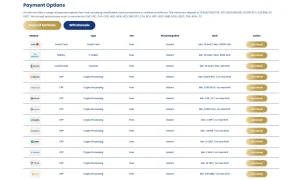
The same separation applies to mobile use. A page working on a phone does not mean the service is authorised for Australian residents, and a payment option available through a mobile interface does not create a lawful route to casino games. Device compatibility and payment functionality are technical features. They are not legal permissions.
This is why phrases such as “Australian online casino”, “Australian pokies” or “BPAY casino” need careful interpretation. They may describe an intended audience, a payment claim, or a search label, but none of those phrases establishes that real-money casino games may lawfully be offered to people in Australia. The relevant issue is what service is being provided and to whom, not simply which payment brand appears beside it.
Australian consumer law also does not protect players who use offshore casinos. That leaves an important gap between being able to view a payment claim and having the protections that apply to domestic consumer transactions. A payment method does not fill that gap or provide a substitute safeguard.
So, treat payment acceptance as a narrow technical claim, not as evidence of lawful casino access. BPAY availability, where claimed, would not answer whether an operator may offer casino games to Australian residents, whether access is being blocked, or what protections apply. Those questions must be kept distinct.
How to Read Deposit Claims When BPAY Details Are Unverified
A statement that a casino accepts BPAY is only useful if it describes what “accepts” means. It might refer to an option shown in a cashier, an old payment page, or a general list of methods. Those are not equivalent. A clear deposit claim should identify the relevant transaction step and explain how a customer would recognise that BPAY is available for that account.
Start with the cashier, the area where payment methods are presented. A claim should say whether BPAY appears there as a selectable deposit method, rather than merely mentioning it somewhere on the site. If the option is conditional, the condition should be stated: availability might depend on the customer’s account, location, currency, or other eligibility checks. Without those details, a broad statement cannot tell you whether the method applies to the particular situation being described.

The wording should also distinguish a direct BPAY payment from a payment routed through another service. A method name alone does not show which party processes the transaction or what information the customer is asked to provide. A useful description would explain the cashier’s instructions, the payment details displayed, and how the customer is expected to complete the transfer. If those steps are not described, the claim leaves the actual deposit process unclear.
What a deposit claim should specify
A well-supported description separates several details that are often collapsed into one phrase:
- Availability: Is BPAY displayed as a deposit choice in the cashier, and under what conditions?
- Amount rules: Is there a minimum or maximum deposit, and does it differ by payment method or account?
- Currency: Is the deposit requested in Australian dollars, or could conversion be involved?
- Costs: Does the operator charge a deposit fee, and could another party apply a separate charge?
- Processing: When is a payment treated as received, and when is the balance updated?
- Failure handling: What happens if the payment is not matched to the account or is rejected?
- Evidence: Is the description based on current cashier information and terms, or on an undated summary?
These are separate questions. A stated minimum does not establish the processing time; a visible payment option does not establish that every transaction will be completed. If a page advertises a low deposit amount, the amount should be tied to BPAY specifically, not presented as though it applies to every method. A number without its conditions can create a misleading impression of what a customer can actually deposit.
Timing language needs similar care. “Fast” or “instant” does not define when the clock starts or what event counts as completion. A precise statement would distinguish the time needed to make a payment from the time needed for it to appear in an account. If processing depends on circumstances, those circumstances should be explained rather than hidden behind a general promise.
Check whether the claim is current and specific
Payment pages can change. A dated description is more informative than an undated reference, but the date alone is not proof that the method is presently available. Look for a direct match between the statement and the cashier instructions, along with terms that cover the same payment method. If the cashier and the written explanation disagree, the claim is not clear enough to rely on.
DO
- Check if BPAY is selectable in the actual cashier
- Verify if the claim specifies current amount and fee rules
- Compare written claims against the operator's current terms
DON'T
- Assume BPAY availability means the service is legal in Australia
- Use deposit method availability to assume withdrawal rules
- Treat branding or logos as proof of a completed deposit route
The wording should also say who is making the claim. An operator’s current payment terms, a cashier display, and an independent description do not carry the same evidential weight. A third-party page may summarise information that has since changed. A detailed account of the steps and conditions is more useful than a bare label, but it should still be checked against the operator’s current information.
Do not treat the presence of BPAY branding as proof of a completed deposit route. Branding may identify a payment service without explaining whether it is enabled for deposits, how an account is identified, or what happens after payment. Likewise, a general list of supported methods does not establish a minimum, a fee policy, or a settlement schedule.
The same standard applies to claims about a BPAY deposit being suitable for a particular amount. The amount must be stated as a current rule for that method, with any relevant account conditions. If the claim does not specify those points, it cannot establish whether a deposit at that level would be accepted. Avoid filling the gaps with assumptions drawn from another payment type or from another operator.

A careful reading therefore looks for an explicit BPAY deposit option, a complete set of transaction instructions, method-specific amount and fee terms, and a defined explanation of processing. When those elements are absent or inconsistent, the claim does not establish a usable BPAY deposit arrangement. Treating a payment label as proof of the whole process confuses an advertised method with the actual conditions attached to a transaction.
Withdrawal Timing Is a Separate Question from Deposit Acceptance
A payment option shown in a cashier for adding funds does not establish that the same method can receive a withdrawal. Depositing and cashing out are separate transaction paths: an operator can accept a method for incoming payments while applying different rules to outgoing funds. That distinction matters when assessing claims about instant BPAY withdrawals. A deposit claim, on its own, tells you nothing reliable about whether BPAY can be used to receive winnings or how long that transfer would take.

For a withdrawal, the relevant details are the available payout methods, the conditions attached to each one, and the stated processing time. These need to be checked as withdrawal terms, not inferred from a deposit screen. If a site describes BPAY as a way to fund an account but does not also explain BPAY withdrawals, the funding information cannot fill that gap. Nor does the word “instant” establish when funds would reach your bank account: a claim needs to identify which part of the process it describes.
The transaction may involve more than one stage. A casino can review a withdrawal request before sending it, and a payment provider or bank may then take time to process the transfer. An “instant” claim could refer to one stage without describing the whole path. To assess a timing statement, you would need to know whether it covers the operator’s review, the transfer after approval, or the complete period from request to receipt. Without that distinction, the label does not provide a dependable estimate.
The available Amex detail illustrates why deposit and withdrawal rules must be read separately. A specialist review reports that an Amex withdrawal may take as long as five days to clear. That is a method-specific timing statement, not a BPAY estimate and not a general promise about every operator. The same review type indicates that an account must previously have been funded with Amex before an Amex withdrawal can be made. This is a condition on the payout route; it does not follow merely from Amex appearing as a deposit option.
There is also a difference between a method being listed and being available for every payout. A specialist review notes that not all Australian online casinos permit withdrawals to Amex. So even where a method can be used to deposit, its withdrawal availability may depend on the operator’s rules. The practical question is not just whether a payment logo appears in the cashier, but whether the operator permits that method for the specific transaction you intend to make.
Apply the same distinction when interpreting BPAY wording. “BPAY accepted” may describe an incoming payment route only. It does not establish that a casino can return funds through BPAY, that a withdrawal request would be processed immediately, or that the receiving bank would post the funds without delay. Those are separate claims and would need their own terms. A stated deposit speed should not be repurposed as a payout speed.
Before relying on a timing promise, look for the operator’s withdrawal conditions and identify the method they apply to. Check whether the method is explicitly available for cash-outs, whether there is a prior-deposit requirement, and what period the stated timing measures. If a page gives only a general “instant withdrawal” label, it leaves important parts of the transaction undefined. If it describes deposits but says nothing about withdrawals, treat the payout route and timing as unestablished rather than assuming they match.
This is a way to evaluate payment wording, not an endorsement of an online casino service. The stated Amex timing cannot substantiate an instant BPAY cash-out claim, and deposit acceptance cannot stand in for withdrawal evidence. For Australians, the legal status of a service is also separate from its payment arrangements; Australian consumer law does not protect players who use offshore casinos.

The Australian Legal Context for Offshore Casino Sites
A payment option and the legal status of a casino service are separate matters. Seeing BPAY mentioned in connection with a website would not make its real-money casino games lawful to offer to people in Australia. The relevant question is not which payment method a site names, but whether the operator is permitted to provide that service to customers located here.
Under the Interactive Gambling Act 2001, operators must not provide online casino games to people in Australia. The restriction concerns the service offered by the operator; it does not turn on whether a customer deposits by bank-linked service, card, or another method. A payment facility cannot create an exception to that rule.
The Act’s treatment of operators is distinct from its treatment of individual players. It does not explicitly make it a criminal offence for a person to use an offshore casino site. That distinction should not be read as approval of offshore gambling or as a guarantee that a particular site is lawful, available, or safe to use. The operator’s prohibition remains in place even where a player is not explicitly criminalised for accessing the service.
The Australian Communications and Media Authority, commonly called ACMA, administers enforcement of the Act. Its role is directed at enforcing the restrictions on prohibited interactive gambling services. A site’s own statements about its location, payment options, or overseas status do not determine how Australian law applies to its offer of casino games.
Legal Risk
Under the Interactive Gambling Act 2001, operators must not provide online casino games to people located in Australia.
This matters when you assess claims about casino sites that accept BPAY in Australia. A payment method may be described on a website, but that description does not settle whether the operator may offer real-money casino play to Australians. Nor does it establish that the service has Australian authorisation. Payment acceptance is therefore not a substitute for understanding the legal position.
There is also a practical consumer-protection issue. Australian consumer law does not protect players who use offshore casinos. If a dispute arises over an account, a payment, or a request to withdraw funds, you should not assume that the protections available for Australian businesses will apply to an offshore gambling operator. A site’s terms and its own complaint process are not equivalent to protection under Australian consumer law.
These points are separate from whether a player may face criminal liability. The fact that the Act does not explicitly criminalise a player’s use of an offshore site does not mean Australian consumer protections extend to that player, and it does not remove the operator-side prohibition. Keeping those distinctions separate prevents a misleading conclusion: “not explicitly criminalised for the player” does not mean “lawful service” or “protected transaction.”
When reading any claim about an offshore casino, treat payment details as information about a transaction mechanism only. They cannot answer whether the underlying casino offer complies with Australian law, and they cannot supply consumer protections that do not apply to offshore casino use.

Assessing Payment Compatibility Without a Verified BPAY List
A list of casinos that accept BPAY is useful only if each entry is supported by current, operator-specific evidence. A payment method’s general availability in Australia does not show that a particular gambling service offers it. Nor does a broad claim that a site accepts bank-linked payments confirm BPAY: different payment services have separate arrangements and may appear differently in a cashier.
A defensible directory would need to establish, for each operator, that BPAY is currently presented as a payment option for Australian customers. It would also need to distinguish a live cashier option from an old review, a general statement about bank payments, or a logo shown without an explanation of what it supports. Those details can change, so a list without dated, operator-level confirmation should not be treated as a reliable comparison.
The same standard applies to labels such as “best” or “top”. A ranking requires a defined basis for comparison, and a claim about BPAY compatibility needs evidence of BPAY compatibility first. Without that, ordering sites by reputation, game selection or another payment method would not establish which ones accept BPAY. A list of websites assembled from indirect clues would make the central claim look more certain than it is.
Amex provides a useful contrast, but not a substitute. A specialist review has named some Australian gambling sites as accepting Amex, and reporting of this kind indicates that Amex deposits are available at some such sites. That is evidence about a different payment method, not about BPAY. It cannot be used to infer that the same sites accept BPAY, that their payment options are interchangeable, or that one method’s availability predicts another’s.
Understanding Payment Claims
To evaluate a deposit claim, you should look for several specific details:
- Availability: Is BPAY displayed as a deposit choice in the cashier, and under what conditions?
- Amount rules: Is there a minimum or maximum deposit?
- Currency: Is the deposit requested in Australian dollars?
- Costs: Does the operator or a third party charge a fee?
- Processing: When is a payment treated as received and the balance updated?
- Failure handling: What happens if the payment is rejected?
- Evidence: Is the description based on current information?
The distinction matters when evaluating promotional labels too. A bonus described as being for BPAY users would require separate confirmation of both the payment condition and the offer’s terms. A payment badge or a general bonus notice does not establish that connection. Without clear, current terms tied to BPAY, the label is not enough to compare offers or claim that a particular bonus is available through that method.
For the same reason, a page claiming to identify the best BPAY casino site, or a complete BPAY casino list, needs more than a collection of operator names. Each entry must be checked against the relevant cashier or a clear statement from the operator, and the comparison must explain what “best” measures. If those checks cannot be made, the sound conclusion is that no ranking can be substantiated—not that every site accepts BPAY, nor that none does.
Treat compatibility as a specific, changeable property of an operator’s payment setup. General information about Australian payment habits, or evidence concerning Amex, cannot fill the gap. A reader should not interpret an unverified directory as confirmation that BPAY is available at any named service.
Casino Access and Payment Methods Are Different Layers
A casino game and a payment method perform different functions. Game access concerns whether a service makes a game available to you. A payment method concerns how an account transaction is attempted. The presence of one does not prove the other: a payment label cannot show which games are accessible, and a game listing cannot establish which payment methods a cashier supports.
That distinction matters when you see a reference to BPAY alongside casino games. It may describe a payment claim, a general site feature or wording that does not explain how the service works. It does not, by itself, show that BPAY is connected to a particular game, that using it changes what you can access, or that it is available for any transaction. Those details require separate, specific confirmation.

Think of access and payment as separate checks. First, access is about the service and its rules: whether a game is offered and whether it is available to you. Payment is about the transaction path: whether a method is presented for the relevant action and whether that transaction can proceed. A result at one layer does not determine the result at the other. Even a payment option displayed in a cashier would not establish that it applies to every game or changes game availability.
The same reasoning applies to phrases such as “games with BPAY” or “BPAY casino payment options.” They can blur the difference between a game catalogue and a cashier. Before drawing a conclusion, identify exactly what the statement is about: a named game, access to a game category, or an account transaction. If it does not say which, it cannot reliably answer all three.
This separation also prevents an incorrect assumption about deposits and play. A transaction method is not a game feature. It does not establish that a game can be opened, that a particular title is available, or that the game has a distinct payment route. Nor does a reference to games confirm that BPAY is usable for deposits or withdrawals.
Treat any claim linking BPAY to game access as unproven unless it specifies the connection and the transaction or access condition involved. Keep the question about the game separate from the question about payment; each needs its own evidence.
How Australians Use Different Payment Types
Australian consumers are familiar with several ways to pay, but familiarity in everyday transactions does not establish that a particular service is available in every online setting. Contactless credit and debit cards are accepted almost everywhere in Australia. Mobile wallets, including Google Pay and Apple Pay, are also accepted almost everywhere. These options can make tap-to-pay and phone-based purchases routine, but that broad acceptance is a feature of the consumer payment environment, not proof of acceptance by a particular merchant or service.

People are also comfortable moving between cards, mobile wallets and services connected to bank accounts, such as PayPal. The choice can depend on what a merchant supports and how the consumer prefers to make a transaction. A payment method’s familiarity therefore tells you something about consumer habits, but not necessarily about the payment options presented in a specific cashier.
That distinction matters when you are looking for an Australian casino that accepts BPAY. The fact that Australians commonly use card payments, digital wallets and bank-linked services does not show that a casino supports BPAY. Nor does the presence of one familiar option imply that another bank-linked payment service will be available. Each method has to be assessed on its own terms; broad patterns in Australian payment use cannot establish operator-specific compatibility.
It is also useful to separate the payment channel from the way a consumer initiates a payment. A mobile wallet may use a card behind the scenes, while a bank-linked service may use a different account connection. Those differences can affect how a transaction is presented and handled, but they do not turn one method into another or guarantee that a particular cashier will offer it.
For BPAY, the practical question is not whether Australians know or use bank-linked services generally. It is whether the specific payment option is clearly identified for the transaction in question. Without that detail, familiarity with cards, wallets or PayPal should not be treated as evidence that BPAY is accepted.

What the Available Evidence Says About Casino Withdrawals
A payment option shown in a cashier does not automatically determine how winnings can be paid out. Deposit and withdrawal functions are separate: an operator may accept a method to fund an account while applying different rules to withdrawals. For anyone checking whether a casino offers a withdrawal to BPAY, the relevant detail is the operator’s stated payout method, not simply the presence of BPAY among deposit options.
Withdrawal eligibility can also depend on the casino’s rules. A specialist review reports that some casinos may not send winnings to Amex, or may charge an additional fee for an Amex withdrawal. That is a reported possibility, not a rule that applies to every casino. The terms for a particular account are what determine whether the method is available and what conditions attach to it.
Limits are another operator-specific detail. A specialist review says individual casinos set Amex deposit and withdrawal limits, which can differ between operators. A limit applying to deposits should not be treated as the withdrawal limit: the two transactions can have distinct conditions. Check the withdrawal terms separately before relying on a stated deposit limit or assuming it carries over to a payout.
- Verify if the method is explicitly available for cash-outs
- Check if there is a prior-deposit requirement
- Identify what specific period the stated timing measures
- Confirm if any additional fees apply to the withdrawal
The same separation matters when reading claims about BPAY. A mention of BPAY in a cashier does not by itself show that winnings can be withdrawn through it. Nor does a claim about a casino with BPAY establish that the method supports both directions of payment. The payout method, eligibility rules, applicable limits and any fee need to be stated for withdrawals specifically.
For a practical check, look for wording that identifies BPAY as a withdrawal method, then confirm whether it applies to your account and whether the casino sets separate payout conditions. If the terms mention BPAY only for deposits, that does not establish a BPAY withdrawal option. Avoid treating a deposit claim as proof of a payout route: they answer different questions, and the withdrawal rules govern how winnings can leave the account.
Checking a Payment Method Before You Use It
A payment attempt can fail for different reasons, and seeing a method named in a cashier does not prove that every transaction will be approved. It helps to separate three checks: whether the operator lists the method, whether the payment provider or card issuer permits the transaction, and whether a fee applies.
Amex illustrates the difference. A specialist review reports that an Amex deposit can be declined when American Express blocks payments to a particular website. Separately, an Australian bank may block gambling-related transactions on an Amex card at the issuer level. In either case, a payment option appearing on screen does not override a block applied by the provider or bank. A declined transaction therefore does not, by itself, show that the card details were entered incorrectly.
Fees are another independent issue. A specialist review describes Amex deposits as often fee-free, but says charges depend on the casino and that withdrawals may carry fees. That is not a general guarantee: the applicable terms need to be read for the specific transaction. A payment can be accepted and still cost more than expected, while a fee-free deposit does not establish that other transaction types are free.

Apply the same careful reasoning when assessing a BPAY payment method. Do not treat general familiarity with BPAY, or a mention of it somewhere on a site, as proof that a particular payment will work. Check the wording shown for the transaction and distinguish an available option from a completed, approved payment. The Amex examples explain why those checks matter; they do not describe BPAY rules.
Before entering payment details, review the cashier’s stated conditions and any fee information, then consider whether your bank or payment provider may restrict the transaction. These are separate checks, not interchangeable assurances. Acceptance by the operator, approval by the institution handling the payment, and the final cost each answer a different question.
Do Not Assume a Payment Method Applies to Every Casino Game
A payment option and a game catalogue are separate parts of an online service. A payment method, if an operator offers it, concerns how money is transferred to or from an account. The operator’s catalogue determines what activities the account can access. One does not establish the other.

That distinction matters when you see a claim about BPAY and casino games. A statement that BPAY is available for an account would not, by itself, show that it works for a particular game or category. Nor does a game listing demonstrate that BPAY can fund the account. Those are separate claims, and each would need its own reliable confirmation. No BPAY-specific game compatibility can be inferred from the general operation of payment methods.
In Australia, this distinction does not change the legal position. The Interactive Gambling Act 2001 prohibits operators from providing real-money online casino games to people in Australia. A payment route cannot make that prohibited service lawful or establish that a game is available to Australian residents.
So phrases referring to BPAY alongside casino games should not be read as proof that a particular game can be accessed or funded through that method. Treat the payment claim and the game-access claim as different questions, rather than assuming one answers the other. If an offshore casino is involved, Australian consumer law does not protect players using it.
How do you check if casino sites accept Amex deposits?
Check whether American Express appears as a selectable deposit method in the casino cashier. If it does, you can select it, enter your card details and deposit amount in AUD, and submit the payment; your bank may still block the transaction.
Which online casinos accept American Express for deposits?
Jackpot City Casino, Spin Palace, Ruby Fortune, Ignition Casino, Joe Fortune, and PlayAmo are listed as supporting Amex deposits for Australian players.
What are the deposit and withdrawal limits at the best Amex casinos?
Limits are set by each casino and can vary, so check the cashier or account payment information for the limits that apply to you. Amex transaction limits are usually higher than MasterCard and Visa options.
Are casino Amex payments instant?
Amex casino deposits are processed instantly. Withdrawals can take up to five days to clear, and you generally need to have previously deposited with Amex to withdraw to it.
Does American Express work for online casinos?
Yes, some Australian online casinos accept Amex deposits, but not all do, and a bank or Amex may block a payment to a particular site. Some casinos also do not allow withdrawals to Amex.
Are there fees for using Amex at online casinos?
Amex deposits are typically free, but a casino may apply a 1.5% surcharge, and Amex cards incur a 3% currency conversion fee. Withdrawal fees may also apply, depending on the casino.