
Check the payment route before using PayID
See how the PayID identifier, banks and NPP fit together, and what to consider when reviewing cashier instructions and payment terms.

How PayID works between your bank and a casino cashier
PayID is an Australian payment system that lets a person identify a bank account using a registered identifier, such as a mobile phone number or email address. The identifier is used in place of the account details a sender would otherwise need to enter. PayID works through the New Payments Platform (NPP), which enables transfers between banks.
To understand the path of a payment, separate the parts involved: the person making the transfer, their bank, the PayID identifier, the NPP, the receiving bank and the account on the receiving side. A casino cashier, where PayID is offered, is the interface that presents payment instructions. It is not the network that moves funds between banks.
The identifier is not itself a bank account or a store of money. It serves as a way to direct a payment to an account associated with that identifier. This distinction matters: entering a PayID does not send money to a phone number or email inbox. The transfer is handled through the banks and the NPP, while the identifier helps specify the destination.
Casinos listed by licence
If you’re looking for PayID pokies in Australia in 2026, this list gives you a concise reference point for reviewing the available operator information. Check the payment and licensing details that matter to you before choosing a site.
-
Bizzo Casino
- License
- Curacao Gaming Control Board (TechSolutions Group N.V.)
Bizzo Casino is listed with a licence from the Curacao Gaming Control Board, held by TechSolutions Group N.V.
-
SpinsUp
- License
- Curacao Gaming Control Board OGL/2023/174/0082 (Dama N.V.)
SpinsUp is listed with Curacao Gaming Control Board licence OGL/2023/174/0082, held by Dama N.V.
-
Wild Tokyo
- License
- Curacao
- Payout speed
- crypto 30-60 minutes, fiat 1-5 days
- Min. deposit
- A$10
Wild Tokyo lists a A$10 minimum deposit. Its stated payout times are 30–60 minutes for crypto and 1–5 days for fiat.
-
MrPacho
- Payout speed
- crypto 30-120 minutes, fiat 24-72 hours
- Min. deposit
- A$30
MrPacho lists a A$30 minimum deposit, with payouts stated as 30–120 minutes for crypto and 24–72 hours for fiat.
-
Rollero Casino
- License
- Curacao Gaming Control Board OGL/2023/176/0095 (Hollycorn N.V.)
Rollero Casino is listed with Curacao Gaming Control Board licence OGL/2023/176/0095, held by Hollycorn N.V.
-
LevelUp Casino
- License
- Curacao eGaming OGL/2023/174/0082 (Dama N.V.)
- Min. deposit
- A$15
LevelUp Casino lists a A$15 minimum deposit and Curacao eGaming licence OGL/2023/174/0082, held by Dama N.V.
-
Ricky Casino
- Payout speed
- crypto under 1 hour, PayID 1-3 business days
- Min. deposit
- A$20 (A$30 to qualify for the bonus)
Ricky Casino lists a A$20 minimum deposit, or A$30 to qualify for the bonus. Its stated payout times are under an hour for crypto and 1–3 business days for PayID.
-
Playfina Casino
- License
- Curacao eGaming (Hollycorn N.V., since 2017)
- Min. deposit
- A$20-30 (depends on the offer)
Playfina Casino is listed with a Curacao eGaming licence held by Hollycorn N.V. since 2017. Its minimum deposit is A$20–30, depending on the offer.
-
JustCasino
- License
- Curacao Gaming Control Board
JustCasino is listed with a Curacao Gaming Control Board licence.
-
House of Pokies
- License
- international iGaming licence – jurisdiction not named in the source
- Payout speed
- PayID 1-24 hours
- Min. deposit
- A$30 (PayID from A$10)
House of Pokies lists PayID payouts of 1–24 hours and a A$30 minimum deposit, with PayID deposits available from A$10. Its source describes its licence as international but does not name the jurisdiction.
At a high level, a transfer begins when the payer uses their bank’s payment service and supplies the receiving PayID and the requested amount. The banks and NPP handle the movement between accounts. PayID’s role is therefore different from that of a cashier page: one identifies the destination for a bank transfer; the other may display details for a payment request or provide a place to select a payment method.
The NPP is the shared infrastructure through which participating banks can send transfers to one another quickly. PayID operates through that platform, so a transfer does not depend on the payer manually entering the recipient’s full account details. The platform enables the bank-to-bank movement; it does not decide what a casino’s cashier displays, whether a particular payment is accepted there or how the venue records it.
A useful way to picture the process is as two connected but separate systems. On one side, the bank transfer uses PayID and the NPP to move funds between bank accounts. On the other, the cashier has its own records and procedures for associating a payment with an account. A transfer can be technically routed through the banking system without the cashier’s interface being the mechanism that routes it.
This separation also explains why “PayID” does not describe every step after a payment is initiated. The name refers to the payment system and identifier, not to a complete promise about how a receiving business processes a payment. The banking rail can facilitate a quick transfer, while the receiving service still has to recognise and record the incoming funds. Those are distinct operations, even when they occur close together.

The same distinction applies to the word “instant”. PayID is designed for quick transactions, and the NPP facilitates quick transfers between banks. That describes the payment infrastructure, not every action taken by a cashier or the time needed for a business to update its own records. The bank-to-bank transfer and the receiving service’s bookkeeping should not be treated as one indivisible event.
PayID is also not a casino-specific product. It is an Australian digital payment system that can be used for transactions between banks. A casino cashier may present it as an option, but the cashier does not create PayID, operate the NPP or control how banks maintain the payment service. The same basic architecture applies whenever a PayID transfer is made: an identifier helps direct the payment, and the NPP supports its movement between banks.
That architecture is why a PayID reference can look simpler than traditional account details while still representing a bank transfer. The user-facing identifier is easy to recognise; the underlying movement remains an account-to-account payment handled by banking infrastructure. The convenience is in how the destination is identified, not in replacing the bank or removing the transfer process.
For a cashier, this means the payment method sits at the boundary between a banking system and a business’s own payment records. The cashier can tell a customer which PayID details to use, but the funds travel through the banking network rather than through the casino webpage itself. Knowing where that boundary lies helps avoid attributing every delay, status message or acceptance decision to PayID. The payment rail and the cashier’s systems perform different jobs.
Legal Warning
Under the Interactive Gambling Act 2001, it is illegal for operators to provide real-money online casino games, including pokies, to people in Australia.
What changes when you use PayID for online pokies
When PayID appears as a payment option in a cashier, it changes how you identify and send a payment: the transaction uses your PayID rather than requiring you to enter ordinary bank account details into the payment form. The cashier still controls the steps on its side, while your bank handles the transfer. The method can be used for deposits and withdrawals, although the two directions do not necessarily follow the same process inside the cashier.
For a deposit, you select PayID in the cashier and follow the payment instructions shown there. The payment then needs to be authorised through the relevant banking process. PayID deposits are typically completed within seconds, so the transfer itself can be much faster than a process that waits for a slower payment method to clear. “Within seconds” describes the typical deposit transfer, not a promise that every cashier will update at precisely the same moment. The venue’s system must also register the payment before it can show the funds in the account.
That distinction matters when you are trying to understand a delay. A bank transfer and a cashier balance update are separate events: the first moves the money, while the second reflects it in the venue’s account system. If the cashier has not updated, the display alone does not establish whether the transfer was authorised or received. Avoid sending the same payment again simply because the balance has not changed; a confirmed PayID transaction cannot be reversed. Check the transaction status and follow the payment provider’s or cashier’s stated process instead.

The reverse direction is also possible. A cashier that supports PayID withdrawals can send funds to a PayID, so the method is not limited to putting money into an account. The transfer itself can move quickly in either direction. However, a withdrawal begins with the venue’s process, not with the bank transfer: the venue must initiate it before the payment reaches your bank. The speed of the transfer should therefore not be confused with the time taken for a cashier to approve and release a withdrawal.
This makes PayID a two-way payment route, but not necessarily a single, identical transaction in both directions. A deposit is initiated by you from the payment flow presented in the cashier. A withdrawal is requested through the cashier and then sent to the relevant PayID. Each direction has its own starting point, and the cashier may handle the request before any bank transfer occurs. The presence of PayID as a deposit option does not, by itself, establish that it is available for withdrawals.
The cost has two parts to consider: a charge for using PayID and any charge added by the venue. PayID does not charge a transfer fee. Reputable venues do not add a separate fee for PayID deposits or withdrawals either. Those are distinct points: a free transfer method does not automatically mean every cashier applies the same terms, so the payment information shown by the venue remains relevant. Do not assume that a fee applies simply because the transaction uses a bank payment system, or assume that all possible cashier charges are PayID charges.
Do
- Check the cashier to confirm PayID is listed
- Verify your bank's registered PayID and account name
- Confirm your bank's daily transfer limits
- Review the exact amount and currency requested
Don't
- Assume a payment method is available just because it is mentioned elsewhere
- Send a duplicate payment if the balance hasn't updated immediately
- Use someone else's PayID or account to bypass name mismatches
- Guess if payment instructions or amounts are unclear
There is also a finality to the payment. Once a PayID transaction is confirmed, it cannot be reversed. That makes the confirmation step important: you should understand what payment you are approving before authorising it. If a payment appears to have gone through but the cashier balance has not changed, initiating another transfer may create a second payment rather than correct the first. Treat the bank’s transaction record and the cashier’s balance as separate pieces of information when resolving a mismatch.
In practice, PayID changes the payment experience most clearly at the transfer stage: a deposit can arrive within seconds, and withdrawals can use the same payment method in the other direction. It does not make every part of the cashier process instantaneous. The transfer, the venue’s account update and, for a withdrawal, the venue’s decision to release funds are different stages. Keeping those stages separate gives you a more accurate picture of what “fast PayID payment” means, without treating a quick bank transfer as a guarantee about the entire transaction.
PayID pokies in Australia: what the 2026 search does—and does not—tell you
The wording “PayID pokies” joins two separate ideas: a payment method and a type of gambling service. Adding “new” or “2026” makes the wording sound current, but it does not establish that a particular service has changed, is available, or can legally provide real-money play to people in Australia. Those questions depend on separate facts. A payment option is not evidence of an operator’s legal status.
PayID is a way to identify and send a bank transfer. Its presence in a payment menu describes how money might be routed; it does not certify the business receiving it. In the same way, a payment receipt can show that a transfer was processed without demonstrating that the underlying service is authorised, fair, or willing to pay a later withdrawal. Payment mechanics and the status of the service are different matters.

That distinction has particular importance in Australia. Under the Interactive Gambling Act 2001, it is illegal for operators to provide real-money online casino games, including pokies, to people physically located in Australia. Casino-style services such as slots, poker, blackjack and roulette fall within the prohibited category when offered to customers here. The law addresses the operator’s provision of the service; the legal frame states that a player does not incur liability merely for playing at an offshore casino without a local licence. That does not make the service lawful or suitable for Australians.
The Act carries substantial penalties for those who violate it: the maximum daily penalty is $360,000 for an individual and $1.8 million for a body corporate. These figures help explain why a payment method cannot be treated as a substitute for considering the legal status of the activity. PayID is not a gambling licence, and a cashier displaying it does not change what the law prohibits.
Nor does the presence of a payment option show that a service is practically accessible. Offshore online casino services are actively blocked and enforcement is applied. A page, payment instruction, or cashier entry that appears online is not proof that the service can lawfully be provided to someone in Australia. It may also be incomplete or out of date. A label such as “new” cannot resolve those issues.
There is a separate practical uncertainty at the bank level. A specialist review has reported that some Australian banks, including banks among the Big Four, may occasionally block PayID transfers to gambling merchants they identify under their acceptable use policies. This is a report about a changeable practice, not a rule that every bank applies to every transfer. It should not be read as evidence that a transfer will succeed or fail in any particular case. A blocked transfer also says nothing, by itself, about whether the merchant is lawful.
The payment itself has a further property worth understanding: once a PayID transaction is confirmed, it is irreversible. That makes the transfer distinct from a reversible card payment or a payment that can simply be recalled at the sender’s request. A completed transfer does not provide a way to undo the payment if the recipient or the service later presents a problem. This is a property of the payment, not an assurance about the recipient.
So the label “PayID pokies in Australia” can identify the subject someone is trying to understand, but it cannot answer the important questions on its own. It does not mean that real-money pokies may lawfully be offered to Australians, that a particular service is locally authorised, that a bank will process a transfer, or that funds sent to a merchant can be recovered. Each of those points concerns something different: the law, the operator, the bank, or the finality of the transaction.
Keeping those categories separate prevents a common reasoning error. Seeing a familiar Australian payment name beside a casino-style service may make the service appear local or officially recognised. That appearance does not follow from the payment method. PayID identifies a transfer route; it does not endorse the recipient or determine whether providing the gambling service is permitted. In Australia, the legal status of real-money online casino services remains the controlling issue, regardless of how a cashier describes its payment options.
Checks to make before using PayID at a pokies cashier
A payment can fail before money moves, or a later withdrawal can be delayed, if the details on the payment and casino accounts do not line up. Before entering any payment information, check what the cashier actually lists, which PayID is registered with your bank, and what limits apply to your account. These are separate checks: passing one does not mean the others have been satisfied.
Confirm PayID is listed in the cashier
Open the cashier page and look for PayID among the available payment methods. Do this before creating an account or entering payment details. A payment method mentioned elsewhere on a site is not enough to establish that it is available in the cashier you are viewing; the cashier is where you can check what is presented for that account.
- Open the cashier and locate PayID in the payment methods
- Verify the PayID is registered to your bank account
- Match the bank account name with your casino profile name
- Check your bank's daily transfer limit
- Review the minimum deposit amount required
If PayID is not listed, do not assume that selecting another method will send a transfer through PayID. Payment methods have their own instructions, and using the wrong details can send money somewhere other than intended. If the cashier’s information is unclear or conflicts with what appears during payment, pause rather than guessing.
The presence of PayID is only a payment detail. It does not establish that a service is lawful in Australia or that other claims about it are reliable. The Interactive Gambling Act 2001 prohibits operators from providing real-money online casino games, including pokies, to people in Australia. Treat payment information as information about a transfer method, not as approval of the service.
Match the bank PayID and account names
Check that the PayID you intend to use is registered with your bank and belongs to the account you control. The details used for the transfer must match the PayID registered with the bank. A mobile number or email address that looks correct is not necessarily the one currently linked to your bank account, so verify it in your banking service rather than relying on memory.
Also check the name on the bank account against the name on the casino profile. A mismatch can interfere with payment checks, particularly when you later request a withdrawal. Use consistent, accurate account details; do not enter someone else’s PayID or use a different person’s account to try to get around a mismatch.
If you have recently changed a phone number, email address or banking arrangement, confirm which identifier is active before proceeding. The destination shown by a payment instruction should correspond to the details you have verified. If it does not, stop and ask the relevant service for clarification instead of completing a transfer based on an assumption.
Check the bank’s transfer limit
Your bank controls the daily limit that applies to PayID transfers from your account. A transfer may be declined or unavailable if it exceeds the limit set for you, even when the payment details are correct. A specialist review describes the bank as the party setting this limit; the applicable amount is specific to your account and should be checked in your bank’s own settings or support information.
Do not treat a limit displayed in a cashier as confirmation of what your bank will permit. The cashier and bank apply different checks: the cashier may state what it can receive, while your bank controls whether you can send the transfer under your account settings. If you are unsure, check the bank limit before initiating anything. Do not attempt repeated transfers simply because one has not appeared to complete; first establish whether the earlier instruction is pending or has failed.
Read the amount and payment instructions carefully
Check the minimum shown for the payment method before entering an amount. Specialist reviews report that many operators set deposit minimums between AU$10 and AU$20, while some report a minimum of AU$5. These are not universal settings: the amount displayed in the relevant cashier is the one to examine, and it may differ between services or change over time.
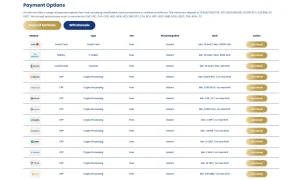
Check the currency and the destination details as well as the amount. A correct PayID does not correct a mistaken amount, and a displayed minimum does not tell you whether your bank will accept the transfer. If any instruction is missing or inconsistent, do not fill the gap by guessing.
PayID transfers cannot be reversed after confirmation. That makes a final review of the recipient and amount important before you approve a payment. If the destination details do not match the instructions you were given, do not confirm the transaction.
Keep the checks separate
A useful sequence is to verify that PayID appears in the cashier, confirm that your bank has the intended PayID registered, check the account names, review your bank’s daily limit, and then compare the payment instructions with the details on screen. Each step addresses a different possible failure. A cashier listing does not confirm your bank settings; a valid bank PayID does not confirm that the cashier accepts it; and a successful deposit does not establish that a later withdrawal will be accepted.
If a payment or account detail cannot be reconciled, pause before sending money. Contact the bank about bank-side settings and the service about its cashier instructions, keeping the two questions distinct. Do not share banking passwords or approval codes to resolve a payment problem.
How to compare PayID payment terms without relying on a ‘best’ label
Payment terms are easier to assess when you separate the amount required to move money in from the amount allowed out, then check whether any deductions alter what arrives. A low minimum deposit does not tell you the withdrawal minimum, and neither figure tells you whether a fee applies. Treat each as a separate condition rather than combining them into a single judgement about a payment method.
A specialist review has described PayID minimum deposits in the AUD 10–20 range. That is a reported range, not a fixed PayID rule: the payment network does not set a universal casino deposit minimum. The amount shown in a cashier is a condition set by the service providing it, and it can change. A comparison should therefore record the displayed minimum and the currency, rather than assuming that a figure found elsewhere still applies.
The same distinction matters for withdrawals. Specialist reviews have reported minimum PayID withdrawals in the AUD 20–50 range, but the relevant figure is the one attached to the particular payment terms being assessed. If you are comparing published terms, note whether the minimum applies to every withdrawal or only to a particular method. Also check whether the stated amount is the requested withdrawal or the amount that must remain after any deduction. Those details affect whether a small balance can be paid out in one transaction.
Look beyond the minimum
A minimum is a threshold, not a measure of total cost. A withdrawal may meet the stated minimum yet still be subject to a fixed fee or a deduction tied to the amount withdrawn. These arrangements should not be treated as interchangeable. A fixed fee applies per transaction under the relevant terms; a threshold-based deduction may apply only when a withdrawal falls below an internal amount. The wording determines which one is in play.
Deposit Minimums
Many operators set deposit minimums between AU$5 and AU$20.
Withdrawal Minimums
Specialist reviews report PayID withdrawal minimums in the AUD 20–50 range.
Potential Deductions
Some operators may deduct A$5–A$10 from withdrawals that fall below certain internal thresholds.
A specialist review has reported that some operators deduct A$5–A$10 from withdrawals below internal thresholds, with A$100 or A$200 given as threshold examples. This is a report about terms that may be encountered, not a general PayID charge or a standard condition. The threshold and deduction, if any, must be checked in the applicable cashier information. If the rule is unclear about whether it applies to the full requested amount or is taken from the payout, do not assume the more favourable interpretation.
A separate specialist review has reported withdrawal charges of AUD 2–5 at some casinos. That figure describes a possible operator-set charge, not a fee imposed by PayID itself. The distinction is important: a transfer method can have no charge of its own while the service handling a withdrawal applies a separate fee. Read the payment terms for the specific transaction rather than inferring cost from the PayID label.
Compare like with like
For a useful comparison, keep the same questions beside each set of terms:
- What is the minimum deposit, and in which currency is it stated?
- What is the minimum withdrawal?
- Is there a fixed withdrawal charge?
- Does a deduction apply below an internal threshold?
- Does the wording explain when the charge is taken and how it affects the amount received?
Recording these points separately prevents a low entry amount from masking a less favourable withdrawal condition. It also avoids treating a listed fee as though it applied to every transaction when the stated rule may be conditional.
Be careful with labels such as “free” or “best.” “Free” could refer only to the transfer method, while a service-side fee remains possible. “Best” has no stable meaning unless the criteria are stated: one person may prioritise a lower deposit minimum, while another may focus on withdrawal thresholds or deductions. A comparison is more transparent when it reports the terms themselves and identifies the conditions attached to them.

Terms can also differ between the general payment page and the cashier screen. If they do, the mismatch matters: a comparison based on one description may not reflect the condition presented for a particular transaction. Check that the figures refer to PayID, not to another payment method, and that amounts are expressed in the same currency before comparing them. A number without its condition can be misleading; a minimum, fee, or threshold should be read together with the sentence that explains when it applies.
Finally, payment terms describe only the handling of funds. They do not establish that a service is lawful to provide in Australia, fair, or willing to pay. PayID’s presence is not evidence of any of those things. For an accurate comparison, keep the scope narrow: note the stated deposit and withdrawal thresholds, identify any possible deductions or charges, and avoid turning a short label into a broader claim about quality or suitability.
Real-money payments: withdrawal timing, bonus conditions and limits
A PayID transfer can move quickly once a casino has approved a withdrawal, but that describes only the bank-transfer stage. A withdrawal request first enters the casino’s own process. The operator may review the request and the account’s identity checks before releasing funds. Until that approval happens, the money has not yet been sent through PayID.
This distinction explains why a fast payment rail does not guarantee a fast payout. There are separate stages: the casino receives the request, completes any review, approves it, and then initiates the transfer. The time spent in the casino’s system is additional to the time taken for the bank transfer. If identity verification is incomplete or a review needs more information, the request may remain pending before PayID is involved.
Timing estimates should be read as reports about particular operators or experiences, not as a promise that applies across the market. A specialist review has reported casino pending periods of 24–72 hours before funds leave the operator’s system. The same type of review has described PayID transfers after approval as taking 12–24 hours, with the full interval from request to receipt reaching 2–4 days when a pending period is included. These are reported ranges, not a standard PayID schedule or a guarantee for an individual withdrawal.
Other specialist reviews describe different processing patterns, including approval followed by a transfer that reaches the account within the same day. They also report that a casino’s pending period and manual review can extend the wait, including over weekends. The variation is the important point: PayID controls the bank-transfer leg, while the casino controls when it approves and sends the payment. A status marked “pending” therefore does not by itself show that a PayID transfer is delayed; it may mean the operator has not released the funds.
Identity checks can affect that release point. Casino reviews report that payout speed depends in part on the operator’s internal review and the player’s KYC status. If the account’s verification is unresolved, the withdrawal may not reach the transfer stage. You should distinguish a request awaiting casino approval from a payment already sent: they are different states, with different causes of delay. The operator’s own withdrawal terms and account messages are the relevant place to establish which state applies.

Bonus conditions create a separate constraint. A bonus may require wagering before the bonus amount or winnings associated with it can be withdrawn. Specialist reviews have reported wagering requirements of 30x–45x the bonus amount, but that range is not a universal rule. The specific terms determine what counts toward the requirement, which games qualify, how the requirement is calculated, and whether a deadline applies. Do not infer these details from the payment method: PayID does not set a casino’s bonus rules.
A maximum bet condition can also affect eligibility while wagering requirements are active. If you exceed the maximum bet allowed by the bonus terms, the bonus and associated winnings may be voided. The relevant limit is the one stated in the terms for that particular offer; do not assume that a limit from another offer or another operator applies. If the wording is unclear, the uncertainty should be resolved before relying on the bonus balance as withdrawable funds.
For a withdrawal that includes bonus-linked funds, check whether the wagering requirement has been completed and whether any other bonus conditions remain. A displayed balance does not necessarily mean every part of it is available for withdrawal. The casino’s terms govern the distinction between a balance shown in the account and funds eligible for release, while the payout process governs when an approved amount is sent.
These mechanics should not be taken as an endorsement of real-money online casino services. Under Australia’s Interactive Gambling Act 2001, operators are prohibited from providing real-money online casino games, including pokies, to people in Australia. The payment method does not change that legal status. Information about transfer timing and bonus conditions explains how the described payment stages work; it does not make an offshore real-money casino service lawful or suitable for use from Australia.
Do online casino sites in Australia use PayID?
Yes, some online casino cashiers offer PayID for payments. Availability depends on whether the site lists it as a payment option.
How to deposit money into online casino sites using PayID?
Choose PayID in the casino cashier and follow the payment instructions provided. Authorise the transfer through your bank, using a PayID registered to your bank account.
How long do PayID cashouts usually take?
After casino approval, a PayID withdrawal typically arrives within 12–24 hours. Internal reviews or pending periods can make the total wait from requesting a payout usually 2–4 days.
What does it cost to start?
PayID deposits commonly start at A$10–A$20, although some operators accept A$5. PayID itself has no transfer fee, and reputable venues do not add fees for PayID deposits.
Can you withdraw casino winnings using PayID?
Yes, PayID can be used for casino withdrawals where the cashier offers it. The casino reviews the request, and payout timing can depend on its processing and your verification status.
Are there any casino sites in Australia that offer withdrawals via PayID?
Yes, casino-initiated PayID withdrawals are available at some sites. Check the cashier’s withdrawal options, since availability and processing times vary by casino.
Can I play Pokies using PayID?
Yes, if the casino offers PayID, you can use it to deposit funds into your account and then play pokies. PayID is a payment method, not a way to play the games itself.
Is PayID safe at an online casino?
PayID is designed for secure bank transfers, but confirmed transactions are irreversible. Check the payment details carefully and make sure the PayID matches the one registered with your bank.