
Understand What “Pokies Parlour” Refers To
In Australia, the phrase informally describes a physical casino space with electronic gambling machines, not a separate licence category or an online service.

What a Pokies Parlour Means in Australia
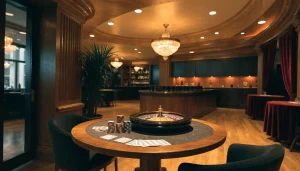
In Australia, “pokies parlour” is an informal way to refer to a physical casino space where electronic gambling machines are available. It is not a separate national category of licence or a standard name for every part of a casino. The phrase may describe the machine area in a larger property, while the property itself can also contain restaurants, accommodation and other facilities. The exact layout depends on the venue.
That physical setting is the key distinction from an online gambling site. A casino parlour is a place you enter; an online service is accessed through a website or app. A web page using casino language does not become a physical parlour, and the word “parlour” by itself does not identify a particular venue. If you are trying to establish what a reference means, look for concrete details such as a property name, a location and the jurisdiction in which it operates.
Major Australian casinos run around the clock. That describes their operating hours, not a requirement to stay for a particular period or a guarantee that every area or service is available at every moment. Entry has a separate threshold: the minimum age for casino admission is 18 throughout Australia. Major casinos require valid photo identification, so the practical distinction between being old enough and being able to establish your age matters at the door. Check the venue’s own entry requirements before travelling, particularly if you are unsure which identification it accepts.
Casinos listed by licence
If you’re looking for an online pokies option in Australia in 2026, this list gives you a concise reference to the operator details available, including licensing and selected payment information.
-
Bizzo Casino
- License
- Curacao Gaming Control Board (TechSolutions Group N.V.)
You can note that Bizzo Casino is listed as licensed by the Curacao Gaming Control Board, with TechSolutions Group N.V. named.
-
SpinsUp
- License
- Curacao Gaming Control Board OGL/2023/174/0082 (Dama N.V.)
You can check SpinsUp’s listed Curacao Gaming Control Board licence, OGL/2023/174/0082, issued to Dama N.V.
-
Wild Tokyo
- License
- Curacao
- Payout speed
- crypto 30-60 minutes, fiat 1-5 days
- Min. deposit
- A$10
You can consider Wild Tokyo if the listed A$10 minimum deposit suits you. Its stated payout times are 30–60 minutes for crypto and 1–5 days for fiat.
-
MrPacho
- Payout speed
- crypto 30-120 minutes, fiat 24-72 hours
- Min. deposit
- A$30
You can note MrPacho’s A$30 minimum deposit and stated payout times: 30–120 minutes for crypto and 24–72 hours for fiat.
-
Rollero Casino
- License
- Curacao Gaming Control Board OGL/2023/176/0095 (Hollycorn N.V.)
You can check Rollero Casino’s listed Curacao Gaming Control Board licence, OGL/2023/176/0095, issued to Hollycorn N.V.
-
LevelUp Casino
- License
- Curacao eGaming OGL/2023/174/0082 (Dama N.V.)
- Min. deposit
- A$15
You can note LevelUp Casino’s A$15 minimum deposit. Its listed licence is Curacao eGaming OGL/2023/174/0082, issued to Dama N.V.
-
Ricky Casino
- Payout speed
- crypto under 1 hour, PayID 1-3 business days
- Min. deposit
- A$20 (A$30 to qualify for the bonus)
You can consider Ricky Casino if its A$20 minimum deposit fits; the bonus requires A$30. Stated payout times are under one hour for crypto and 1–3 business days for PayID.
-
Playfina Casino
- License
- Curacao eGaming (Hollycorn N.V., since 2017)
- Min. deposit
- A$20-30 (depends on the offer)
You can note Playfina Casino’s listed Curacao eGaming licence, held by Hollycorn N.V. since 2017. Its minimum deposit is A$20–30, depending on the offer.
-
JustCasino
- License
- Curacao Gaming Control Board
You can note that JustCasino is listed as licensed by the Curacao Gaming Control Board.
-
House of Pokies
- License
- international iGaming licence – jurisdiction not named in the source
- Payout speed
- PayID 1-24 hours
- Min. deposit
- A$30 (PayID from A$10)
You can note House of Pokies’ stated PayID payout time of 1–24 hours and its A$30 minimum deposit, reduced to A$10 for PayID. The source describes its licence as international but does not name the jurisdiction.
A venue’s location can help clarify whether a reference is to a real, physical property. Lasseters Casino is at 93 Barrett Drive in Alice Springs, in the Northern Territory. Jupiters Gold Coast Casino & Hotel is on Broadbeach Island on the Gold Coast. Country Club Casino is listed at Country Club Avenue, Prospect, in Meander Valley. These examples show that casino properties can be associated with different kinds of local addresses; they do not establish that every venue uses “parlour” in its official name.
The licensing arrangement also differs from the idea of a single national casino operator. Australian casinos are regulated by the state or territory where each property operates, and each property has a licence from its local jurisdiction. That means a physical venue’s operating context is tied to its location. A name, a photograph or a claim that a site represents a casino does not, on its own, supply the same information as identifying the property and its jurisdiction.
The online distinction is not merely a matter of where the machines are displayed. The Interactive Gambling Act 2001 prohibits operators from providing real-money online casino games, including slots, poker and table games, to people physically in Australia. A physical casino and an online service therefore cannot be treated as interchangeable versions of the same access route. A venue may have an online presence for information, but that does not turn its physical gaming floor into an online casino service.
 Pokies in Melbourne: game odds and venue checksLearn how RNG outcomes and RTP work, and how to check Melbourne venue details, hours and the limits of “open now” listings.
 Casino in Melbourne: Hotel Stay and Visitor GuideLearn how to compare room categories, occupancy terms and the final room rate, including taxes, service charges and other disclosed compulsory costs.
When you see “pokie parlour” in a listing or description, read it as a label that needs context rather than proof of a separate venue type. Ask what place is being described, where it is located, and whether the wording refers to a physical casino or to an internet service. For a physical visit, the property’s address and entry conditions are useful details. For a website, the language used in its branding does not establish that it is a locally licensed casino or that its gambling service is lawful in Australia.
This distinction also prevents a common category error: a venue’s physical presence does not validate an unrelated website that uses a similar name, and an accessible website does not establish the existence of a physical parlour. The two refer to different settings, with different forms of access and different regulatory treatment. The word “parlour” may be part of how a person describes a casino area, but the meaningful facts are the actual property, its location and the rules that apply to the activity being offered.
How Sign-Up and Deposit Bonus Claims Should Be Read
A sign-up or deposit bonus is a promotional claim, not proof of a gambling service’s legal status. It may describe what a website says will happen when someone creates an account or transfers money, but it does not show that the service is authorised to provide that kind of gambling in Australia. The offer and the legality of the underlying service are separate questions.
Legal Restriction
Under the Interactive Gambling Act 2001, it is prohibited for operators to provide real-money online casino games to people physically located in Australia.
That distinction matters for searches about a pokies parlour sign-up bonus or a no-deposit offer. The wording can make a promotion sound like an ordinary feature of a local venue, but an online page and a physical casino parlour are different things. An online account does not become a local casino account because its promotion uses familiar Australian terms. Nor does a reference to “no deposit” establish that an offer is available, that it can be claimed, or that the service is lawful.
Separate the promotion from the service
Read a bonus statement as a claim made by the provider. It may refer to an account-creation benefit, a deposit-linked benefit, or a promotional balance. Those descriptions do not, by themselves, establish the offer’s full conditions. They also do not establish who is operating the website, where the operator is authorised, or whether the operator may provide online casino games to people in Australia.
The legal question comes first. Under the Interactive Gambling Act 2001, operators cannot provide real-money online casino games to people physically located in Australia. This prohibition covers casino-style games such as slots, poker and table games. A promotion attached to such a service cannot change the nature of the service: calling it a welcome offer, a sign-up reward or a deposit bonus does not make prohibited online casino gambling permissible.
This is why the phrase “pokies parlour no deposit” needs careful interpretation. “No deposit” describes a claimed condition of an offer, not a regulatory category. It does not mean that the product is a physical parlour, that the account is locally licensed, or that a reader can safely treat the promotion as an invitation to play. If the claim appears beside real-money online casino games, the promotion does not remove the legal restriction on operators providing those games in Australia.
 Pokies in Canberra: Checking Venue Hours and AccessLearn how to verify whether a Canberra venue and its pokie machines are operating; listed hours may show a regular schedule, not…
 Pokies in Brisbane: Venue Checks, Hours and Online RisksLearn how to verify venue access and gaming-area hours, assess claims about online pokies, and compare deposits, bonuses and withdrawal conditions.
What the wording can and cannot tell you
A sign-up claim can tell you what a page says it intends to offer at account creation. A deposit claim can tell you that the page links a promotion to a payment. Neither statement independently confirms that the benefit will be credited, what conditions apply, or whether the service can lawfully offer the underlying gambling. Those points require evidence beyond the promotional wording.
The same applies when an offer is described as a pokies parlour casino no-deposit bonus. Combining “parlour,” “casino” and “bonus” in one label does not establish a connection to a licensed physical venue. A brick-and-mortar casino operates under a licence issued by its state or territory; an online page cannot borrow that status merely by using similar language. The label is not a licence document, and a promotional banner is not a regulator’s decision.
Treat claims about account creation and deposits as claims to assess, rather than as proof. Look at what the wording actually asserts and distinguish it from what it leaves unestablished. For instance, a page may say that an offer is tied to registration, but that does not show that the offer is available to an Australian reader. A page may describe a benefit after a deposit, but that does not establish that depositing is lawful or that the operator may provide online casino games to someone in Australia.
There is also a difference between being able to create an account and being permitted to receive the service. Account forms, promotional messages and payment instructions are actions controlled by a website. They do not determine the legal status of the gambling product. A site’s willingness to accept account details or display a bonus therefore cannot substitute for evidence about the service’s legal position.
For a reader, the practical conclusion is narrow but important: bonus language can describe a promotion, but it cannot establish that an online casino is Australian-licensed or that its real-money casino games may be provided here. Keep the promotional claim separate from the legal status of the service. A no-deposit label does not remove the prohibition, and a deposit-linked offer does not create an exception to it.
Online Play, Website Access and Australian Rules
A physical casino and an online casino-style service are governed differently. The Interactive Gambling Act 2001 prohibits operators from providing real-money online casino games to people located in Australia. The prohibition covers slots and table games, as well as online poker. A website that presents itself as a digital version of a pokies parlour does not become lawful for Australian customers merely because it resembles a venue or uses familiar casino language.
The federal regulator is the Australian Communications and Media Authority (ACMA). Its role is to oversee compliance with federal interactive gambling rules and enforce the Interactive Gambling Act. That role is separate from the state and territory licensing systems that apply to physical casinos: a venue licence in one jurisdiction does not authorise an operator to provide prohibited online casino games across Australia.

What ACMA can do
ACMA can investigate services that provide or advertise prohibited interactive gambling. It may also ask Australian internet service providers to block access to websites involved in those activities. Blocking is an enforcement measure directed at access to a site; it is not a licensing process and does not convert an online service into an authorised Australian casino.
The regulator reports that enforcement action has led to more than 1,455 gambling and affiliate websites being blocked since November 2019. Reports also give different totals for illegal services that have withdrawn from the Australian market since enforcement began in 2017: one figure is more than 210, while another is over 190. Those accounts do not agree, so neither total should be treated as an uncontested count.
These figures describe regulatory activity, not a test that you can apply to a particular website. A service may change its presentation or the address through which it is reached, but that does not alter the legal question: whether it is providing a prohibited online gambling service to people in Australia. Nor does a blocked address, by itself, tell you everything about the service’s current operation.
Why access is not proof of permission
A site may load, let you register, or accept account traffic without being authorised to provide online casino games in Australia. Those are technical events: they show that a connection or account process is functioning. They do not show that the operator has permission under Australian law. The same distinction applies if the site appears under another domain. A changed address does not change the rules governing the service.
Website blocking can affect which domains resolve through Australian internet providers, and alternate addresses may appear over time. As a result, a site being unavailable at one address does not establish that every related address is blocked; equally, an address that opens does not establish that the service is lawful. Access and legal status are separate questions.
The same care is needed with claims about online play or free play. A promotional label does not determine whether the service is permitted, and a page’s wording cannot establish its legal status. The key distinction in the federal rules is between prohibited real-money online casino services and the separate question of what a particular website actually offers. Do not infer permission from an “online” or “free” label, or from the fact that a page is reachable.
If you are assessing a service, look at what it provides to people physically located in Australia, rather than relying on its domain, account flow, or marketing language. ACMA’s enforcement actions show that online access is subject to active intervention, while the governing law—not the site’s appearance—determines whether real-money casino-style play can be provided here.
Free Chips and Spins: What the Available Information Can Establish
“Free chips” and “free spins” are promotional labels, not complete descriptions of an offer. The wording alone does not establish that a promotion exists, that you qualify for it, or that it is available to people in Australia. It also does not show what the promotional credit can be used for or whether it can be converted into withdrawable money.
To understand a claim, separate its label from its terms. A description may identify a promotional feature, while the conditions explain how it works. Those conditions matter: they may define eligibility, what actions are required, how the credit can be used, and whether any winnings can be withdrawn. If those details are absent or unclear, the label cannot fill the gaps. Do not infer a particular benefit from the words “free chip” or “free spins”.
 Best pokies in Perth: venue checks and legal limitsLearn how to verify current venue hours, assess “best-paying” claims, and see why directory listings are not direct confirmation of a venue’s…
 Tasmania Pokies: Venue Hours, Access and Legal LimitsLearn how to verify venue hours and whether gaming machines are operating. Official venue information and a phone call can confirm current…
“Free” also needs to be read in context. It does not, by itself, tell you whether participation requires an account, a deposit, or some other action. Nor does it establish that the credit has cash value. A promotional balance and money available for withdrawal are not necessarily the same thing; the terms would need to say how the balance is treated. If a claim gives no clear explanation, you cannot determine its practical value from the headline.
The wording does not establish the legal status of the service making the claim. Under the Interactive Gambling Act 2001, operators cannot provide real-money online casino games to people physically located in Australia. A promotional label does not create an exception to that rule or make a prohibited service lawful. The distinction is between what a promotion appears to promise and what an operator is legally permitted to provide.
This matters when a promotion is presented as a free option for Australian readers. The word “free” is not evidence that the service is authorised for local use, and it should not be treated as an assurance that a reader can claim or use the advertised benefit. A claim may describe an offer in general terms without establishing its availability to a particular person or in a particular place.
Read the wording as a set of claims to verify, not as proof of value. Look for a clear explanation of eligibility, any required action, how promotional credit is used, and what happens to any resulting balance. If the description does not provide those details, you cannot reliably work out what the promotion would deliver. If the claim suggests that real-money online casino play is available in Australia, the promotional language does not change the legal position.
Do
- Verify the physical address and jurisdiction of a venue.
- Check for independent evidence of a review's claims.
- Read promotional terms for eligibility and withdrawal conditions.
Don't
- Assume a "no deposit" claim means a service is lawful.
- Treat a website's branding as proof of a local licence.
- Infer permission from a site being reachable or loading.
How to Read a Pokies Parlour Review
A useful review lets you distinguish facts about a venue from the reviewer’s interpretation. Start with details that can be checked independently: the venue’s name, its physical address, the jurisdiction in which it operates, and whether the review clearly describes a land-based gaming venue rather than an online service. These details establish what is being discussed; praise or criticism alone does not.
Location information should be specific enough to identify a place. For instance, Lasseters Casino is at 93 Barrett Drive in Alice Springs, while Jupiters Gold Coast Casino & Hotel is on Broadbeach Island. Country Club Casino is listed on Country Club Avenue in Prospect, within Meander Valley. A review that gives an address or a clearly identifiable locality offers a point you can verify. A vague description such as “near the city” does not do the same job.
Next, check whether the review separates observable operating context from opinion. Australian casinos are licensed by their respective state or territory jurisdictions, and major casinos operate around the clock. Those are broad operating facts, not proof that every claim in a particular review is accurate. A reviewer’s statement that a venue is welcoming, quiet, well run or “the best” remains an assessment unless the review explains what was observed and how that judgment was reached.

Be cautious when a review moves from a specific fact to a broad conclusion. A listed address can support the claim that a venue is located there; it cannot establish that the venue offers a particular experience. Likewise, a reviewer’s account of a visit is not automatically evidence of the venue’s current conditions. Look for clear distinctions between what the reviewer personally observed, what the venue itself states, and what the reviewer infers.
The same discipline applies to labels such as “parlour.” The word may be used loosely in promotional copy or reviews, so examine the description rather than relying on the label. Does the text identify a physical venue and its location, or does it describe a website and account-based play? Those are different subjects. A review should make clear which one it covers instead of blending them into a single impression.
A practical evidence check
When reading a pokies parlour review, test each important statement:
- Can you identify the venue? Look for a name and location that point to a real place.
- Is the claim factual or evaluative? An address is checkable; “excellent atmosphere” is a judgment.
- Is the basis explained? A review should say what supports its assessment rather than presenting adjectives as evidence.
- Does the conclusion stay within the evidence? A description of one visit cannot establish every visitor’s experience or the venue’s continuing conditions.
A polished tone, confident wording or detailed narrative does not make a claim independently verified. Treat those features as presentation, not proof. The strongest review is transparent about what it can establish and careful not to turn a limited observation into a guarantee.
The Australian Casino Footprint in Context
Australia’s gambling facilities are not distributed evenly across the country. A specialist casino review describes gambling activity in 147 Australian cities and identifies more than 20 full-scale casinos across all eight states. Those figures are a snapshot reported by that review, not a permanent count: facilities can open, close or change status, and the way a source defines a gambling facility affects what is included.
The figures also measure different things. A city count records places where gambling is available; a casino count refers to a particular type of venue. Neither tells you how many facilities operate in each city, how large they are, or how much gambling activity they handle. A broad national total can therefore indicate reach without showing how concentrated the market is.
Where facilities are concentrated
The same specialist review identifies Sydney, New South Wales, as Australia’s largest gambling city, listing 11 gambling facilities there. This is a city-level count in that review, not a claim that every listed facility is a full-scale casino. The distinction matters: “gambling facility” can cover a wider set of venues than “casino”, so the Sydney figure should not be compared directly with a count limited to casinos.
The Northern Territory provides a different kind of comparison. The review lists 3 casinos across 3 cities. This describes a small number of casino locations distributed between separate urban centres, rather than a cluster within one city. Read alongside the Sydney listing, it shows why a national footprint is better understood through both venue type and location than through a single total.
These figures do not establish that every region has the same range of venues or the same density of facilities. A count across cities does not describe distances between them, access from surrounding areas, or the number of venues available to a particular resident. It is a map of reported presence, not a measure of convenience or local availability.
How to interpret a footprint count
When you see a national or city-level total, first identify the unit being counted. A number of casinos is not interchangeable with a number of gambling facilities or cities with gambling. Then check whether the figure is presented as a current inventory or as a count compiled by a particular review. Here, the figures belong to a specialist review, so they are best treated as that source’s reported snapshot rather than as a settled, continuously updated register.

This distinction is useful when comparing claims about the Australian market. Two totals can differ without describing opposite realities if their sources use different venue categories, geographic boundaries or update points. A city may contain several kinds of gambling venues while contributing only one place to a city count; conversely, one city can account for multiple facilities in a venue count.
For a reader considering a physical venue, a national footprint offers context but does not identify the nearest location or confirm its current operating details. Those questions require venue-specific information. The broad picture is that casino and gambling facilities are spread across Australia, but the reported totals should be read with their definitions and source attached—not as interchangeable measures of the same thing.
What a Pokies Parlour Bonus Can—and Cannot—Tell You
The word “bonus” is a label, not a complete description. On its own, it does not tell you what is being offered, who can receive it, what conditions apply, or whether the service using the term is lawful in Australia. A page that mentions a parlour bonus therefore needs to be read as a claim to assess, not as proof that a particular benefit exists.
To understand a claim, separate its parts. Identify the service or venue it refers to, the benefit being described, and any stated conditions. Then check whether the wording actually explains how the benefit works. If it gives only a headline, you cannot infer details such as eligibility, duration, restrictions, or value. Those details must be stated; the word “bonus” does not supply them.
The setting matters too. Australia regulates physical casinos through state and territory licensing, with each property operating under a licence issued in its jurisdiction. That fact does not establish that an online service using similar parlour language is licensed, or that it can lawfully provide online casino games to people in Australia.
The Interactive Gambling Act 2001 prohibits operators from providing real-money online casino games to customers physically located in Australia. Casino-style games such as slots, poker, roulette and blackjack fall within that prohibition. Advertising real-money online casino services to Australian audiences is also banned. A promotional label cannot change the legal status of the service behind it.
This distinction prevents two common errors. First, a bonus claim is not evidence that a venue or online service has a particular offer available. Second, it is not evidence of regulatory approval. A polished page, familiar wording or use of “parlour” does not answer either question. The claim itself and the type of service it promotes are separate things to examine.
For a physical venue, a bonus-related statement should be understood in the context of that venue and its local casino licence. For an online casino promotion, the key issue is not whether the wording sounds attractive or complete: Australian law prohibits the underlying real-money online casino service. Do not treat promotional language as a substitute for that distinction.
In short, “pokies parlour bonus” describes no specific set of terms by itself. It tells you only that promotional language is being used. Anything more—what the benefit is, who qualifies, or whether the service may lawfully offer it—requires evidence beyond the label.
VIP Parlour Claims and the Limits of Available Evidence
“VIP” is a label, not a complete description of a casino service. By itself, it does not establish that a venue has a formal membership tier, that you qualify for one, or that any particular benefit is available. A page using the phrase “VIP parlour” may be describing a physical casino, promoting an online service, or simply using promotional wording. You need details about the actual venue or service before drawing conclusions.
For a physical casino, the relevant operating context is its state or territory: Australian casino properties operate under licences issued by their local jurisdiction. That does not verify a VIP programme or the terms attached to it. The label should therefore be treated separately from evidence about the property, its licence and its entry arrangements. The minimum age for casino entry is 18 across Australia, and major casinos require valid photo identification for entry; a VIP claim does not, by itself, alter those conditions.
Look for concrete, attributable information rather than relying on the label. Does the material identify the venue and explain who provides the claimed service? Does it describe eligibility and benefits in clear terms, and do those details appear in information issued by the venue itself? If these points are not established, you cannot infer that a tier exists, that access is guaranteed, or that a benefit applies to you.
- VIP
-
A label used to describe a perceived membership tier or premium service level, which does not inherently verify specific benefits or regulatory standing.
The same distinction matters when a website presents itself as a VIP casino parlour. A title or badge does not establish the nature or status of the service behind it. Nor should polished wording be treated as proof that the offer is connected to a licensed physical casino. Keep the claim narrow: “VIP” indicates how the service presents itself, not what you will receive or what regulatory status it has.
Parlour Pokies and the Scale of Casino Machine Gaming
The national count provides a concrete measure of casino machine gaming: 3,308 gaming machines are recorded as both endorsed on venue licences and installed in Australian casinos. This is a count of machines, not a count of gaming venues, parlours, licences or people who use them.
That distinction matters when you encounter the phrase “parlour pokies”. It can suggest a particular room or area within a venue, but the national figure does not describe how machines are arranged inside individual casinos. Nor does it show how many machines are available at any one property. It records the total across casinos under the stated licensing and installation criteria.
The two conditions narrow what the number represents. A machine must be covered by a venue licence and installed in a casino to fall within this count. A licence endorsement alone does not establish that a machine is installed, and a machine elsewhere is not included merely because it is in a gaming venue. The count therefore refers to a defined category, rather than every gaming machine in Australia.
You can use the figure as a scale reference, but not as a measure of activity. It does not tell you how often machines are used, how much is wagered, what outcomes occur or how many machines are operating at a particular time. It also does not indicate the layout or character of any specific parlour.

When comparing claims about machine numbers, check what is being counted: machines or venues, casinos or all gaming venues, and licensed capacity or installed equipment. Those categories can produce different totals. The figure of 3,308 applies specifically to machines endorsed on venue licences and installed in Australian casinos; it should not be read as a count of every machine a visitor might encounter across the country.
Real-Money Casino Claims and Changing Website Domains
A website that loads in Australia does not, by that fact alone, have permission to offer real-money casino games here. The same applies if it accepts account traffic or moves to a different web address. Access describes what your connection can reach; it does not establish the operator’s legal status. Under the Interactive Gambling Act 2001, operators cannot provide online casino-style games for money to people in Australia.
Website blocking can change what happens when you enter an address. Australian internet service providers may be required to block access to sites providing prohibited gambling services or advertising them. As a result, a domain that once resolved may stop loading through an Australian provider. A specialist market review describes alternate addresses appearing over time after blocking. A new address, however, is not proof that the service has become lawful or locally licensed.

The Australian Communications and Media Authority (ACMA) has taken blocking action against illegal gambling services, including alternate domains associated with Fair Go. It has blocked more than 1,455 illegal gambling and affiliate websites since November 2019. Those actions concern access to domains; they do not certify replacement addresses or turn an online casino into an authorised Australian service.
If you encounter a claim that a “pokies parlour” offers real-money play online, separate the description from the evidence. A familiar name, functioning sign-in page, payment prompt or newly registered domain cannot override the law or establish local authorisation. Nor does a blocked address becoming inaccessible prove that every site using a similar name is the same operator. Domain behaviour can change because of enforcement and internet-provider filtering, so treat the address as a technical route, not a licence credential. Real-money online casino services remain prohibited for operators serving people in Australia, regardless of which domain is used.