
Separate PayID claims from verified payment facts
Widespread use of bank-linked services does not establish that an online casino accepts PayID.

What the Available Evidence Can—and Cannot—Establish About PayID
Australian consumers have several familiar ways to pay in everyday settings. Contactless credit and debit cards are accepted almost everywhere in the country, as are mobile wallets such as Google Pay and Apple Pay. People are also comfortable moving between cards, mobile wallets and services connected to banks, including PayPal.
That distinction matters when you are trying to identify an Australian online casino that accepts PayID. A payment method’s familiarity or widespread use does not show that a particular type of merchant accepts it. Nor does the general availability of mobile wallets or bank-linked services identify PayID acceptance at an online casino. Each claim concerns a specific method and a specific merchant category. One cannot be substituted for another.
It is useful to separate three different ideas:
- General payment habits: the ways consumers in Australia are accustomed to paying across everyday transactions.
- Payment-method availability: whether a particular service or instrument is offered for a particular transaction.
- Merchant acceptance: whether a particular business accepts that method for the transaction in question.
Casinos listed by licence
If you’re looking for a casino that accepts PayID in Australia in 2026, check the payment details and terms that matter to you before choosing. This list gives you a concise reference to the available operator information.
-
Bizzo Casino
- License
- Curacao Gaming Control Board (TechSolutions Group N.V.)
Bizzo Casino is listed with a Curacao Gaming Control Board licence held by TechSolutions Group N.V.
-
SpinsUp
- License
- Curacao Gaming Control Board OGL/2023/174/0082 (Dama N.V.)
SpinsUp is listed with Curacao Gaming Control Board licence OGL/2023/174/0082, held by Dama N.V.
-
Wild Tokyo
- License
- Curacao
- Payout speed
- crypto 30-60 minutes, fiat 1-5 days
- Min. deposit
- A$10
Wild Tokyo lists a minimum deposit of A$10. Its stated payout times are 30–60 minutes for crypto and 1–5 days for fiat.
-
MrPacho
- Payout speed
- crypto 30-120 minutes, fiat 24-72 hours
- Min. deposit
- A$30
MrPacho lists a minimum deposit of A$30, with stated payout times of 30–120 minutes for crypto and 24–72 hours for fiat.
-
Rollero Casino
- License
- Curacao Gaming Control Board OGL/2023/176/0095 (Hollycorn N.V.)
Rollero Casino is listed with Curacao Gaming Control Board licence OGL/2023/176/0095, held by Hollycorn N.V.
-
LevelUp Casino
- License
- Curacao eGaming OGL/2023/174/0082 (Dama N.V.)
- Min. deposit
- A$15
LevelUp Casino lists a minimum deposit of A$15 and a Curacao eGaming licence, OGL/2023/174/0082, held by Dama N.V.
-
Ricky Casino
- Payout speed
- crypto under 1 hour, PayID 1-3 business days
- Min. deposit
- A$20 (A$30 to qualify for the bonus)
Ricky Casino lists PayID payouts in 1–3 business days and crypto payouts in under an hour. The minimum deposit is A$20, or A$30 to qualify for the bonus.
-
Playfina Casino
- License
- Curacao eGaming (Hollycorn N.V., since 2017)
- Min. deposit
- A$20-30 (depends on the offer)
Playfina Casino is listed with a Curacao eGaming licence held by Hollycorn N.V. since 2017. Its minimum deposit is A$20–30, depending on the offer.
-
JustCasino
- License
- Curacao Gaming Control Board
JustCasino is listed with a Curacao Gaming Control Board licence.
-
House of Pokies
- License
- international iGaming licence – jurisdiction not named in the source
- Payout speed
- PayID 1-24 hours
- Min. deposit
- A$30 (PayID from A$10)
House of Pokies lists PayID payouts in 1–24 hours and PayID deposits from A$10; its general minimum deposit is A$30. The source describes its licence as international, without naming the jurisdiction.
The first is a statement about consumer behaviour across a market. The other two are operational details that depend on the payment method and the merchant. Knowing that consumers readily switch between cards, wallets and bank-linked services does not bridge that gap. It cannot confirm that PayID appears as an option at a casino, and it cannot establish that casinos accepting other methods also accept PayID.
The same reasoning applies to broad descriptions such as “mobile casino” or “online pokies.” Those phrases describe how a person may access or characterise an online gambling service; they do not identify its accepted payment methods. A service’s accessibility on a mobile device does not, by itself, tell you whether PayID is supported. Likewise, the fact that a payment option is widespread in other contexts does not show that it is available for a particular online transaction.
This is not a distinction about whether a payment method is popular, modern or convenient. Those qualities, even if established, would not answer the narrower question of acceptance. To establish that an online casino accepts PayID, the relevant information would need to connect that named method to that specific operator and transaction context. General figures or observations about cards, mobile wallets and bank-linked services do not make that connection.
 Casinos That Accept POLi in Australia: Key ChecksLearn how to distinguish a casino’s game catalogue from confirmed POLi availability, and what claims about deposits, withdrawals and bonuses do—and do…
 EcoPayz casino sites in Australia: what to checkLearn how Australia’s Interactive Gambling Act applies to offshore casino payments, why EcoPayz acceptance proves neither legality nor game access, and what…
 Casino Sites That Accept Paysafecard in AustraliaThis guide separates what a Paysafecard deposit can indicate from what it cannot establish, including whether a casino offers an instant withdrawal.
The distinction also prevents an overly broad reading of the Australian payment picture. “Accepted almost everywhere” describes contactless card payments and mobile wallets in the general setting stated; it is not a guarantee about every merchant or every online service. “Consumers are comfortable switching” describes willingness to use different types of payment services; it does not mean every service offers every option. Neither statement should be treated as a proxy for PayID availability.
For someone comparing online casino payment options, the practical limit is therefore clear: these market-level patterns can provide context about familiar ways Australians pay, but they cannot identify a PayID-accepting casino. They do not support a list of operators, a ranking of sites, or a claim that PayID is available at a particular one. Naming a casino on that basis would turn a general observation about payment preferences into a specific acceptance claim, which is a different kind of statement.
The same boundary applies to searches for the best Australian casino using PayID. “Best” would require a defined basis for comparison, while “using PayID” requires confirmation that the method is accepted. General consumer preferences establish neither. A widespread payment option is not evidence that it is offered by a particular gambling service, and familiarity with several payment categories does not make those categories interchangeable.
The careful conclusion is limited but useful: Australian consumers are accustomed to contactless cards, mobile wallets and bank-linked services, and those options are broadly familiar in the country. That context can help explain why payment choice matters to consumers. It cannot, on its own, establish whether PayID is accepted by an online casino in Australia.
How to Assess Claims About PayID-Accepting Casino Sites
A claim that a casino accepts PayID needs to be supported by information that identifies the operator and confirms the payment method. A page title, a search result, or a general statement that a site offers “local payments” does not establish that PayID is available. Nor does the fact that Australians use bank-linked services or mobile wallets widely show that any particular casino accepts PayID.
Naming operators without evidence tied to their current payment options would turn an unconfirmed claim into a recommendation. Calling any site the “best” would add another unsupported judgment: it would imply that acceptance had been checked and that the site had been compared against relevant criteria.
What a credible claim would need to show
A useful claim should be specific enough to check. It should name the operator, state that PayID is an available payment method for the relevant customer location, and make clear whether the statement concerns deposits, withdrawals, or both. A broad label such as “bank transfer” is not equivalent to PayID. Payment methods can differ in how they are initiated and processed, so one label should not be treated as proof of another.
The source also matters. An operator’s current cashier or payment terms are more directly relevant to its own available methods than a general comparison page. Even then, the wording needs to be clear: a method shown on an informational page may not be available to every customer or for every transaction type. If a page does not identify the operator or explain what “PayID support” means, it cannot establish a site-specific claim.

A review or directory can help locate statements to check, but its wording should not be mistaken for confirmation. Such pages may be out of date, may describe a different payment method, or may repeat claims without showing where they came from. The important question is not how many pages repeat a claim, but whether the underlying operator information actually supports it.
Separate evidence from ranking language
“Best” is not a payment feature. It is a comparison that needs stated criteria and reliable information for each site being compared. A list cannot be made meaningful merely by arranging names under a PayID heading. Without confirmed acceptance, there is no sound basis for ranking sites by PayID access, deposit suitability, or overall quality.
The same distinction applies to phrases such as “PayID casino” or “casino that accepts PayID.” They can describe a verified payment option, but they can also be labels used to attract attention. Treat the phrase as a claim to assess, not as evidence in itself. If the supporting text only discusses fast banking, local customers, or convenient transactions, it has not necessarily established PayID acceptance.
Nor should games or other site features be used to fill this gap. A casino’s general description does not confirm which payment methods it supports. Keeping those questions separate prevents an unrelated feature from being presented as proof of a payment option.
Check what the statement actually covers
When reading a claim, look for its scope. Does it apply to Australian customers, or does it describe a service available elsewhere? Does it refer to the named operator, or to a group of sites in general? Is it current, and does it distinguish PayID from other bank-linked services? A statement that leaves these points unclear may be worth treating as unconfirmed rather than relying on it to choose a site.
DO
- Check the operator's specific cashier for PayID
- Verify if the method applies to both deposits and withdrawals
- Confirm specific amount limits and processing times
DON'T
- Assume PayID is available just because mobile wallets are common
- Treat "local payments" as a guarantee of PayID support
- Use general payment popularity as evidence for specific casinos
Also distinguish availability from other aspects of a transaction. A claim that a method is accepted does not, by itself, establish fees, limits, processing times, or whether it can be used for payouts. Those details require their own evidence. Combining them into a single broad promise makes it harder to tell what has actually been confirmed.
Australian consumer law does not protect players who use offshore casinos. That is an important limitation when considering claims about offshore operators; a payment label should not be read as assurance of consumer protection.
Until an operator’s own information clearly confirms PayID for the relevant customer and transaction, a site should not be presented as a verified PayID casino. The careful outcome is not an improvised shortlist, but a clear distinction between a claim and evidence that supports it.
What a PayID Deposit Would Need to Be Verified
A claim that a casino supports PayID deposits needs to be tied to the deposit process itself. A reference to PayID elsewhere on a site, or a general statement about available payment methods, does not establish that PayID can be selected to fund an account. The relevant detail is whether the cashier identifies PayID as an option for deposits and describes the conditions attached to that option.
The distinction matters because payment availability is not the same as a working deposit route. A method could be mentioned in general information but absent from the cashier, or shown in a cashier without being available to every customer. To establish that a PayID deposit can be made, the information would need to identify the method in the deposit flow and make clear which users or accounts can access it. The wording should also distinguish deposits from any separate payment function.

The steps would need to be described specifically enough to follow and verify. For instance, a clear explanation would identify where the customer selects PayID, what information the payment flow requires, and what action completes the deposit request. Those details should come from the operator’s current cashier instructions, not from assumptions based on how another service handles payments. A deposit procedure for a different method cannot be treated as a PayID procedure.
The amount entered is another separate condition. A useful deposit description would state any minimum or maximum that applies, and whether those limits depend on account status or other stated conditions. A general claim that a method is accepted does not tell you what deposit amount the cashier will allow. Nor should a limit for one payment method be carried over to PayID: payment options can have different rules.
Timing also needs method-specific confirmation. The time between submitting a deposit and seeing a corresponding account balance is a processing detail, not something that can be inferred from the name of a payment method. A reliable description would say whether the quoted timing concerns payment authorisation, the operator’s handling of the request, or the point when funds are available in the account. Without that distinction, “instant” or “fast” can describe different stages and may not tell you when the account is credited.
Verifying a Deposit
-
1
Locate the cashier
Access the operator's current payment interface directly.
-
2
Identify PayID
Look for PayID specifically listed as a funding option for your location.
-
3
Review the conditions
Check for any minimum/maximum limits and the required transaction steps.
The payment record should make the transaction traceable. Before proceeding, a customer would need to be able to identify the amount, the selected method, and the destination or reference specified by the cashier. If a confirmation or receipt is generated, it should correspond to the same deposit request. A mismatch between the cashier’s instructions and the payment details is not something to resolve by guessing; the transaction should be checked through the operator’s stated support route before any funds are sent.
Deposit conditions can also include verification requirements or restrictions on the account. A casino may require a Know Your Customer assessment before financial transactions. That general requirement does not establish the exact checks for a PayID deposit, when they apply, or whether a particular account is eligible. Those conditions need to be stated for the relevant account and transaction rather than inferred from a general payment description.
For a casino deposit via PayID to be meaningfully confirmed, the information therefore needs to cover the method’s presence in the cashier, the actual deposit steps, applicable amount limits, processing and crediting stages, and any account conditions. It should be current and specific to deposits. Until those pieces are clear, a PayID reference alone is not enough to predict whether a deposit can be completed, how much can be deposited, or when the balance would change.
 Casino sites and BPAY in Australia: what claims meanLearn why a BPAY listing does not confirm casino access in Australia, how deposit and withdrawal claims differ, and what the Interactive…
 Casinos That Accept Litecoin in AustraliaLearn how to assess casino payment claims and why everyday use of digital payments does not prove that a specific service accepts…
Australian Law and Offshore Online Casinos
A payment method does not change the legal status of an online casino service. In Australia, the Interactive Gambling Act 2001 prohibits operators from providing online casino games to people in the country. The restriction concerns the operator’s offer of the service; it does not explicitly make an individual player’s use of an offshore site a criminal offence.
That distinction matters when you assess a site that appears to accept Australian customers. A payment option, including PayID, cannot establish that the operator may lawfully offer casino games in Australia. Nor does a site’s overseas location or foreign authorisation make the service lawful under Australian rules. The relevant question is whether the operator is offering a prohibited service to people in Australia, not which route a payment takes.
The Australian Communications and Media Authority, commonly called ACMA, administers enforcement of the Interactive Gambling Act. Its role is directed at the law governing providers and prohibited services. The fact that a player is not explicitly criminalised for using an offshore casino should not be read as approval of the service, a guarantee that a site will remain available, or evidence that Australian protections apply.
Access is also not the same as legality. Offshore online casino services may be subject to blocking and enforcement action, so a website that loads or displays payment information at one point does not establish that it can lawfully serve Australian residents or will remain accessible. A claim that a casino takes PayID, debit payments or another method answers only a payment question; it does not resolve the legal question.
Legal Risk
Australian consumer law does not protect players who use offshore casinos. Using an offshore site does not grant you local legal protections or recourse for disputes.
Advertising is a separate issue. Real-money online casino services must not be promoted to Australian audiences. Describing a payment feature as though it were an endorsement would blur the difference between explaining a legal boundary and advertising a prohibited service.
There is also an important consumer-protection limitation: Australian consumer law does not protect players who use offshore casinos. If a dispute arises over an account, a payment or access to funds, you should not assume that the remedies available for a domestic consumer transaction will apply. The absence of explicit player criminal liability does not create a local licensing system for offshore casinos or provide the protections associated with one.
For a reader looking for a casino that accepts PayID in Australia, these legal points set the boundary of what a payment claim can tell you. It may describe a site’s stated cashier options, but it cannot establish that the site is permitted to offer online casino games to people in Australia. The law applies to the service being offered, regardless of whether a particular deposit method is available.
Why PayID Is Not a Casino Game Payment Detail
A payment method and a game describe different parts of a service. A payment method concerns how money is transferred; a game concerns the activity offered to a player. Putting “PayID” beside “casino games” in a description does not, by itself, show that PayID is built into a game or changes how it works.
The distinction matters because the phrase can refer to several separate ideas. It might suggest that a payment option is available somewhere in a service, that a player can use it to fund an account, or that a particular game supports it. Those are not equivalent claims. A payment option, where available, relates to handling funds; it does not become a feature of the game merely because both are mentioned together.

Nor does the phrase “games with PayID” identify a technical connection. It could be shorthand for a service-level payment claim, rather than a statement about the game itself. Without a clearly described relationship, the wording cannot tell you whether PayID is accepted, where it would be used, or whether it has any bearing on game access. Avoid treating a combined label as proof of those things.
This is also why a game’s title or category cannot establish a payment option. Payment arrangements are determined separately from the rules and operation of a game. A reference to a payment method does not explain the game’s mechanics, and a description of game mechanics does not establish how funds are handled. The two subjects require separate information.
For Australian readers, the distinction should not be taken as an invitation or assurance that online casino games are available for real-money play. The legal position concerns the provision of those services, not the wording used to associate a payment method with them. Australian consumer law does not protect players using offshore casinos, so a payment label should not be treated as evidence of a protected or locally approved service.
When you see PayID linked verbally to casino games, read the wording narrowly: it may be describing a payment claim about a service, not a property of any game. Do not infer that a game itself accepts PayID, that PayID enables access, or that the combination confirms the service’s status in Australia. The payment question and the game question are separate; one cannot answer the other.
What the Facts Say About Australian Payment Preferences
In Australia, everyday payment habits span several types of service. Contactless credit and debit cards are accepted almost everywhere, and mobile wallets such as Google Pay and Apple Pay have similarly broad acceptance. Consumers are also comfortable moving between cards, mobile wallets and services linked to banks, including PayPal. That variety describes general payment preferences; it does not establish which methods a particular business supports.
The distinction matters when you are assessing whether an Australian online casino accepts PayID. A payment option can be familiar and widely used across the country without being available at a specific merchant. Likewise, broad acceptance of contactless cards or mobile wallets cannot be used to infer that a casino supports a bank-linked service, or that it supports PayID. Each method has its own acceptance arrangements, which must be confirmed for the relevant business.
Payment preferences also do not reveal the technical route behind a transaction. Paying by contactless card, using a mobile wallet and using a bank-linked service are separate choices, even when a consumer can switch between them easily. Familiarity with one option does not show that another option is enabled, nor does it establish the conditions under which a business accepts it. For PayID, the general popularity of flexible payment choices is context, not evidence of casino acceptance.
 Casinos That Accept CashToCode in Australia: How to CheckLearn how Australian law applies to offshore casino services and how to verify CashToCode claims, payment routes, and withdrawal options. ACMA administers…
 Casinos That Accept MiFinity in Australia: How to CheckLearn how to verify casino MiFinity support, deposit minimums, withdrawals and bonus terms; general payment habits alone do not confirm acceptance.
This is why nationwide payment habits should not be turned into a list of PayID casinos or treated as proof that an Australian casino uses PayID. General acceptance across shops and services says nothing definitive about a specific online merchant’s cashier. To establish support, you would need information tied to that operator and its current payment options, rather than a conclusion drawn from what Australians commonly use elsewhere.
The practical takeaway is narrow: Australian consumers are accustomed to switching among widely available cards, mobile wallets and bank-linked services. That makes a range of payment options familiar to many people, but it does not confirm PayID availability at any online casino. Keep market-wide habits separate from claims about an individual merchant, and do not treat one as a substitute for the other.
PayID Withdrawals: What Cannot Be Confirmed
A PayID withdrawal is a payout from an account to a PayID, rather than a payment sent into an account. For casino winnings, whether that route is available cannot be stated as an established feature. Nor can a processing time be assigned to it. The term “instant withdrawal” should not be treated as a confirmed outcome simply because a payment method is described as fast in another context.
A payout depends on the method the operator makes available for withdrawals, not merely on the method used to fund an account. Even where a payment option appears in a cashier, that alone would not establish that winnings can be returned through it. Deposit and withdrawal functions are separate parts of a transaction: one sends funds in; the other sends funds out. Evidence about one direction does not verify the other.
Timing also has more than one possible stage. A request may be submitted, reviewed, approved and then processed by the payment service. Without confirmed PayID-specific withdrawal conditions, there is no reliable basis for saying how long any stage would take or when funds would arrive. A general claim of “instant” does not define which stage it refers to, or establish that the same timing applies to a payout.
For the same reason, no particular withdrawal limit, fee or eligibility condition can be attributed to PayID here. Those details would need to be stated for the actual transaction route; they cannot be inferred from facts about another payment method. A displayed payment logo, a deposit option or a broad claim about fast transfers would not answer whether PayID is supported for withdrawals.
If you encounter a claim about an online casino with PayID withdrawal, read it as an operator-specific claim, not as a general feature of PayID. The relevant distinction is whether the cashier expressly lists PayID for withdrawals and specifies the applicable conditions. Without that confirmation, the practical answer remains unknown: PayID may not be available for payouts, and no dependable arrival time can be given. Do not plan around a promised instant PayID casino withdrawal unless the precise payout route and timing are clearly confirmed for that transaction.
Real-Money Play and the Limits of the PayID Evidence
A payment label and permission to provide gambling services are separate questions. Even if a site describes PayID as an option, that description would not establish that a real-money casino service may lawfully be offered to people in Australia. Nor would it show that PayID can be used to fund play, receive winnings or access any particular service. Those conclusions require transaction and operator information, not an inference from the payment name.

The legal position applies regardless of the payment method. Under the Interactive Gambling Act 2001, operators must not provide real-money online casino games to people physically located in Australia. The prohibition covers casino-style games, including poker and table games. It concerns the operator’s provision of the service; it does not mean that using a payment method makes the service lawful. A PayID reference cannot change that distinction.
If you encounter a claim about real-money play through PayID, keep its parts separate. The claim might refer to a payment feature, a way to access an account, or a broader offer. None of those descriptions, by itself, demonstrates that a casino transaction is available or that the service complies with Australian law. Avoid treating a payment logo or a promotional phrase as proof of either point.
There is also a consumer-protection consequence. Australian consumer law does not protect players who use offshore casinos. That matters independently of whether a site accepts a particular payment method: payment availability does not supply local consumer protections or remove the legal restrictions on operators serving Australian residents.
The practical boundary is therefore straightforward. “Real money” describes the stakes or funds involved; “PayID” names a proposed payment route. Neither term proves the other, and neither establishes that an online casino service is lawful for Australian residents. Without reliable details about the transaction and the operator, a claim connecting PayID with real-money casino play remains unsubstantiated.
PayID as a Payment Method: What Is Actually Verified
A payment method is more than a label in a cashier. To understand what a transaction involves, you need to know how the payment is initiated, which party authorises it, whether the receiving service accepts it, and what conditions apply. Those details cannot be inferred from the name of a method or from the way another payment option works.
In Australia, consumers are comfortable switching among cards, mobile wallets and services linked to banks, such as PayPal. Contactless card payments and mobile wallets including Google Pay and Apple Pay are accepted almost everywhere in the country. That describes broad payment habits and acceptance in everyday settings. It does not establish how PayID works at a particular online casino, or whether a casino’s cashier supports it.
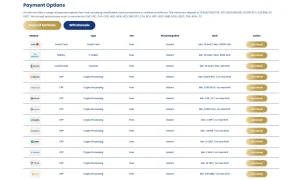
Card procedures illustrate why the distinction matters. A casino deposit using Amex involves selecting the card in the cashier, entering card details and an amount in AUD, then submitting the payment. That sequence is specific to a card transaction. It does not show that PayID uses the same steps, asks for the same information or follows the same authorisation path. Nor does the widespread use of mobile wallets prove that a separately named method is available at an online gambling service.
For a PayID casino payment method, acceptance conditions would need to be stated for the relevant service rather than inferred from general Australian payment preferences. A method’s appearance in a list, a bank-linked payment’s popularity, or the availability of cards and wallets cannot by itself answer whether PayID is supported. The label also cannot establish transaction rules.
This matters if you are deciding whether you can pay with PayID at a casino. Treat the method as a specific transaction route, not as a synonym for bank payment or digital wallet use. Only information that identifies PayID itself and explains the conditions attached to its use can support a claim about that payment method. Cards, mobile wallets and PayPal provide context about other ways people pay; they do not define PayID.
Casino Bonuses and PayID: No Verified Terms to Report
A reference to PayID alongside a casino bonus does not, by itself, establish that an offer exists or that PayID is an eligible payment method. The two claims are separate: one concerns an inducement, the other concerns how a transaction is handled. A label combining them cannot confirm either.
Bonus wording also does not reveal the conditions attached to an offer. To understand what a promotion means, you would need its complete terms, including who is eligible, which payment methods qualify, how the offer is applied, and what restrictions govern any benefit. Without those details, claims about a PayID-linked welcome offer, a bonus without a deposit, or other PayID casino promotions should not be treated as established terms.
This distinction matters because an advertised benefit can depend on conditions that are not apparent in a short headline. Even if a page mentions PayID and a bonus together, that wording does not show that making a PayID payment triggers the offer, that the offer is available to Australian users, or that any stated benefit can be used or withdrawn. Those conclusions require explicit, applicable terms.
Australia also restricts advertising of real-money interactive gambling services, including online casinos. Bonus claims should therefore be read as promotional statements, not as evidence that an operator may lawfully provide the service to people in Australia. This section is informational and does not recommend or promote an offer.
The practical distinction is simple: a payment-method reference is not a bonus rule, and a bonus headline is not proof of payment eligibility. Do not infer an offer, its value, or its conditions from the phrase “PayID bonus” alone.
What are the deposit and withdrawal limits at the best Amex casinos?
Limits are set by each casino and can vary; Amex limits are usually higher than those for Mastercard and Visa. Check the casino’s cashier for its current deposit and withdrawal limits.
Which online casinos accept American Express for deposits?
Jackpot City Casino, Spin Palace, Ruby Fortune, Ignition Casino, Joe Fortune and PlayAmo are listed as supporting Amex deposits for Australian players.
Are casino Amex payments instant?
Yes, Amex casino deposits are processed instantly. Withdrawals can take up to five days to clear.
Does American Express work for online casinos?
Yes, some Australian online casinos accept Amex deposits, including Jackpot City Casino, Spin Palace, Ruby Fortune, Ignition Casino, Joe Fortune and PlayAmo. Some casinos may not accept Amex, and Australian banks may block gambling transactions on Amex cards.
Are there fees for using Amex at online casinos?
Amex deposits typically have no fee, but a casino may charge a 1.5% surcharge, and Amex cards incur a 3% currency conversion fee. Withdrawal fees may also apply, depending on the casino.
How long do Amex casino deposits take to process?
Amex casino deposits are processed instantly.