
Know What You’re Paying With Before You Deposit
PayID routes funds from a connected bank account; it is not carrier billing, and its presence says nothing about a casino’s games or bonus terms.

PayID Is a Bank Payment, Not a Phone-Bill Charge
“Pay by phone bill” and PayID describe different payment mechanisms. The first phrase suggests carrier billing: a purchase is charged to a mobile account or deducted from prepaid phone credit. PayID does not work that way. It is a payment service connected to a bank account, where an identifier helps direct a payment to its recipient.
The word “phone” can cause confusion because a mobile number can be used as a PayID identifier. That number identifies an account for a bank payment; it does not turn the payment into a charge on your phone bill. If you use a mobile number as your PayID, the funds still come from the bank account connected to your banking service. The number is an address for the payment, not its funding source.
That distinction matters when you see wording about paying for mobile casino games through a phone bill. It does not establish that PayID is carrier billing, or that a mobile provider will add a gambling payment to your account. PayID is not a way to move the cost onto a monthly phone statement. It remains a bank payment even when you access your bank through a phone or use a mobile number as the identifier.
Casinos listed by licence
If you’re looking at pay-by-phone casinos in Australia, check whether a listed operator actually offers a phone payment method before depositing. These cards summarise only the available details, so you can see what is known and what still needs checking.
-
Bizzo Casino
- License
- Curacao Gaming Control Board (TechSolutions Group N.V.)
You can note Bizzo Casino’s stated licence: the Curacao Gaming Control Board, held by TechSolutions Group N.V. No phone payment details are provided here.
-
SpinsUp
- License
- Curacao Gaming Control Board OGL/2023/174/0082 (Dama N.V.)
You can note SpinsUp’s Curacao Gaming Control Board licence, OGL/2023/174/0082, held by Dama N.V. The available details do not specify phone payment options.
-
Wild Tokyo
- License
- Curacao
- Payout speed
- crypto 30-60 minutes, fiat 1-5 days
- Min. deposit
- A$10
Wild Tokyo lists a minimum deposit of A$10, with crypto payouts in 30–60 minutes and fiat payouts in 1–5 days. Its stated licence is Curacao; phone payment availability is not specified.
-
MrPacho
- Payout speed
- crypto 30-120 minutes, fiat 24-72 hours
- Min. deposit
- A$30
MrPacho lists crypto payouts in 30–120 minutes and fiat payouts in 24–72 hours. No licence or phone payment details are provided here.
-
Rollero Casino
- License
- Curacao Gaming Control Board OGL/2023/176/0095 (Hollycorn N.V.)
You can note Rollero Casino’s Curacao Gaming Control Board licence, OGL/2023/176/0095, held by Hollycorn N.V. The available information does not state whether phone payments are supported.
-
LevelUp Casino
- License
- Curacao eGaming OGL/2023/174/0082 (Dama N.V.)
- Min. deposit
- A$15
LevelUp Casino lists a minimum deposit of A$15 and a Curacao eGaming licence, OGL/2023/174/0082, held by Dama N.V. Phone payment options are not specified.
-
Ricky Casino
- Payout speed
- crypto under 1 hour, PayID 1-3 business days
- Min. deposit
- A$20 (A$30 to qualify for the bonus)
Ricky Casino lists crypto payouts in under an hour and PayID payouts in 1–3 business days. Its minimum deposit is A$20, or A$30 to qualify for the bonus; these details do not establish that PayID or another phone payment method is available for deposits.
-
Playfina Casino
- License
- Curacao eGaming (Hollycorn N.V., since 2017)
- Min. deposit
- A$20-30 (depends on the offer)
Playfina Casino lists a Curacao eGaming licence held by Hollycorn N.V. since 2017. Its minimum deposit is A$20–30 depending on the offer, while phone payment availability is not stated.
-
JustCasino
- License
- Curacao Gaming Control Board
JustCasino’s stated licence is the Curacao Gaming Control Board. No deposit, payout, or phone payment details are provided here.
-
House of Pokies
- License
- international iGaming licence – jurisdiction not named in the source
- Payout speed
- PayID 1-24 hours
- Min. deposit
- A$30 (PayID from A$10)
House of Pokies lists PayID payouts in 1–24 hours and a minimum deposit of A$30, or A$10 for PayID. Its source describes the licence as an international iGaming licence without naming the jurisdiction; the payout information alone does not confirm phone deposits.
What the PayID name identifies
PayID operates through the New Payments Platform (NPP), Australia’s payment infrastructure. Instead of relying on the recipient’s account details as the identifier you enter, a PayID can use information such as a mobile number or email address. The identifier is linked to a bank account so that payments can be sent to it through the banking system.
A phone number therefore has two possible roles in this discussion. It can be part of a carrier-billing arrangement, where a provider’s account is charged, or it can serve as a PayID identifier associated with a bank account. The number itself does not tell you which arrangement is being used. You need to know what account is actually funding the payment.
With PayID, the relevant funding source is the linked bank account. Your bank provides the payment service through its banking facilities; your mobile carrier is not acting as the payment source merely because the identifier is a phone number. This is why “PayID by phone” can be misleading if it is taken to mean “add the cost to my phone bill.” A payment made using a phone is not necessarily a phone-bill payment.
The same distinction applies if you use an email address as your PayID. The email address helps identify where a bank payment should go; it does not become a separate source of funds. In either case, PayID describes how the recipient is identified, while the bank account supplies the money.

Why the wording matters in Australia
People looking for an online casino payment by phone bill may be trying to avoid entering bank details or may expect the cost to appear on a mobile account. PayID does not provide that billing arrangement. Treating it as if it did can lead to a misunderstanding about where money comes from and what service processes the payment.
There is also a separate legal issue. Under Australia’s Interactive Gambling Act 2001, operators are prohibited from providing real-money online casino games, including slots and table games, to people physically located in Australia. That applies regardless of whether a site describes its payment option as PayID, phone billing or something else. A payment label does not change the legal status of the gambling service.
So, when you encounter wording about paying for casino games by mobile phone, separate the claimed payment method from the device used to access it. A phone can be used to access a bank app, but that does not make the resulting transaction a phone-bill charge. PayID is a bank-linked payment service that uses an identifier; carrier billing, as the phrase suggests, would charge a mobile account. They are not interchangeable terms.
What Happens When You Deposit with PayID
In a payment flow that offers PayID, the casino’s cashier starts the process, but the payment itself is confirmed in your banking app. The sequence has separate steps: choose PayID in the cashier, enter the amount, check the payment details, then authorise the transfer through your bank. A deposit is not complete merely because you have selected the method or opened the banking app.
Do
- Verify that the recipient name in your banking app matches the casino's instructions.
- Include the exact player ID or username in the payment reference field.
- Confirm the amount, recipient, and reference before authorising the transfer.
Don't
- Assume a successful bank transfer means the casino has automatically credited your account.
- Use a different note or reference than the one specifically requested by the cashier.
- Send a second payment if the first one is not immediately visible in your balance.
There is an important legal limit in Australia. The Interactive Gambling Act 2001 prohibits operators from providing real-money online casino games, including pokies, to people located in the country. The steps below explain the payment sequence, not an endorsement or invitation to use an online casino service.
Start in the cashier
If PayID appears as a payment option, selecting it should take you to a deposit form or display the details needed to make a transfer. Enter the amount you intend to send and read the instructions shown for that transaction. The amount entered in the cashier needs to match what you later authorise in your banking app; otherwise, the payment and the casino’s deposit record may not match cleanly.
The payment screen may also show a recipient name and a reference field. Treat these as transaction details to check, not as incidental text. Before confirming anything, verify that the recipient name shown by your bank matches the recipient information supplied for the payment. If the name or other details do not match, stop rather than assuming the transfer will still be credited correctly.
Check the reference before leaving the cashier
The payment reference connects the incoming transfer with the account that requested it. Some casinos require your player ID or username in that field so their system can identify the deposit automatically. Enter it exactly as instructed, and check the characters before proceeding. A missing or incorrect identifier can prevent automatic matching.
Where the instructions call for a unique reference, include it in the payment description and do not substitute a different note. The reference is not the amount, the recipient name, or your bank’s PayID identifier. It is the information used to associate the transfer with the relevant player account. If the cashier supplies a specific code or format, follow that instruction rather than shortening or rewriting it.

This step matters even when the transfer itself is successful. Money can reach the named recipient while the casino’s records still lack the detail needed to connect it to your account. In that case, the deposit may stay pending and require support staff to process it manually. A correct reference reduces the chance of that mismatch; it does not change the amount sent or independently authorise the payment.
Confirm the amount in your banking app
After entering the deposit details, open the banking app and review the transfer before approving it. Confirm the amount, the recipient name and the reference or description. These are distinct checks: matching the amount does not confirm the recipient, and a correct recipient does not confirm that the reference is present.
Only authorise the transaction if the information agrees with the payment instructions. If the app displays a different recipient or the reference field is blank when one is required, do not complete the transfer on the assumption that the casino can identify it later. Return to the cashier or seek clarification through an appropriate support channel before sending money.
Once you confirm the transfer, your bank processes the instruction. The casino then needs to associate the incoming payment with the deposit request and update the account balance. Those are separate events: approving the bank transfer does not itself prove that the casino has credited the deposit. Check the account status after payment rather than repeating the transfer simply because the balance has not changed immediately.
If the deposit is not credited
First compare the payment record in your banking app with the cashier’s instructions. Check that the amount and recipient match and that the reference contains the required player ID or username. If the reference was omitted or entered incorrectly, keep the transaction details and contact the relevant support channel so the payment can be investigated. Do not send another payment as a way to force the first one to appear; that could create a second transaction without resolving the original matching problem.
A useful record includes the amount, recipient details, payment reference and the transaction confirmation shown by your bank. Share only the information needed to identify the transfer, and use the appropriate secure contact route. If every detail is correct but the account still shows no credit, the issue may be in the recipient’s processing or account-matching step rather than in the confirmation you made in the app.
The practical sequence is therefore precise: select PayID, enter the amount, preserve the required reference, verify the recipient and payment details, then confirm in your banking app. Each check addresses a different possible failure. A transfer can be authorised while its reference is unusable for automatic crediting, so the final review of the description is as important as checking the amount.

How PayID Casino Payments Move Through the Banking Network
PayID payments involve two separate processes: the movement of money between financial institutions and the receiving business’s handling of that payment. The New Payments Platform (NPP) supports the first process. It carries payment instructions between participating institutions, allowing a PayID transfer to settle in real time once the payer’s bank releases it. “Real time” describes the banking network’s settlement, not every step required for a payment to appear in a recipient’s account balance or be recognised by a service.
The sequence begins when a payer authorises a transfer through their bank. The bank checks and releases the instruction into the payment system. The NPP then routes it to the receiving institution, where the transfer can settle without waiting for the slower processing cycle associated with some traditional bank payments. PayID transfers commonly clear within minutes after release, while the network itself is designed for real-time settlement.
That timing does not mean a payment is credited to a casino account at the same instant. Settlement confirms that the funds have moved through the banking network; account crediting is a separate operation controlled by the recipient. A casino’s system may need to identify the incoming payment, associate it with the correct customer account and apply its own approval process. Those steps are outside the NPP’s role.
This distinction explains why two status messages can describe different stages without conflicting. A banking app may show that a transfer has been completed, while the recipient’s account still shows no corresponding balance. The bank’s status concerns the payment between institutions. The casino’s status concerns whether its own systems have matched and processed the receipt. A delay at the second stage does not, by itself, show that the NPP has failed to settle the payment.
There can also be a difference between receiving a payment and approving its use. A service may record funds as received while still applying internal checks before making them available in an account. The NPP does not decide whether a casino accepts a customer, approves a deposit, or updates a gaming balance. It transports payment instructions and supports settlement; the recipient remains responsible for its own account records and decisions.
For a payment problem, the useful distinction is therefore between a transfer that has not been released or settled and one that has settled but is not visible in the recipient’s account. The first concerns the payer’s bank or the payment path. The second concerns recipient-side identification, processing or approval. Checking the transaction status with the bank and the account status with the recipient addresses different parts of the chain; one cannot substitute for the other.
This mechanism should not be read as confirmation that real-money online casino services are lawful in Australia. Under the Interactive Gambling Act 2001, operators are prohibited from providing real-money online casino games to people located in Australia. The payment network’s ability to transfer funds does not authorise a service or change that legal position.
In practical terms, PayID’s speed describes the banking rail, not the full customer-facing process. The NPP can settle a released transfer in real time, and the money may clear within minutes, but the recipient’s own matching and approval steps can still determine when an account reflects it. Distinguishing those stages gives you a more accurate way to interpret payment statuses than treating “sent,” “settled” and “credited” as interchangeable.

How to Assess a PayID Casino Without a Best-of List
A payment option is not evidence that an online casino is lawful, reliable or suitable for Australian residents. PayID identifies a way to move money; it does not certify the business receiving it. Before considering any claim about a casino that accepts PayID, separate what can be checked from what the payment method merely appears to suggest.
The legal position is the first check. Under the Interactive Gambling Act 2001, an operator must not provide real-money online casino games to people in Australia. That prohibition covers pokies and other casino-style games, including poker and table games. A foreign licence does not override Australian law or turn an offshore casino into a locally authorised service. Accordingly, a “best” ranking or a list of casinos accepting PayID should not be treated as a recommendation to deposit.
If you encounter an operator’s claims, inspect the licence details rather than relying on a badge or a statement that the site is “licensed”. Identify the regulator named, then check the regulator’s own records to see whether the licence exists and whether it applies to the operator shown on the site. Also check the licence’s scope and status. A genuine overseas licence may tell you something about the operator’s obligations in that jurisdiction; it does not establish permission to offer real-money casino games to customers in Australia.
A payout record needs the same scrutiny. Look for dated, specific accounts that distinguish a withdrawal request from approval and receipt of funds. A claim that payments are fast is not a record. Nor does one successful payment establish how disputes, account checks or unsuccessful requests are handled. Treat operator-selected testimonials and broad promises cautiously; they are not independently verified evidence of consistent outcomes. Do not infer that PayID guarantees a payout simply because it was offered as a deposit route.
- Verify the operator's licence details with the named regulator.
- Check for consistent business names across terms and payment instructions.
- Look for specific, dated payout records rather than broad promises.
- Confirm the exact identity of the PayID recipient before transferring.
Check whether the operator’s stated identity is consistent across its terms, licence information and payment instructions. Differences in business names or unexplained changes in the entity receiving funds make it harder to establish who is responsible for the service. The displayed PayID recipient should be checked before any transfer is confirmed; a mismatch is a reason not to proceed, not a detail to overlook.
Account checks also matter to the reliability of claims about withdrawals. A specialist review reports that identity checks may be required before a first withdrawal, and that completing KYC verification early can reduce paperwork delays. That observation is not a guarantee about any particular operator. Read the operator’s own account and verification conditions, and do not send documents through an unverified channel.
A useful assessment therefore does not produce a “best” casino. It tests whether claims can be independently substantiated and whether they change the legal position—which a payment method or overseas licence cannot do. In Australia, the decisive point is that real-money online casino games may not lawfully be provided to people in the country. A polished site, a PayID option and favourable payout anecdotes do not alter that.

Read the Bonus Terms Before You Opt In
A bonus is governed by its conditions, not by the payment method used to fund an account. PayID does not make an offer “no wagering”, remove restrictions, or determine which games count towards a promotion. The same checks apply whether an offer is described as a deposit bonus, a no-deposit bonus, or a no-wagering offer.
There is an important Australian legal limit: operators cannot provide real-money online casino games, including pokies, to people physically located in Australia. A bonus label does not change that. Treat claims that such an offer is available to you as a reason to stop and check what is being offered, not as proof that it can lawfully be provided.
If you are reviewing bonus terms in another context, read the conditions that govern the bonus balance and any winnings from it. The wording should tell you what you must do, what restrictions apply while doing it, and what happens when the conditions are not met. A headline such as “no wagering” is not enough to establish that there are no other limits.
Bonus Conditions
Always check the specific terms governing a promotion, such as wagering requirements, maximum bet limits, and game weightings, as these determine how and when you can access bonus funds.
The conditions to inspect
- Wagering requirement: Check whether you must place bets before bonus funds or related winnings can be withdrawn. Confirm which balance the requirement applies to and whether the terms define when it is complete.
- Maximum bet: Look for a cap on the amount permitted on an individual bet while the bonus is active. If a bet exceeds the cap, the terms may affect eligibility for the promotion or its winnings.
- Game weighting: Check whether different games contribute differently towards any wagering requirement. Do not assume that every game contributes equally, or that a particular game counts, unless the terms say so.
- Time limit: Find when the offer begins and when its conditions expire. A deadline can make an otherwise achievable requirement unusable if you do not have enough time to meet it.
- Maximum cash-out: Check whether the terms limit the amount that can be withdrawn from bonus play. This is separate from whether a balance appears in the account.
Read the full terms before accepting an offer, including definitions and clauses that explain what happens if a condition is breached. If a key restriction is unclear, do not assume the more favourable interpretation; ask the operator for a written explanation before taking any action.
Promotional conditions are also separate from KYC verification. A specialist review has reported that identity checks may be requested before a first withdrawal and that completing them earlier can reduce paperwork delays. That does not make a bonus withdrawable or override its conditions.
Check the Withdrawal Route Before You Deposit
A deposit option does not tell you how winnings can be withdrawn. Before sending money, read the payment terms for the specific route out: which methods are accepted, whether the deposit method must be reused, and what happens if that method cannot receive a payout.
A specialist review reports that some operators may require withdrawals to go back through the deposit method where possible. Treat that as a condition to verify in the operator’s own terms, not as a universal rule. “Where possible” matters: a payment method may accept deposits but not provide a matching withdrawal route. POLi, for instance, is primarily a deposit method, so its presence on a cashier page is not evidence that it can be used to cash out.
PayID should be treated the same way. Its availability for deposits does not establish that the operator supports PayID withdrawals. Look for separate wording under withdrawals or payouts, and check whether the method is available for your account and circumstances. If the terms say that another route may be used, identify that route before depositing; do not assume the operator will send funds back through whichever option you prefer.

This distinction also helps when you are looking for phone-bill payments. A payment label or deposit button does not establish that a charge will appear on your phone bill, nor that the same route can return funds. Deposit and withdrawal methods are separate parts of the payment arrangement. Confirm each one from the relevant terms rather than inferring cash-out support from a deposit screen.
The withdrawal route can also involve steps that are separate from the payment network. An operator may review a request before releasing it, and its terms may set conditions for the destination account or method. Read those requirements before deciding whether a payment route is suitable. Keep a record of the terms shown to you, since payment options and conditions can change.
In Australia, real-money online casino games are prohibited services when offered to people physically located in the country. A payment method does not make such a service lawful or establish that an operator is authorised to provide it. Do not treat a withdrawal promise as proof of legitimacy. The practical check is to avoid using an unlawful online casino service, rather than relying on a payment option to make deposits or withdrawals safe.
If you encounter a service, verify its legal status and payout record before taking any action. A route that appears available on a deposit page may not be available for withdrawals, and a stated payout process does not remove the legal risk.
What PayID Can—and Cannot—Tell You About Casino Games
PayID describes a way to move money from a bank account. It does not identify the games connected to an account, show whether pokies or other casino-style games are available, or establish that a promotion applies to a deposit. Those are separate details, and a payment logo cannot verify them.
A page describing PayID payments may mention games or bonuses, but the method itself provides no evidence about either. A deposit option does not confirm that a particular game is offered, that it can be played on a phone, or that a bonus is available to you. Treat each claim as a separate matter rather than reading the payment method as proof of a full product catalogue.
The minimum deposit is one concrete payment detail you can compare. PayID deposits at casino sites are described as starting in the AUD 10–20 range, while some bank-transfer options accept AUD 5. These figures concern the amount needed to deposit, not the price of a game or the value of a bonus. Check the payment screen and applicable terms for the amount shown before proceeding.
There is also an important Australian legal limit. The Interactive Gambling Act 2001 prohibits operators from supplying real-money online casino games to people in Australia. That covers casino-style offerings such as slots, poker and table games. A PayID option on a page does not change that restriction or make an online casino service lawful to provide in Australia.

If a page combines claims about PayID, games and bonuses, keep the claims distinct: payment information concerns how funds are sent; game and promotion statements concern other services and conditions. Do not assume that wording such as “mobile casino” means a game is available through a phone payment, or that a listed deposit method makes the associated casino offering permissible in Australia.
PayID Is an Australian Payment Option, Not a Global Casino Label
PayID belongs to Australia’s banking environment. It lets someone with an Australian bank account send or receive money using an identifier, such as a mobile number or email address, rather than entering account details for each payment. The identifier is linked to a bank account; it does not make a payment method available everywhere a mobile phone can access a website.
That distinction matters when a casino-related page describes payment by phone. The phrase may refer to different things in different countries: a bank payment initiated with a phone, a charge billed through a mobile carrier, or another local payment service. Those methods are not interchangeable. A site’s use of mobile-payment wording does not establish that it accepts PayID.
Nor does a casino’s overseas location or licence tell you whether PayID is supported. PayID depends on participation in Australia’s banking system, while a foreign operator may use payment options designed for its own market. A page about casinos in Curaçao, for instance, is not evidence that an Australian bank can send PayID funds to that operator. Likewise, a German-language page about paying for online slots by phone describes a different market context, not an Australian PayID facility.
PayID
A bank-linked payment service using an identifier like a mobile number or email.
Carrier Billing
A service where charges are added directly to your mobile phone account.
Credit/Debit Cards
Payments processed through card networks like Visa or Mastercard.
There is also a separate legal boundary. Under the Interactive Gambling Act 2001, operators may not provide real-money online casino games, including slots, to people physically located in Australia. Search results or payment descriptions do not change that rule, and an overseas label does not turn a prohibited service into a locally permitted one. PayID’s presence in Australian banking is not approval of any gambling service that might mention it.
Treat the payment label as a limited technical claim: it describes a way to move money through participating Australian banks. It does not identify the casino’s location, establish that the operator can lawfully serve people in Australia, or confirm that a particular site supports the method. These are separate questions, and the word “phone” does not connect them.
Credit Cards and PayID Are Different Deposit Routes
PayID and a payment card may both appear in a payment menu, but they move money through different systems. PayID sends funds from a bank account using an identifier. A card payment instead uses card details and is handled by the card network and the payment processor. Neither method is a charge to your mobile phone bill; phone-billing services are a separate category.
For Australia, the distinction matters because credit-card payments must not be accepted for online gambling services. A page that displays Visa or Mastercard does not, by itself, establish that a credit card can lawfully be used. The card type and the payment route matter: do not treat a credit-card option as an acceptable way to fund online gambling.
Specialist reviews describe Visa and Mastercard as widely accepted for deposits in some casino payment menus, but that observation is not a guarantee of availability or suitability in Australia. The processor and the operator’s setup can affect which card transactions are offered. A card brand alone does not tell you whether a transaction will be processed as credit or debit.
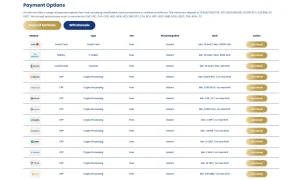
A deposit option also does not determine the withdrawal route. Specialist reviews report that card withdrawals may be slower or unavailable, depending on the processor. The fact that a card can be used for a deposit therefore does not mean winnings can be returned to it. Check the stated withdrawal methods separately rather than inferring them from the deposit screen.
Searches for phone-bill credit payments or services associated with other countries do not change these distinctions. A phone-billing service is not PayID, and a card payment is not a bank-account transfer. Before entering payment details, identify the actual method being requested and whether it involves credit. If it is a credit-card payment for online gambling, do not proceed.
Free Spins Do Not Change the Payment Mechanics
A free-spin offer or promotional credit is separate from the route used to fund an account. If a promotion is attached to a deposit, the payment still follows the selected method’s process; the bonus does not turn a bank payment into a phone-bill charge. Nor does the word “credit” necessarily mean that money has been added to your bank balance. It may describe a promotional balance with conditions on its use or withdrawal.

That distinction matters when an offer is described as free spins for a phone payment. Read the terms to establish whether a deposit is required, which payment methods qualify and what happens to any resulting winnings. A promotion’s label alone does not establish that it is available through PayID or through a charge to a mobile account.
Deposit thresholds are set separately from bonus conditions. Published PayID casino deposit minimums commonly fall in the AUD 10–20 range, while some bank-transfer options accept AUD 5. Those figures do not confirm that a particular promotion qualifies at that amount; the offer’s terms determine eligibility.
In Australia, real-money online casino games, including pokies, are prohibited services when provided to people in the country. A free-spin or credit promotion does not change that legal position. Treat claims about promotional credits as distinct from claims about payment methods, and do not assume that an advertised offer is lawful or available to you simply because it mentions a familiar payment route.
Do Australian online casinos support PayID withdrawals?
Some casinos offer PayID withdrawals, but availability depends on the operator. The casino must approve the request before the transfer is released.
How long do withdrawals take?
For verified accounts, top-rated casinos typically review and approve PayID withdrawals within 2–6 hours. Once released, the payment can arrive within minutes, though other methods may take one to five business days.
Can you withdraw casino winnings using PayID?
Yes, some casinos allow PayID withdrawals. You may need to use the same payment method you used for deposits, and the casino’s review must be completed first.
What are the minimum and maximum deposit limits at PayID casinos?
PayID casino deposits commonly start at AUD 10–20, with some accepting as little as AUD 5 by bank transfer. The maximum depends on your bank; major Australian banks commonly allow AUD 1,000–5,000 per transaction.
What is the minimum PayID deposit?
PayID casino deposits commonly start at AUD 10–20. Some casinos accept deposits as low as AUD 5 via bank transfer.