
Separate casino approval from payment speed
Crypto transfers can be quick after release, but operator approval and bonus conditions shape the route from request to usable funds.

Bitcoin Casinos: How Crypto Payments Change the Withdrawal Path
A Bitcoin withdrawal has two separate clocks: the time an operator takes to approve and send a payment, and the time the Bitcoin network takes to record it. A quick network transfer cannot remove the operator’s review stage. That distinction matters whenever a payment is described as instant: the word may refer only to the movement of funds after approval, not to the full period from submitting a request to receiving spendable Bitcoin.
A specialist review has described cryptocurrency transactions as capable of being near-instant. That is a general description of possible transaction speed, not a promise about every Bitcoin transfer or a measure of how quickly a casino will release a withdrawal. The transfer still depends on the operator initiating it and the network processing it. If either stage takes longer, the overall wait is longer.
Follow the payment through its stages
A useful way to understand the path is to separate the operator’s actions from the network’s actions:
- You submit a withdrawal request. The operator receives the instruction and determines whether it can release the funds. The request is not yet a Bitcoin transaction on the network.
- The operator approves and sends the payment. At this point, it creates a transaction directing Bitcoin to the destination address you supplied. Until the operator sends it, the network has nothing to process.
- The network records the transaction. Bitcoin nodes receive and handle the transaction; confirmation provides a record that it has been included in the blockchain.
- The receiving wallet reflects the payment. What you can see or use may depend on how the receiving wallet presents incoming and confirmed transactions.
Casinos listed by licence
Use this list as a starting point when exploring no-KYC casino options in Australia for 2026. A no-KYC label does not guarantee that verification will never be requested, so check each casino’s current terms before you deposit.
-
Bizzo Casino
- License
- Curacao Gaming Control Board (TechSolutions Group N.V.)
Bizzo Casino is listed with a Curacao Gaming Control Board licence held by TechSolutions Group N.V.
-
SpinsUp
- License
- Curacao Gaming Control Board OGL/2023/174/0082 (Dama N.V.)
SpinsUp is listed with Curacao Gaming Control Board licence OGL/2023/174/0082, held by Dama N.V.
-
Wild Tokyo
- License
- Curacao
- Payout speed
- crypto 30-60 minutes, fiat 1-5 days
- Min. deposit
- A$10
Wild Tokyo lists a Curacao licence, with a minimum deposit of A$10. Its stated payout times are 30–60 minutes for crypto and 1–5 days for fiat.
-
MrPacho
- Payout speed
- crypto 30-120 minutes, fiat 24-72 hours
- Min. deposit
- A$30
MrPacho lists crypto payouts in 30–120 minutes and fiat payouts in 24–72 hours. The minimum deposit is A$30.
-
Rollero Casino
- License
- Curacao Gaming Control Board OGL/2023/176/0095 (Hollycorn N.V.)
Rollero Casino is listed with Curacao Gaming Control Board licence OGL/2023/176/0095, held by Hollycorn N.V.
-
LevelUp Casino
- License
- Curacao eGaming OGL/2023/174/0082 (Dama N.V.)
- Min. deposit
- A$15
LevelUp Casino is listed with Curacao eGaming licence OGL/2023/174/0082, held by Dama N.V. Its minimum deposit is A$15.
-
Ricky Casino
- Payout speed
- crypto under 1 hour, PayID 1-3 business days
- Min. deposit
- A$20 (A$30 to qualify for the bonus)
Ricky Casino lists crypto payouts in under an hour and PayID payouts in 1–3 business days. The minimum deposit is A$20, or A$30 to qualify for the bonus.
-
Playfina Casino
- License
- Curacao eGaming (Hollycorn N.V., since 2017)
- Min. deposit
- A$20-30 (depends on the offer)
Playfina Casino is listed with a Curacao eGaming licence held by Hollycorn N.V. since 2017; its minimum deposit is A$20–30, depending on the offer.
-
JustCasino
- License
- Curacao Gaming Control Board
JustCasino is listed with a Curacao Gaming Control Board licence.
-
House of Pokies
- License
- international iGaming licence – jurisdiction not named in the source
- Payout speed
- PayID 1-24 hours
- Min. deposit
- A$30 (PayID from A$10)
House of Pokies lists an international iGaming licence, though the jurisdiction is not named in the source. Its PayID payout time is 1–24 hours; the minimum deposit is A$30, or A$10 for PayID.
The exact interface and labels differ between operators and wallets, but the division is the important part: operator processing comes before network settlement. A transaction can move quickly once broadcast while the withdrawal request itself remains pending. Conversely, an operator may approve and send it promptly, but the network stage can still affect when the receiving wallet treats it as settled.
This is why comparing a Bitcoin cashout with a bank payment by quoting only the transfer speed can mislead. It compares one part of one route with a different route’s full processing time. To assess a stated payout estimate, identify its starting point and end point. Does the estimate begin when you click submit, when the operator approves the request, or when it broadcasts the transaction? Does “complete” mean a transaction identifier has been issued, or that the receiving wallet recognises the transfer as confirmed? Without those definitions, two timing claims may describe different things.
The address is part of the instruction
A Bitcoin payment is directed to a wallet address. That address is not interchangeable with a bank account identifier, and a transfer sent to an incorrect destination may not be recoverable through the operator’s ordinary withdrawal process. Check the destination carefully before confirming a request, and make sure the address belongs to a wallet that can receive Bitcoin. A payment sent using the wrong asset or to an incompatible destination can create a separate problem from a slow payout.

The withdrawal form may also ask you to enter an amount and confirm the transaction. Those details define what you are asking the operator to release; they do not force the operator to approve it or make the network process it immediately. Keep the request record and any transaction reference available so you can distinguish a pending operator request from a transaction that has already been broadcast.
Bitcoin’s network transfer mechanics are therefore only one part of the withdrawal path. The operator controls when it reviews and releases a request; the network handles the transaction after it is sent; the receiving wallet displays its progress. Each stage has a different owner and a different status. If a payment appears delayed, first establish which stage it has reached rather than assuming that the blockchain itself is responsible.
For someone in Australia, this payment explanation should not be read as an endorsement or an invitation to use a real-money casino. The Interactive Gambling Act 2001 prohibits operators from providing online casino-style games, including slots and table games, to people located in Australia. Bitcoin changes how funds may move; it does not alter that legal position or turn a payment method into evidence that a service is permitted.
Legal Prohibition
Under the Interactive Gambling Act 2001, providing online casino-style games to people located in Australia is prohibited.
The practical test for any claim about a Bitcoin payout is thus simple: separate the operator’s approval time from the network transfer time, then find out what event the quoted estimate actually measures. “Near-instant” can describe a transaction capability, but it cannot, by itself, establish when a withdrawal will be approved, sent, confirmed, or visible in your wallet.
No-KYC Crypto Casinos: What the Payment Method Does—and Does Not—Change
Choosing cryptocurrency changes the payment rail, not the identity rules that apply to an account. A crypto deposit does not, by itself, show that an operator has waived verification, and it does not guarantee that a later withdrawal can proceed without checks. The two questions are separate: which methods an operator accepts, and what information it requires before releasing funds.
A specialist review of Australian payment options described cards, PayPal and Skrill wallets, and bank transfers, with cryptocurrency available at some casinos. That is a report about payment methods, not evidence that every operator accepts crypto or that a particular service is accessible to you. Payment menus can differ between operators and may change. Nor does a crypto option establish that an operator is lawful in Australia.
A payment method is not an identity policy
A payment method describes how funds are sent or received. Identity verification concerns who is using the account and whether the operator can process a withdrawal. Those functions do not become interchangeable because a payment is made in cryptocurrency.
A casino might accept a crypto deposit while still requiring identity checks before withdrawal. Conversely, an operator’s claim that it offers a low-check or “no-KYC” account is a claim about its account procedures, not a technical property of the coin or network. The label cannot be inferred from the payment button.

This distinction matters because a deposit can be straightforward while a withdrawal is not. The operator controls whether to review an account and release a payment; the payment method does not compel it to approve a request. In Australia, casinos must verify player identity through KYC procedures before processing withdrawals. A promise that crypto makes verification unnecessary would conflict with that requirement.
What “no KYC” can and cannot tell you
The phrase may suggest that an account can be opened or funded with little initial information. It does not reliably describe what happens at every later stage. In particular, it does not establish that funds can be withdrawn without identity verification. The conditions attached to an account, including withdrawal requirements, are the relevant details; the cryptocurrency option alone answers none of them.
You should therefore read “no KYC” as a description that needs checking, not as a guarantee. Look for the operator’s stated identity and withdrawal terms before entering personal or payment information. If the terms reserve the right to request documents, the no-check label does not remove that possibility. If the terms are unclear or inconsistent, the payment method cannot resolve the uncertainty.
The same reasoning applies to a new crypto casino or an offer described as a no-deposit bonus. A new service does not become more trustworthy because it accepts digital assets, and a bonus does not make verification optional. Payment choice, account checks and promotional conditions are separate matters. A crypto deposit does not prove that a bonus is available, that it can be withdrawn, or that an account is exempt from checks.
Australia changes the context
There is also a legal distinction that a payment label cannot alter. Under Australia’s Interactive Gambling Act 2001, operators cannot provide real-money online casino games to people physically located in Australia. Casino-style services such as slots, poker and table games fall within that prohibition. Using cryptocurrency does not change the nature of the service or make an otherwise prohibited offer lawful.
That means a page advertising a crypto casino as “no KYC” should not be treated as a recommendation or as proof that the service is available to Australian residents. A payment option is not a local authorisation, and a claim about identity checks does not override the Australian rules. The important point is not whether a site uses cards, a bank transfer, an e-wallet or cryptocurrency; it is that the chosen payment rail does not change the legal status of the underlying casino service.
For a reader comparing claims, keep the questions distinct: is cryptocurrency listed as a payment option; what identity checks are required; what happens before a withdrawal is approved; and is the service lawful for someone physically in Australia? An answer to the first question does not supply answers to the others. In particular, “crypto accepted” is not evidence of “no verification,” and “no KYC” is not evidence that a real-money casino is permitted to serve Australians.

What “No KYC” Means When You Try to Withdraw
“No KYC” is a description an operator may use for its sign-up process or for reduced checks at a particular stage. It is not proof that a withdrawal can be paid without identity verification. The distinction matters because opening an account and releasing funds are separate decisions: a site may allow account activity before it has completed the checks required to process a cashout.
For a withdrawal, the operator must verify the player’s identity through KYC procedures before processing the payment. A claim that checks are limited, delayed or unnecessary at registration does not remove that requirement. Nor does it establish that the operator will accept a withdrawal request without asking for verification. The practical meaning of “no KYC” therefore depends on what the claim covers; read it as a statement about a particular stage, not a guarantee about the full withdrawal path.
A specialist review reported that first withdrawals often prompt verification requests. That timing can catch you off guard if you have treated a “no KYC” label as applying from registration through payout. Once a request is raised, the withdrawal cannot proceed until the operator has completed its checks. The request may therefore remain pending even if the account appeared ready to use before you tried to withdraw.
Completing verification early can significantly speed up later withdrawals. The reason is procedural: if the operator has already checked your identity before a cashout request, that check is less likely to become a new task that holds up the request. This does not guarantee immediate payment. It removes one potential source of delay; it does not control the operator’s other processing steps or the payment transfer itself.
When assessing a no-KYC claim, separate three questions. What checks are described at account creation? What verification may be required before withdrawal? And what does the operator say happens if a check is incomplete? A statement about the first question does not answer the other two. Look for clear withdrawal terms rather than relying on a short promotional label, and do not assume that the same wording means the same process across different operators.
If verification is requested, treat it as a condition of the withdrawal rather than as an optional extra. Until the operator has confirmed the required checks, the cashout may not be processed. Sending a request first and waiting for the operator to ask for verification can add a pause that could have been avoided by completing the process earlier. If you cannot establish what verification is required or how the operator handles it, the “no KYC” wording does not give you a reliable expectation of when funds might be released.
There is also a market-specific boundary. Under Australia’s Interactive Gambling Act 2001, operators are prohibited from providing real-money online casino games to people physically in Australia. A “no KYC” description does not change that legal position, and this explanation is not a recommendation to use an offshore casino. The phrase should not be read as evidence that a service is authorised, accessible or able to pay without checks.
The useful conclusion is narrow: reduced checks at sign-up do not mean identity checks are waived at withdrawal. Verification may arise when you first request a cashout, and completing it beforehand can reduce a later hold. A label cannot promise that an entire withdrawal will be immediate or that the operator will skip the checks required before processing funds.

No-Deposit Bonuses: Check the Wagering Rules Before You Claim
A no-deposit offer describes how a bonus is made available; it does not, by itself, tell you whether the resulting balance can be withdrawn. The key detail is the wagering requirement: the play-through condition attached to bonus funds before they become eligible for withdrawal. A specialist review reports two ways this condition can be calculated: against the bonus alone or against the combined deposit and bonus. It considers the bonus-only basis preferable because the amount subject to the condition is narrower.
Read the rule as a calculation, not as a headline. If the requirement applies only to bonus funds, the deposit is outside that wagering calculation. If it applies to the combined deposit and bonus, both amounts are included. That difference can change how much qualifying play is needed before a withdrawal is permitted, even when the advertised bonus is described in the same way.
A no-deposit bonus may sound as though it has no cost to you, but the absence of an initial deposit does not remove its conditions. The offer’s terms determine what must happen before the balance can be withdrawn. Before accepting, locate the wording that identifies the calculation base. Look for whether it refers to bonus funds alone, or to the bonus together with any deposit. If that distinction is not stated clearly, you cannot reliably assess the withdrawal condition from the offer label.
This distinction matters when a promotion combines a bonus with a deposit. Suppose the terms define the wagering base as the bonus only: the deposit is not part of that base. If the terms define it as the combined amount, the deposit is included too. These are different rules, not two descriptions of the same requirement. Do not assume that “bonus wagering” means bonus funds alone; the wording needs to establish that.
Do
- Locate the specific wording regarding the wagering calculation base.
- Determine if the requirement applies to bonus funds alone or the combined amount.
Don't
- Assume that a no-deposit label exempts you from wagering conditions.
- Assume that "bonus wagering" always refers to bonus funds only.
The same check applies when an offer is described as a no-KYC bonus or a crypto casino bonus. Those labels concern different aspects of an offer and do not explain the wagering calculation. A payment method does not change whether the requirement is based on bonus funds or on the combined balance. Nor does a no-deposit label tell you whether a withdrawal will be available before the stated wagering condition is met. Keep the offer’s payment, identity and bonus terms separate when assessing what the balance can be used for.
Before you accept, check the terms for the base amount and make sure you understand which funds are included. Then consider whether the rule makes the deposit part of the calculation. If it does, the condition covers a broader amount than a bonus-only rule. If the terms do not let you identify the base, treat the withdrawal condition as unclear rather than inferring the more favourable interpretation.
A “best” no-deposit offer cannot be judged from the size or label of the bonus alone. For withdrawal eligibility, the useful comparison is whether the wagering condition applies to bonus funds only or to the combined deposit and bonus, and whether the wording makes that clear. The bonus-only approach is the preferable one identified in specialist coverage, but the actual terms attached to an offer are what determine its conditions.
Finally, do not treat completing wagering as proof that every other withdrawal condition has been satisfied. It addresses the bonus requirement only. Read the offer’s wording before claiming, and do not attempt to withdraw bonus-related funds until you have met the applicable wagering condition.
PayID Withdrawals: Separate the Casino’s Approval from the Transfer
A PayID cashout has two distinct stages: the operator reviews and releases the request, then the payment moves through the banking system. PayID is Australia’s bank-to-bank instant payment system, operating through the New Payments Platform (NPP). Its real-time transfer capability applies to the payment stage; it does not make the operator’s review instantaneous.
A withdrawal request typically involves signing in, opening the wallet or withdrawal area, entering your PayID details, specifying an amount and confirming. The operator must then check the request before releasing funds. Identity verification is required before a withdrawal is processed, and a first cashout may prompt additional review. Using PayID does not remove that requirement or guarantee an instant withdrawal.
Once the operator releases the funds, the transfer can move in real time. A specialist review reported that some leading Australian PayID services processed withdrawals in under five minutes, contrasting that with one to three business days for standard bank transfers. Treat those figures as a reported comparison, not a promise: operator procedures and payment conditions can change, and the reported time does not describe every request from submission to receipt.
What happens before the transfer
Auto-approval can shorten the operator stage, but it is conditional. A specialist review reported that some top-tier services automatically approved withdrawals below $5,000 AUD. This does not mean every request below that threshold bypasses checks. Identity verification, account details, transaction history or an amount requiring manual review can still affect release.
PayID Processing
While the PayID network supports real-time transfers, the operator's review stage can still introduce delays.
An operator may manually review certain requests, and identity verification is required before a cashout is processed.
The same specialist review identified withdrawals above $2,000 as a potential cause of delay. That is a reason to check the operator’s stated review process, not evidence that every larger cashout will be held. Some operators may release larger withdrawals in instalments under their own policies, so the amount requested and the amount transferred at once may differ.
Before submitting, confirm that the PayID details belong to you and match the details linked to your account. Use the same PayID details used for deposits; changing them can trigger a security review. Funds should be sent only to an account connected to your profile. These checks help explain why a fast payment network cannot resolve a mismatch or bypass an operator’s approval process.
Check the limits and the meaning of “instant”
Look for the minimum and maximum withdrawal amounts in the operator’s terms, along with any weekly or monthly cashout caps, fees and stated processing times. A per-transaction maximum is not necessarily the total amount you can withdraw over a wider period. If limits or fees are unclear, the advertised transfer speed alone is not enough to predict when you will receive the full amount.
“Instant” should refer only to the transfer after approval. The full sequence includes submitting the request, completing any required checks, receiving approval and then waiting for the bank-to-bank movement. A request can therefore remain pending even though the payment network itself supports real-time transfers.
PayID is a payment mechanism, not an assurance about an operator’s status or verification policy. In Australia, the Interactive Gambling Act 2001 prohibits operators from providing real-money online casino games to people physically located in the country. A payment method does not change that legal position or make a “no KYC” claim a substitute for identity checks.
Compare Banking Methods by Deposit and Withdrawal Behaviour
A payment method has two separate roles: moving money into an account and returning money from it. The same option is not necessarily available in both directions, and the time taken for a transfer does not include any operator review before release. For Australian readers, there is also a legal boundary: the Interactive Gambling Act 2001 prohibits operators from providing real-money online casino games to people in Australia. The comparisons below describe payment mechanics, not an invitation to use such services.
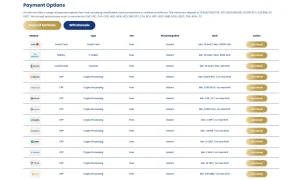
E-wallets such as PayPal and Skrill can be used by Australian players in some real-money casino contexts, according to a specialist review. Once a withdrawal has been approved, e-wallet processing may be shorter than bank processing. One specialist review described e-wallet transactions as taking hours rather than days; a separate timing summary puts e-wallet withdrawals within 24 hours. These are reported timings, not a guarantee for a particular transaction. The operator’s review and payment procedure can affect when funds are released.
Bank transfers involve an additional banking stage after the operator sends the money. A specialist review reported that traditional transfers could take as long as five business days to complete. Another summary describes bank transfers as taking several days, alongside card payments. These descriptions are compatible as broad indications, but neither tells you the processing time for a specific bank or request. The important distinction is that operator approval and bank settlement are separate steps.
E-wallets
Transactions may be processed in hours or within 24 hours once approved.
Bank transfers
Traditional transfers may take several business days to complete.
Instant banking
Connects directly to a bank account to move funds, but does not guarantee immediate operator approval.
Prepaid cards
Primarily used for deposits; they may not be available for withdrawals.
Instant banking refers to services that connect a payment to a bank account, rather than to a stored-value wallet or voucher. A specialist review reported that some real-money casino services in Australia had offered instant banking through providers such as POLi. “Instant” in this context describes the payment method’s movement of funds; it does not establish that a withdrawal request will be approved or released immediately. Availability can also differ between deposits and withdrawals, so the payment name alone does not show what the reverse transaction supports.
Prepaid cards and vouchers, including Neosurf, are primarily deposit instruments in the account of a specialist review. That review described them as generally available for deposits but not withdrawals. This creates a practical mismatch: if a voucher is accepted for an incoming payment, the operator may still need another eligible method to return funds. A deposit option should therefore not be assumed to function as a cashout route.
When comparing methods, check the direction of payment first, then separate approval time from transfer time. An e-wallet may have a shorter reported withdrawal path than a conventional bank transfer, while a voucher may not provide a withdrawal path at all. Instant banking availability does not remove the operator’s processing stage. Payment terms also determine which methods can be used and whether the same route is available for both deposit and withdrawal.
Ethereum, Tether and Ripple: What Can Be Confirmed About No-KYC Payments?
Ethereum, Tether and Ripple are distinct names, but naming an asset does not establish that a particular casino accepts it. A cashier may list supported payment options, and its terms may set conditions for deposits or withdrawals. Check those details for the specific service rather than inferring acceptance from the asset’s popularity or from a general claim about crypto payments.

A specialist review describes cryptocurrency transactions as capable of near-instant movement. That is a statement about payment movement, not a promise about how quickly a casino will approve a withdrawal or release funds. An operator may still review a request before sending it, and the speed of a blockchain transaction cannot establish that the operator will waive identity checks.
“No KYC” is a label used for services claiming reduced or absent identity checks. It should not be treated as proof that a withdrawal will be paid without verification. The payment method and the operator’s verification decision are separate: choosing Ethereum, Tether or Ripple does not itself remove the possibility of a check.
For an Australian reader, there is also a legal distinction. Australian law prohibits operators from providing real-money online casino games to people in Australia. A “no-KYC” description or a cryptocurrency option does not change that rule.
If you encounter a claim about one of these assets, read it narrowly. It may refer only to a deposit option, not to withdrawals, and it does not by itself specify whether the operator accepts the asset or what checks it applies. Treat each claim as requiring confirmation in the operator’s own payment and account terms; do not assume Ethereum, Tether and Ripple are interchangeable or that one asset’s payment behaviour proves anything about another.
USDT, Crash Games and No-Deposit Offers: Keep Payment and Play Separate
USDT, crash games and no-deposit offers describe different things. USDT is a cryptocurrency; a crash game is a game format; and a no-deposit offer is a bonus condition. Putting these terms together does not show that a particular service accepts USDT, provides crash games or lets you withdraw without identity checks.
- Confirm if the payment method is available for both deposits and withdrawals.
- Check if the specific cryptocurrency is accepted by the cashier.
- Identify if crash games are actually offered by the service.
- Read the specific wagering requirements for any bonuses.
A specialist review reported that cryptocurrency transactions can be near-instant. That describes the potential speed of the cryptocurrency transaction itself, not the time taken for an operator to approve or release a payment. It also does not confirm that USDT is an available payment method at any particular casino. Check the payment options stated by the service rather than treating a currency name in a claim as proof of acceptance.
The game format is a separate question. A reference to crash games does not establish that those games are offered, or that access to them is available without verification. Payment options and game access do not determine an operator’s identity-check requirements.
A no-deposit offer is separate again: it concerns bonus terms, not the payment method or game format. Before claiming one, read the conditions that govern when bonus-related funds can be withdrawn. Meeting those terms does not itself establish that verification will be waived.
Treat each claim independently: confirm the payment method, confirm what games are actually available, and read the offer conditions. Do not infer that a service accepts USDT, offers crash games or dispenses with checks merely because all three ideas appear together in a description. In Australia, real-money online casino games are prohibited services for operators to provide to people physically in the country.
Free Spins and No-KYC Claims: Read the Bonus Conditions First
Free spins and identity checks are separate conditions. A claim that an account involves reduced checks does not explain what happens to any winnings from free spins, or whether those funds can be withdrawn. The bonus terms determine how wagering applies; the payment method or label attached to an account does not replace those rules.
A specialist review describes two possible bases for wagering requirements: they may apply to bonus funds alone, or to the combined deposit and bonus. The distinction affects the amount of funds counted toward the requirement. Bonus-funds-only wagering is preferable because it does not include the deposit in that calculation. Read the terms to identify which basis applies before accepting an offer or using spins.

Also check what the rules say about winnings credited after free spins. They may be treated as bonus funds, so the applicable wagering condition can affect whether they are withdrawable. Do not assume that a displayed balance is immediately available as cash: a requirement may need to be met first.
In Australia, real-money online casino games, including slots, are prohibited for operators to provide to people physically located in the country. A bonus label does not change that legal position. If you are reviewing an offer’s wording, keep the questions distinct: what wagering condition applies to the funds, and what identity checks may be required. A “no-KYC” claim does not answer the bonus question, and free spins do not establish that checks will be waived.
Live Casino and No-KYC: What the Available Evidence Does Not Establish
A “no-KYC” label does not establish that live-dealer games are available, or that you could access them without identity checks. The label describes a claimed approach to verification; it is not evidence about a particular game category or the checks applied to it. Nor does it explain how a live-game deposit or withdrawal would be handled.
For players physically in Australia, there is an additional legal limit: under the Interactive Gambling Act 2001, operators are prohibited from providing real-money online casino games to people in the country. That prohibition covers casino-style games such as roulette, blackjack, poker and slots; describing a game as live does not change its classification.
General account or withdrawal procedures also cannot be treated as proof of a live-casino exception. Casinos must verify a player’s identity before processing withdrawals, and a claim that checks are reduced does not mean they are waived. If a service makes a specific promise about live games or cashouts, the wording alone cannot confirm that the service is lawful, available to Australian residents or exempt from verification.
Keep the claims separate: a no-KYC statement does not confirm live-game access, and a live-game label does not confirm a different payment process.
What payment methods are available?
Australian players may find credit and debit cards, PayPal and Skrill, and bank transfers; some casinos also offer cryptocurrency. Prepaid vouchers such as Neosurf are generally for deposits, not withdrawals.
How do you choose the best easy withdrawal casino site?
Compare the stated withdrawal times, fees and limits, and check whether the site clearly explains its withdrawal process. Completing identity verification early can help avoid delays, and you should check whether withdrawals must go back to your deposit method.
What are easy withdrawal casinos?
They are sites with a straightforward cashout process and relatively fast payouts. For example, PayID transfers can be near-instant once the casino releases the funds, while the operator’s review may still cause a delay.
How fast are withdrawals?
E-wallet withdrawals are often completed within hours and typically processed within 24 hours, while bank transfers can take up to five business days. PayID can move funds in real time once released, but operator reviews and first-time verification can add waiting time.